
The best checkers pieces for crowning are easy to stack, easy to see, and sized for the board you already use. A crowned checker should look intentional, not like two slippery pieces that might tip over every time someone reaches across the board.
This guide compares checker piece categories rather than ranking individual products. It does not claim hands-on testing, current prices, ratings, or live availability. If you need a full board-and-pieces set instead of replacement or upgrade pieces, start with best checkers sets for beginners.
As an Amazon Associate, The Good Chess & Checkers may earn from qualifying purchases.

Product-first guide
Shop the products in this guide
Compare these affiliate product routes first, then use the guide criteria to choose the board, pieces, storage, clock, or learning aid that fits the player.
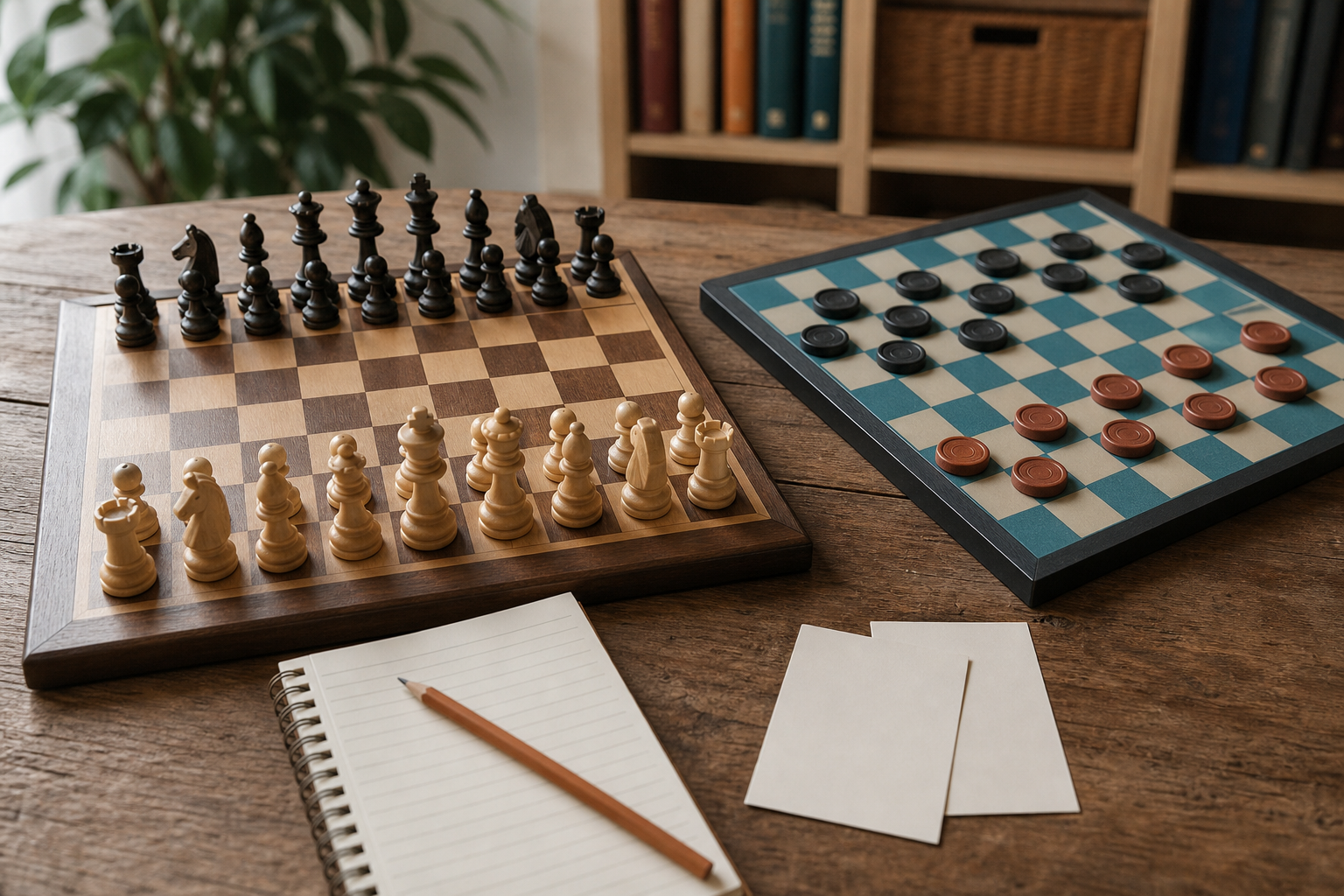
Helpful product path
Shop checkers piece options
Compare replacement and upgrade pieces by diameter, thickness, stacking stability, board fit, contrast, and storage before buying.
What Makes a Checker Good for Crowning?
In many family and American checkers games, a piece becomes a king when it reaches the far row. The common tabletop way to show that is to stack a captured or spare checker on top. That small detail changes what you should look for in the pieces.
- Stacking stability: two pieces should sit together without rocking, sliding, or hiding the square underneath.
- Right diameter: each checker should fit comfortably inside one dark square with enough edge space for fingers.
- Useful thickness: pieces that are too thin can be hard to pick up; pieces that are too tall may make kings wobbly.
- Clear contrast: red, black, white, natural wood, or other colors should stay easy to sort under normal room light.
- Enough extras: replacement-piece buyers should check quantity carefully so there are enough pieces for both starting sides and crowned kings during play.
- Storage fit: loose pieces are easier to lose than a full boxed set, so a pouch, tray, or labeled container matters.
Best Overall: Ridged Plastic Checkers
Ridged plastic checkers are the most practical first comparison point for families, classrooms, and casual players. The molded edge gives fingers something to grip, the pieces are usually light enough for kids to handle, and two pieces often stack more clearly than smooth novelty pieces.
Choose pieces with a flat enough top and bottom for crowning. Decorative grooves are fine when they help grip, but deep shapes can make kings lean. Match the diameter to your board before buying: a piece that looks normal online may crowd a smaller travel board.
Best for: replacement pieces, shared family boards, classroom bins, and players who want easy sorting.
Skip them if: the board is decorative wood and the lightweight plastic pieces would feel mismatched or slide too easily.
Best for Young Beginners: Large, Grippy Pieces
Large checkers pieces can make crowning easier for children and new players because the king is more visible from across the board. Larger pieces also give small hands more surface area to pick up without dragging nearby pieces.
The tradeoff is board fit. A large piece needs a large enough square. If two crowned pieces sit on neighboring squares and almost touch, jumps and multi-jump positions can become harder to read. For broader kid-focused buying advice, use best chess and checkers sets for kids.
Best for: family teaching games, large home boards, and players who need the king stack to stand out.
Skip them if: your board has small squares, a folding lip, or storage wells that only fit standard pieces.
Best for Existing Wooden Boards: Wooden Replacement Checkers
Wooden checkers are a good fit when the board is meant to stay out on a table or match a wooden chess-and-checkers set. They can feel steadier and more gift-like than lightweight pieces, but they still need to stack cleanly for kings.
Look for consistent thickness and a simple round shape. Very glossy finishes can be attractive, but pieces that slide too easily may be annoying during crowning, jumping, and cleanup. If the material decision is still unclear, compare the broader tradeoffs in wooden vs plastic chess and checkers sets.
Best for: wooden boards, coffee-table sets, gifts, and players who care about a more traditional feel.
Skip them if: the pieces are too slick, too decorative to stack, or sold in colors that blend into your board.
Best for Classrooms and Clubs: Bulk Replacement Pieces
Bulk replacement checkers make sense when pieces disappear faster than boards wear out. Classrooms, libraries, and clubs should prioritize consistent size, easy color sorting, and simple storage over premium materials.
Before buying a bulk pack, count what you actually need. A standard game starts with 12 pieces per side, but extra pieces help when crowned kings need stacking and when a few pieces go missing. Store extras away from the active set so helpers can refill boards without mixing sizes. For full group equipment planning, read best chess and checkers sets for club starter kits.
Best for: classrooms, after-school clubs, library game shelves, and shared bins with frequent piece loss.
Skip them if: the pack mixes sizes or colors in a way that makes one board feel inconsistent.
Best for Travel Boards: Low-Profile Pieces
Travel checkers pieces need to fit the storage case first. Low-profile pieces can be useful in folding or magnetic sets because they close more easily and take up less space, but the king stack still needs to be readable.
Be careful with pieces that are too thin or tiny. If a crowned king is hard to pick up, the travel convenience is not worth much. For moving cars, planes, waiting rooms, and hotel tables, a purpose-built set may work better than loose replacement pieces. Compare those options in best magnetic chess and checkers sets for travel.
Best for: compact boards, folding cases, travel pouches, and players replacing pieces from a portable set.
Skip them if: two stacked pieces are so short or small that beginners do not notice the king.
Best for Rule Clarity: Pieces with Obvious King Stacks
Some checkers pieces are technically usable but poor teaching pieces because a king does not look different enough. For beginners, the crowned piece should be obvious at a glance. A stable two-piece stack is usually clearer than a tiny mark, subtle engraving, or color detail that disappears under normal lighting.
This matters most when teaching jumps and king movement. If forced captures or multiple jumps are confusing at your table, pair clear king stacks with do you have to jump in checkers? so everyone agrees on the rule before the game starts.
Best for: teaching games, family rule reminders, and mixed-age tables where players may forget which pieces are kings.
Skip them if: the "king" marker is decorative but not visible during normal play.
Quick Comparison Framework
- Choose ridged plastic checkers when you want practical replacement pieces for a normal family or classroom board.
- Choose large, grippy pieces when visibility and easy handling matter more than compact storage.
- Choose wooden pieces when they match a wooden board and still stack cleanly.
- Choose bulk replacement pieces when several boards need spares and consistency matters.
- Choose low-profile pieces only when the travel case or folding board needs them.
- Choose obvious king stacks when teaching clarity is the main goal.
Who Should Skip Replacement Checkers?
Skip loose replacement checkers if the board itself is hard to read, the squares are too small, or the set is missing storage. New pieces will not fix a board that frustrates beginners before the first move. In that case, a complete beginner-friendly set may be the better buy.
Also skip a piece-only purchase if you cannot confirm the checker diameter against your board squares. Pieces that are too wide crowd jumps and kings. Pieces that are too small make the game feel fussy. When both the board and pieces need attention, use how to choose the right chess and checkers board size before buying.
Bottom Line
For most families and beginner groups, the best checkers pieces for crowning are simple ridged pieces that stack neatly, contrast clearly, and fit the board squares without crowding. Upgrade to large, wooden, bulk, travel, or teaching-focused pieces only when your board and players need that specific advantage.
A good king stack should make the game easier to follow. If the crowned piece wobbles, blends in, or crowds the board, keep looking.