
A first endgame book should help you finish positions you can realistically reach: basic checkmates, king-and-pawn endings, opposition, and a few essential rook endings. It should not bury a new player under hundreds of positions before those foundations are secure.
This is a fit-based selection guide, not a claim that we read or tested every exercise in every edition. Preview the table of contents, notation, diagrams, and answer style, then confirm the exact author and edition before buying.
The Good Chess & Checkers may earn commissions from qualifying purchases.
Quick decision aid
Buy for your current level, not for the biggest table of contents
Beginners usually benefit from a course that separates must-know endings from later material. A short, understandable section you can practice is more useful than an advanced reference you will not open.
Selection Criteria That Matter
- Assumed skill: the opening chapters should begin with positions you understand. If the sample starts with dense rook theory, it is probably not a first book.
- Lesson order: look for basic mates and king-and-pawn ideas before uncommon or calculation-heavy endings.
- Diagrams: frequent, readable boards reduce the effort of reconstructing a position from notation alone.
- Explanations: a useful beginner text explains the goal, the losing mistake, and the reason a move works.
- Exercises and answers: practice positions should match the lesson, and answers should explain more than a bare move sequence.
- Notation: confirm that algebraic notation is introduced clearly if you do not already read it comfortably.
- Study load: choose a book you can use in short sessions with a board. Completeness matters less than repeatable practice.
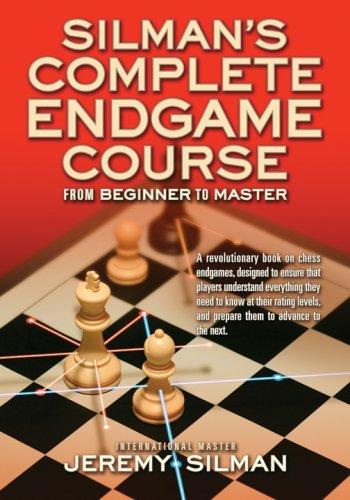
Best Level-by-Level Course: Silman’s Complete Endgame Course
A course divided by playing level
The organizing idea is its main advantage: study the section meant for your current strength, then stop before later material becomes noise. Preview the first section to make sure its prose and diagrams suit the way you learn.
Best for: an adult or teen beginner who wants a clear syllabus and a book that can remain useful while their game improves.
Skip it if: a large book feels discouraging, you want workbook-style pages, or you are buying for a young child who needs shorter lessons and more visual prompts.
Best Position-by-Position Course: Pandolfini’s Endgame Course
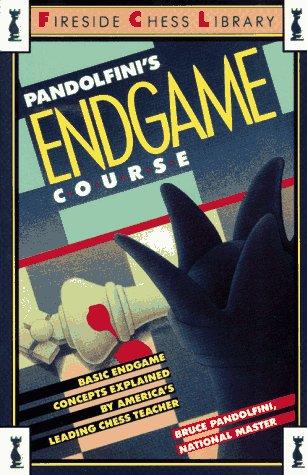
Compact lessons built around specific positions
This format can work well when you prefer one position and one idea at a time. Check sample pages for diagram frequency and explanation depth; concise lessons still need enough context for you to understand the plan.
Best for: a learner who likes bite-size positions and will set each one up on a physical board.
Skip it if: you want a book explicitly divided by rating or need long narrative explanations connecting every lesson.
Best Broader Tour: Winning Chess Endings by Yasser Seirawan
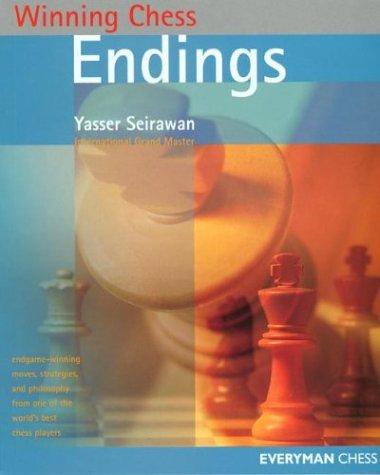
A general introduction across major ending types
Consider this when you already understand basic mates and want a guided tour of pawn, rook, minor-piece, and queen endings. Compare the contents and samples with your current gaps rather than assuming every chapter is beginner-essential.
Best for: an improving beginner who wants one readable overview after learning the most basic checkmates.
Skip it if: you need a minimal first checklist, a workbook, or a course that tells you exactly which material to postpone.
Quick Comparison Framework
- Choose Silman when you want the clearest boundary between what to learn now and what to leave for later.
- Choose Pandolfini when short, position-centered lessons make it easier for you to keep studying.
- Choose Seirawan when you want an approachable survey and already know the most basic mating patterns.
- Choose a workbook later when you understand the ideas but fail to recognize them without a chapter heading.
- Choose a tactics book instead when your immediate problem is spotting forks, pins, and short combinations in middlegames.
Preview an Edition Before Buying
- Match the title and author; similar titles and combined marketplace listings can be misleading.
- Read the contents and find king-and-pawn endings, opposition, basic mates, and introductory rook endings.
- Open a middle sample page and check whether the diagrams remain readable at the book’s physical size.
- Read one explanation without moving the pieces. If it is unclear, rebuild the position; if it is still unclear, choose a gentler book.
- Find exercises and answers. Make sure the response explains the goal and important alternative, not only the notation.
- Check whether the edition uses algebraic or older descriptive notation. Most current learners will find algebraic notation easier to pair with modern lessons.
How to Study Without Turning It Into Homework
Use a real board and cover the answer. Name the goal first, play your candidate move, and then test the defending side’s best reply. Repeat the same position from both colors on another day. Ten focused minutes on one ending is better than skimming a whole chapter.
A board with clear coordinates can reduce setup mistakes; the coordinate chess board guide explains what to look for. If pieces are still hard to identify, revisit beginner chess set criteria before adding another study book.
The broad beginner chess rules-and-strategy pillar is not built yet. This guide currently links to the closest practical foundations rather than pretending that missing hub exists.
Who Should Skip an Endgame Book?
Wait if you are still learning legal moves, check, checkmate, and stalemate, or if algebraic notation makes every diagram slow to decode. A rule guide, a teacher, or a small set of basic mating exercises will be a better first step.
Also skip a new purchase if you already own an unread beginner endgame chapter. Study its king-and-pawn positions first. The right time to buy a dedicated book is when you can name the gap it needs to solve—not merely because endgames seem important.
Bottom Line
For most adult and teen beginners, Silman’s Complete Endgame Course offers the clearest level-based route. Pandolfini’s Endgame Course is a sensible alternative for short position-by-position study, while Winning Chess Endings suits an improving player ready for a broader overview. Preview the exact edition, choose the teaching format you will actually use, and practice each position on a board before moving on.