
How Chess Pieces Move: A Beginner Guide for Families
Chess gets much easier when each piece has one clear job in your mind. This guide explains pawns, rooks, bishops, knights, queens, and kings in plain language, with the beginner details that usually cause the first questions.
If a new player tries to learn every chess rule at once, the board can feel crowded before the game even starts. A better first lesson is simple: learn how each piece moves, practice a few captures, and save deeper strategy for later.
Use this as a family table guide, a classroom refresher, or a quick check before teaching a child their first full game. If the board is not set up yet, start with how to set up a chess board and checkers board correctly, then come back to the moves.
As an Amazon Associate, The Good Chess & Checkers may earn from qualifying purchases.
Product next step
Shop chess sets with readable pieces
For learning piece movement, favor familiar Staunton shapes, clear square contrast, and a board large enough for beginners to see patterns.
Helpful product path
Shop chess gear for this lesson
Compare beginner chess gear by Staunton piece shapes, square size, contrast, and whether the set makes practice easier.
The Quick Rule: Pieces Move in Patterns
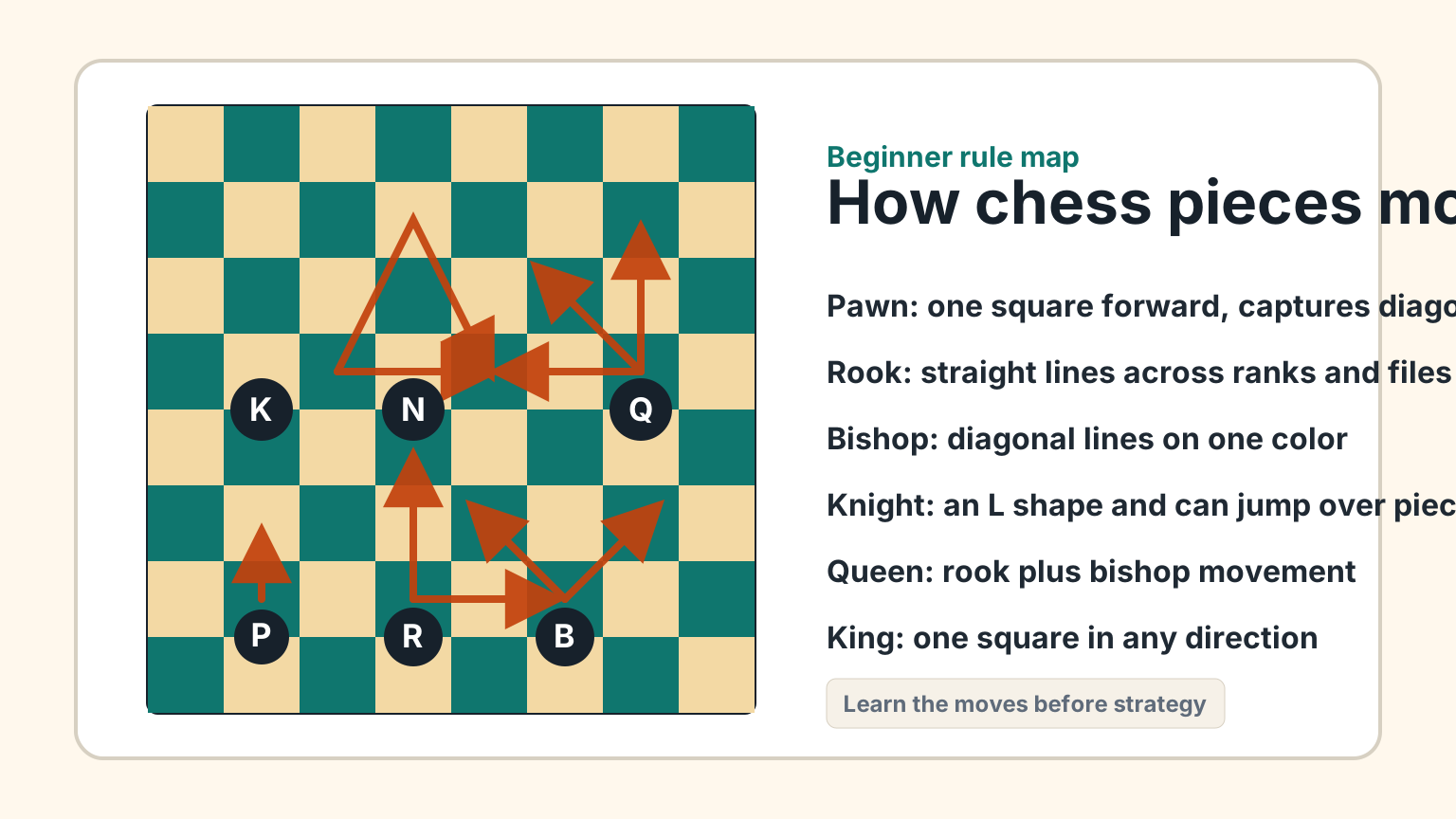
Every chess piece has a pattern. Some move in straight lines, some move diagonally, one moves in an L shape, and the king moves slowly because the whole game is about keeping it safe.
Most pieces capture by moving onto an opponent's square using their normal movement pattern. Pawns are the main exception: they move forward, but capture diagonally. That single difference is responsible for many beginner mistakes.
How Pawns Move
Pawns move straight forward one square at a time, toward the opponent's side of the board. On a pawn's first move only, it may move forward two squares if both squares are clear. After that, it moves one square forward.
Pawns do not capture straight ahead. They capture one square diagonally forward. If an opponent's piece is directly in front of a pawn, the pawn is blocked unless a special rule applies in a more advanced lesson.
For a beginner game, teach this sentence first: pawns walk forward but capture diagonally. Once that feels natural, you can add promotion: when a pawn reaches the far side of the board, it can become another piece, usually a queen.
How Rooks Move
Rooks move in straight lines: up, down, left, or right. They can move one square or many squares, as long as the path is clear. A rook cannot jump over pieces.
Rooks are easiest to understand on open lines. If the rook has a clear row or column, it can travel a long way. If friendly pieces are in front of it, it may feel trapped until those pieces move.
How Bishops Move
Bishops move diagonally. Like rooks, they can move one square or many squares as long as the diagonal path is clear. Bishops cannot jump over pieces.
Each bishop stays on the same color square for the whole game. A bishop that starts on a light square will always move on light squares. A bishop that starts on a dark square will always move on dark squares. That is a useful way for beginners to check whether a bishop move is legal.
How Knights Move
Knights move in an L shape: two squares in one straight direction and then one square to the side. Another way to picture it is one long step and one short turn.
The knight is the only piece that can jump over other pieces. That makes it useful early in the game when the board is crowded. The knight still captures only on the square where it lands; it does not capture the pieces it jumps over.
Knights are often the hardest piece for beginners, so practice them by placing a knight in the center of an empty board and pointing to every square it can reach.
How Queens Move
The queen combines the rook and bishop. It can move in straight lines or diagonals, one square or many squares, as long as the path is clear.
Because the queen moves so freely, beginners often bring it out too early. That can work against another new player, but it can also make the queen a target. A good teaching rule is to learn the queen's movement without building the whole game around it.
How Kings Move
The king moves one square in any direction: forward, backward, sideways, or diagonal. The king captures the same way, one square at a time, but it may not move onto a square controlled by an opponent's piece.
If the king is attacked, it is in check. The player must respond to check by moving the king, blocking the attack, or capturing the attacking piece when that is legal. If there is no legal escape from check, the position is checkmate and the game ends.
For a first game, do not worry about every rare king detail. Teach the main idea: the king is slow, important, and cannot walk into danger.
What Pieces Can and Cannot Do
- Pieces cannot share a square. A square holds one piece at a time.
- Most pieces cannot jump. Rooks, bishops, queens, kings, and pawns need a clear path. Knights are the exception.
- You cannot capture your own piece. Friendly pieces block movement.
- Captures replace the opponent's piece. Move your piece to that square and remove the captured piece.
- The king needs extra care. A move is not legal if it leaves your own king in check.
Three Special Moves to Learn Next
The movement patterns above cover ordinary moves, but a complete beginner should know that chess has three special cases. You do not need to master them before practicing the six pieces.
- Castling: The king moves two squares toward a rook, and that rook moves to the square beside the king. Castling is allowed only when the king and rook have not moved, the squares between them are empty, and the king is not in check, moving through check, or landing in check.
- En passant: A pawn may sometimes capture an opposing pawn that has just moved two squares and landed beside it. The capture must happen immediately on the next move.
- Promotion: A pawn that reaches the farthest rank must become a queen, rook, bishop, or knight. A queen is the usual choice, but it is not the only legal one.
Introduce these after ordinary movement and captures feel comfortable. Castling is the most useful one to teach early because it helps beginners protect the king and bring a rook into play.
A Simple Practice Order
Beginners learn faster when the board is not full. Try these short drills before a full game:
- Move only pawns for a few turns, saying "forward to move, diagonal to capture."
- Place one rook on an empty board and name every square it can reach.
- Place one bishop on a dark square and notice it never leaves dark squares.
- Place one knight near the center and count its L-shaped landing squares.
- Put a king and queen on the board and compare the queen's freedom with the king's limits.
If you are teaching kids, keep the first practice short and stop while the moves still feel successful. The goal is not to lecture through the whole rulebook. For a gentler teaching plan, use how to teach chess and checkers to kids without overwhelming them.
Common Beginner Mistakes
- Moving pawns like they capture: Pawns move forward but capture diagonally.
- Letting bishops change color: A bishop always stays on its starting color.
- Making knights slide diagonally: Knights move in an L shape, not a diagonal line.
- Jumping with the queen or rook: Long-range pieces still need a clear path.
- Ignoring check: If the king is attacked, that problem must be handled immediately.
Who Should Skip a Full Piece Lesson?
If a child is very young, tired, or frustrated, skip the full set of pieces for the moment. Start with pawns and rooks, or play a mini-game where the goal is just to reach the other side of the board. A shorter lesson that ends well is better than a complete lesson that makes chess feel heavy.
If the issue is the physical set instead of the rules, check whether the board and pieces are easy to see and handle. A readable starter set matters more than fancy materials. For buying help, read how to choose a chess and checkers set everyone can actually use.
Bottom Line
Chess pieces are not random. Pawns move forward and capture diagonally, rooks move straight, bishops move diagonally, knights move in L shapes, queens combine rook and bishop movement, and kings move one careful square at a time.
Learn those patterns first. Once the moves feel comfortable, strategy becomes much less mysterious because players can finally see what the pieces are trying to do.
For more practical articles, visit The Good Chess & Checkers blog. For more on our editorial approach, read About The Good Chess & Checkers.