
A rechargeable chess clock is worth considering when the club uses clocks often, one person can own the charging routine, and the documented runtime comfortably covers a session. Choose replaceable batteries when clocks sit unused for long periods, travel between organizers, or need to return to service immediately with a battery swap. Use a clock app first when timed play is still an experiment.
The power system does not make a clock easier to program or more suitable for a particular time control. Treat charging as one operational choice alongside readable displays, clear buttons, a simple reset path, and consistent controls across the club.
As an Amazon Associate, The Good Chess & Checkers may earn from qualifying purchases.
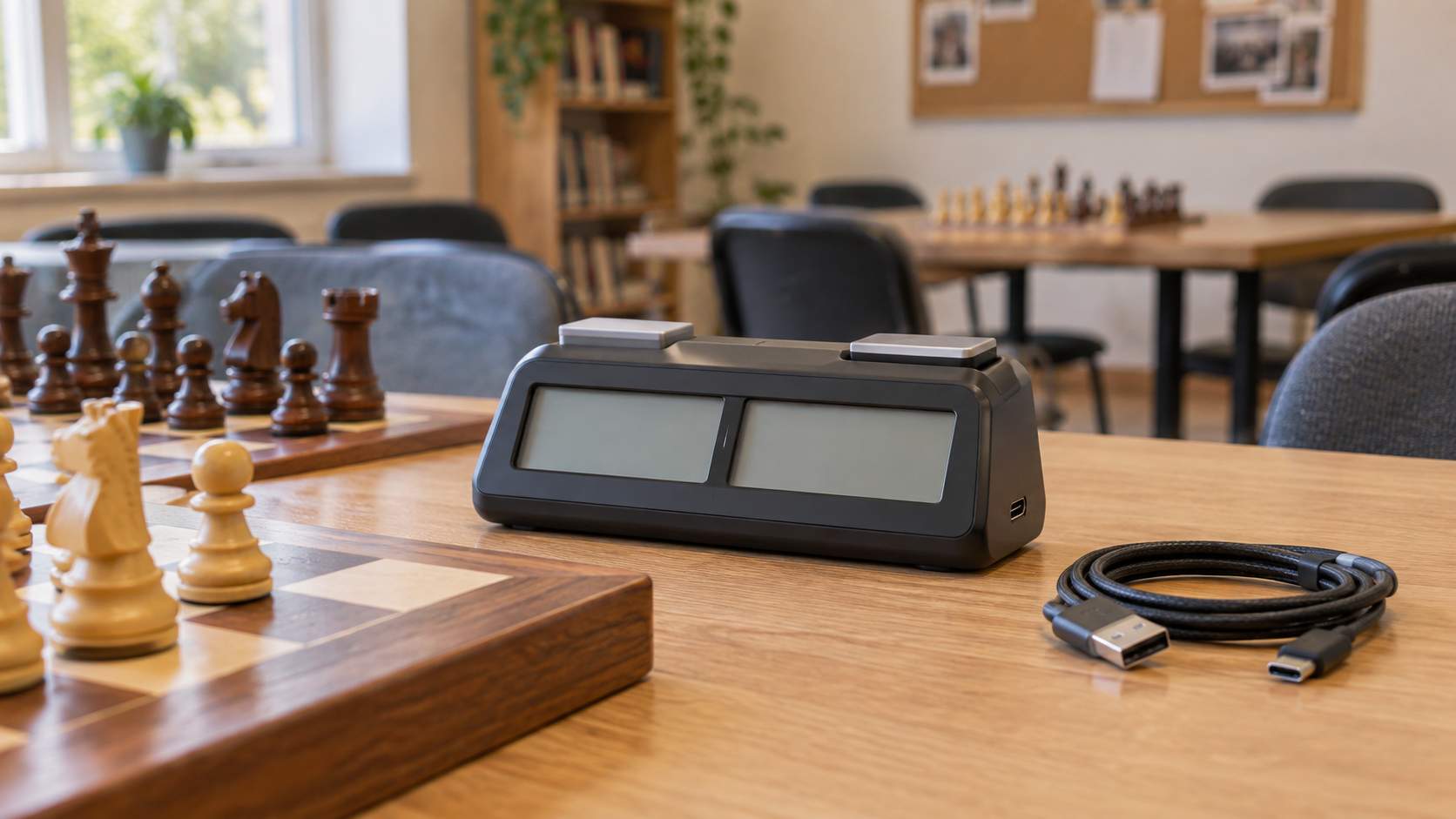
Choose the power routine before the feature list
Browse rechargeable digital chess clocks
For each current listing, verify the manufacturer-stated charging connector, included cable, power input, runtime, controls, supported timing modes, sound settings, and instructions. Do not infer those details from the product photo.
Quick verdict
- Buy one to trial when clocks are used weekly, storage is near a reliable charging point, and an organizer already checks equipment between sessions.
- Choose replaceable batteries when equipment changes hands, may sit for months, or must recover quickly without waiting to charge.
- Use an app first when only a few casual games are timed and a shared device can stay at the board.
- Skip clocks for now when beginners are still learning legal moves and the timer adds pressure without supporting the lesson.
The real question is who maintains the clock
Rechargeable equipment works best when responsibility is visible. Someone needs to count the clocks after play, notice low charge, connect the correct cables, and return every unit to storage. Without that owner, a built-in battery can turn an ordinary setup task into a surprise at the next meeting.
Write a short routine before buying several clocks: when they are checked, where they charge, who disconnects them, where cables live, and what the group does when one is unavailable. Follow the clock maker’s charging and storage instructions rather than creating a generic charging rule.
When rechargeable power earns its place
The club meets often enough to maintain a rhythm
A weekly or frequent club can attach charging to the normal pack-up or pre-session check. A group meeting only occasionally may find ordinary replaceable batteries simpler because there is no charging step to remember between long gaps.
The clocks stay in one controlled location
A fixed cupboard or equipment shelf makes it easier to keep each clock with its documented cable and instructions. If volunteers carry clocks home in different bags, cables and responsibility can become separated. A labeled pouch for each model reduces that friction.
The documented runtime leaves a practical margin
Compare the manufacturer’s stated runtime with the club’s longest realistic session, including setup and breaks. Leave a margin rather than planning to use the full claim. Runtime can vary with settings and battery condition, so the club’s first unit should be a real workflow trial—not a promise that every future session will be identical.
When replaceable batteries are the cleaner choice
A replaceable-battery clock can return to use as soon as a correct spare set is installed. That can suit a club with no secure charging location, long gaps between meetings, several volunteer organizers, or equipment that travels to different rooms.
This option still needs maintenance. Record the required battery type from the manual, store suitable spares separately, inspect the compartment as directed, and remove or replace batteries according to the manufacturer’s storage guidance. Do not mix battery types or improvise around damaged contacts.
Run a one-clock, two-session trial
- Choose one clock whose current manual clearly states its charging method, controls, and timing modes.
- Confirm that the intended charging location and power adapter follow those instructions.
- Label the clock and cable as one kit, then store the manual with the club’s equipment notes.
- Use it through a normal session and record only operational observations: starting charge indication, games completed, and whether controls were easy to reset.
- Have the assigned organizer complete the charging and storage routine before the next meeting.
- Repeat once. If the routine was missed or the unit was unavailable, solve that workflow before buying more.
What to compare before buying
- Charging documentation: verify the connector, input, included cable, indicators, and instructions from the current manual or manufacturer listing.
- Runtime statement: compare the documented figure with the full session length and preserve a margin.
- Controls and reset: a club gains more from consistent, teachable controls than from a long feature list.
- Timing modes: confirm the modes the group actually uses; do not assume every digital clock supports the same options.
- Display and buttons: check legibility at the table and whether players can identify start, pause, and player controls.
- Cable storage: keep the correct cable with the clock without pressing plugs against the display or buttons.
- Unavailable-clock plan: decide whether the fallback is a spare clock, suitable replacement-battery unit, app, or untimed game.
How many should the club buy?
Start with the number of timed games the club actually hosts, not the total number of boards. One trial clock is enough to expose charging, labeling, control, and storage problems. If timed play becomes routine, add units gradually and favor consistent controls so volunteers do not have to relearn setup at every table.
For a wider room plan, use the beginner-friendly chess and checkers station guide. It helps place clocks after boards, pieces, teaching visibility, storage, and beginner comfort are working.
Bottom line
A rechargeable chess clock is worth it for a casual club when frequent use and clear equipment ownership make charging easier than managing spare batteries. Trial one clock across two meetings, using its current instructions and the club’s real storage location. If the clock starts both sessions ready without adding confusion, the power system fits; if not, a replaceable-battery clock or app is the more dependable choice.