
Private checkers lessons can be worth it when a beginner has one specific obstacle, can test the instructor's teaching before committing, and will practise between meetings. Book a short series only after a useful trial. Delay when the learner still needs the basic rules or cannot name a goal; choose a club, course, book, or guided family practice when individual feedback is not the missing piece.
One-to-one attention is a lesson format, not proof of quality or a promise of improvement. The instructor should teach the same checkers variant the learner plays, explain current terms clearly, and turn feedback into a manageable next task. This guide does not rank instructors or independently verify credentials.
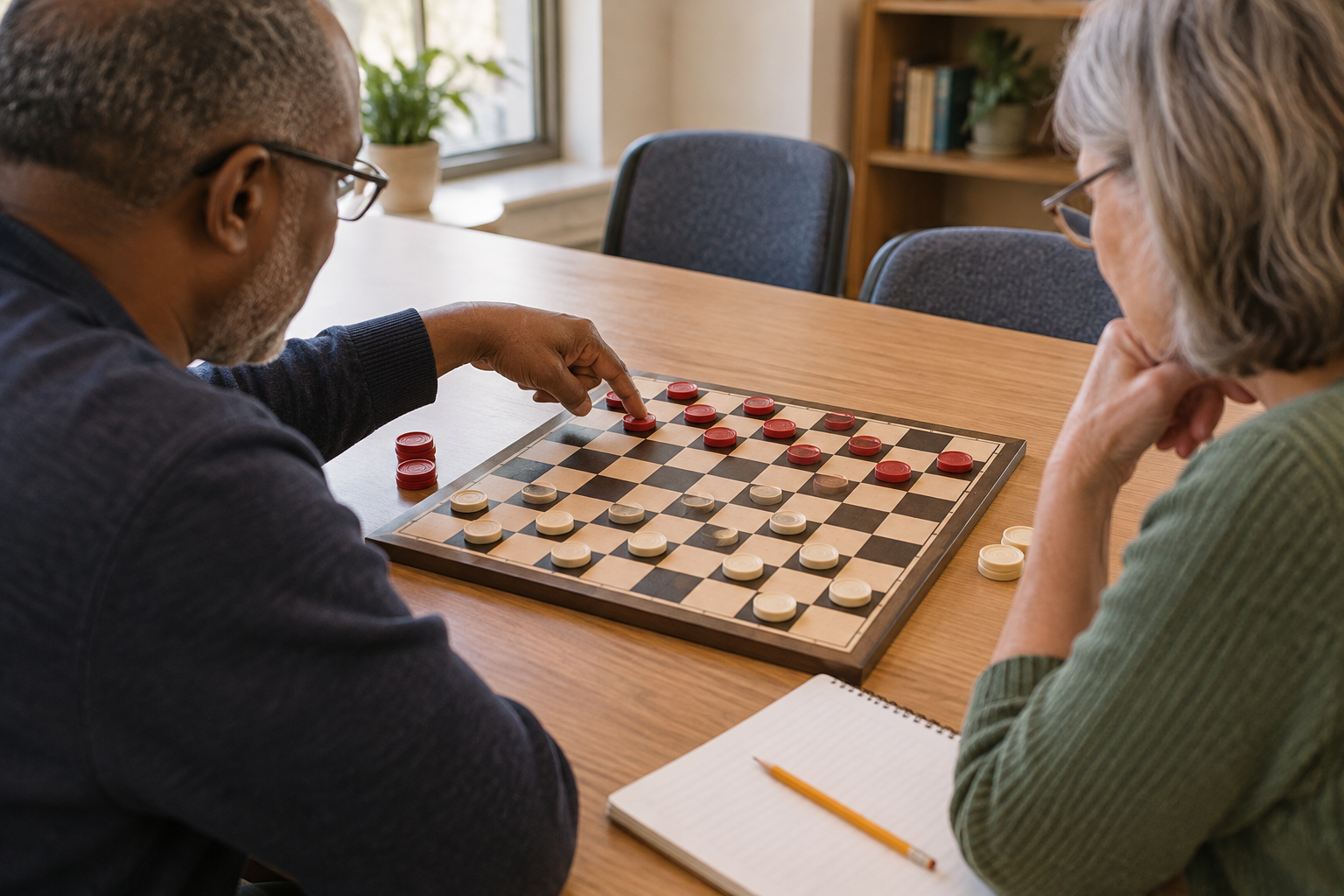
Quick verdict: book, trial, delay, choose an alternative, or skip
- Book a short series after a useful trial when the goal, ruleset, schedule, practice plan, complete cost, and cancellation terms are clear.
- Try one lesson when individual feedback seems useful but the instructor's pace, explanations, or beginner fit are still unknown.
- Choose an alternative when the learner mainly needs regular opponents, a fixed curriculum, or inexpensive repetition rather than tailored correction.
- Delay when setup, legal diagonal movement, required captures, multiple jumps, or kings still need frequent prompting.
- Escalate questions directly to the provider about credentials, accessibility, communication, recording, privacy, cancellation, and—when a child is involved—supervision and safeguarding arrangements.
- Skip when the goal is vague, practice time is unlikely, terms cannot be inspected, or payment would strain the budget.
Start with the exact problem
“Get better at checkers” is too broad to test. A useful first goal might be recognizing every required capture, planning a complete multiple jump, understanding when a piece becomes a king under the chosen variant, or reviewing two decisions from a recent game. Write the problem in one sentence and ask how a first lesson would address it.
If the learner cannot yet finish a legal game, begin with the beginner checkers rules pillar and play several slow games. That free step can reveal whether the real need is rules clarity, more repetitions, a regular opponent, or personal feedback.
Eight checks before paying
- Ruleset fit: ask which variant the instructor teaches. American checkers and international draughts do not share every board, capture, promotion, or king rule.
- Teaching sample: request a trial, a sample explanation, or a clear outline of the first meeting. A profile or outcome claim is not a teaching sample.
- Beginner fit: ask what knowledge is assumed and what experience the instructor states they have with learners at this stage. Verify any credential that matters with its named issuer.
- Lesson output: confirm what the learner should understand or practise afterward. A short repeatable task is more useful than an impressive amount of unexplained material.
- Complete cost: check the current lesson fee, minimum booking, package rules, platform or travel charges, materials, taxes if applicable, and payment schedule on the provider's official terms or written quote.
- Policies: read current cancellation, rescheduling, missed-session, refund, recording, privacy, and communication terms before paying.
- Access and setup: confirm location or video platform, time zone, device and board requirements, accessibility needs, and who supplies lesson materials.
- Appropriate arrangements: for a child or vulnerable learner, the responsible adult should verify supervision, communication, location, recording, platform, and safeguarding policies directly. A public profile is not evidence of those arrangements.
Trial-lesson decision worksheet
Use this worksheet before and after one trial. It is a decision aid, not a score that certifies an instructor.
- Before: write one rules question or rebuild one confusing position from a real game.
- During: note whether the instructor names the rules variant, explains unfamiliar terms, asks the learner to choose moves, and adjusts when an explanation does not land.
- After: write the next practice task in one sentence. The learner should understand how to do it without the instructor present.
- Terms: record the complete cost and the official cancellation, rescheduling, communication, and recording terms you verified.
- Fit: choose one outcome: book one to three more lessons, test a cheaper alternative, ask a specific unresolved question, or stop.
A friendly conversation can still be a poor lesson fit if the learner mostly watches or leaves without a usable next step. A simple lesson can be worthwhile when it clears a repeated mistake and creates a practice routine.
Cost, maintenance, and setup tradeoffs
The cost is more than the advertised lesson fee. Include travel or platform charges, materials, payment or package conditions, and the learner's scheduled practice time. Do not prepay for a large package simply because its per-session figure is lower. A small initial commitment preserves the ability to stop when the fit is weak.
The ongoing maintenance is the learning routine: save one position or question before each meeting, keep brief notes, complete the agreed practice, and review whether the original problem is changing. Without that work, repeated lessons can become expensive demonstrations.
Online lessons remove travel but add device, camera, board-sharing, account, and privacy questions. In-person lessons make a physical board easier to share but add location and travel constraints. Verify the actual setup with the provider rather than assuming either format is simpler.
When an alternative fits better
Use free rules help when captures, multiple jumps, and kings are the main obstacle. Choose an online course when an ordered curriculum matters more than live individual correction; use the online checkers course decision to inspect variant, syllabus, samples, feedback, and access terms. Try a local club when regular opponents and a recurring playing routine are the real need; decide whether a local checkers club fits a beginner. Borrow a strategy book when the learner reads diagrams comfortably and can work independently; first decide whether a checkers strategy book is worth it.
Red flags and reasons to walk away
- Guaranteed wins, ratings, titles, tournament results, or a fixed improvement timeline.
- Pressure to buy a large package before a trial or before current written terms are available.
- Unclear variant, fees, cancellation process, communication boundaries, recording practices, or lesson arrangements.
- Credentials, affiliations, or results that cannot be checked with the named source.
- Dismissive treatment of beginner questions or lessons that repeatedly begin above the learner's level.
- No practice task, or assignments the learner cannot understand independently.
- For a child, evasive answers about adult involvement, supervision, direct communication, platform use, recording, or safeguarding policies.
Who should skip private lessons?
- Beginners who mainly need the rules and several unhurried practice games.
- Players whose goal is social play and regular opponents rather than individual teaching.
- Learners who will not have time to practise between meetings.
- People who cannot comfortably afford the complete recurring cost.
- Anyone who cannot inspect the provider's current terms or get clear answers to material questions.
Bottom line
Private checkers lessons are most defensible when a beginner can name the problem, test the teaching first, confirm the ruleset and all current terms, afford the complete arrangement, and practise between meetings. Start with one lesson and review the fit after no more than a few sessions.
Delay when the learner needs free rules help or a stable practice habit. Choose a club, course, book, or family practice when that format solves the real need more simply. Skip when individual instruction has no specific job or the provider's terms and arrangements remain unclear.