
A local checkers club is worth trying when it welcomes beginners, plays a ruleset you want to learn, and meets often enough for the total time and cost to make sense. Visit once before paying when guest access is available. Delay if you cannot yet finish a basic game, choose a free family or library meetup when regular membership would go unused, and skip a group whose rules, fees, conduct, or age policies are unclear.
“Club” can mean anything from a free informal meetup to a dues-based organization with scheduled competition. Instruction is not automatic, and practices vary by group. Verify the organizer's current schedule, fees, visitor terms, ruleset, accessibility, equipment, conduct, and cancellation details rather than assuming chess-club or tournament customs apply.
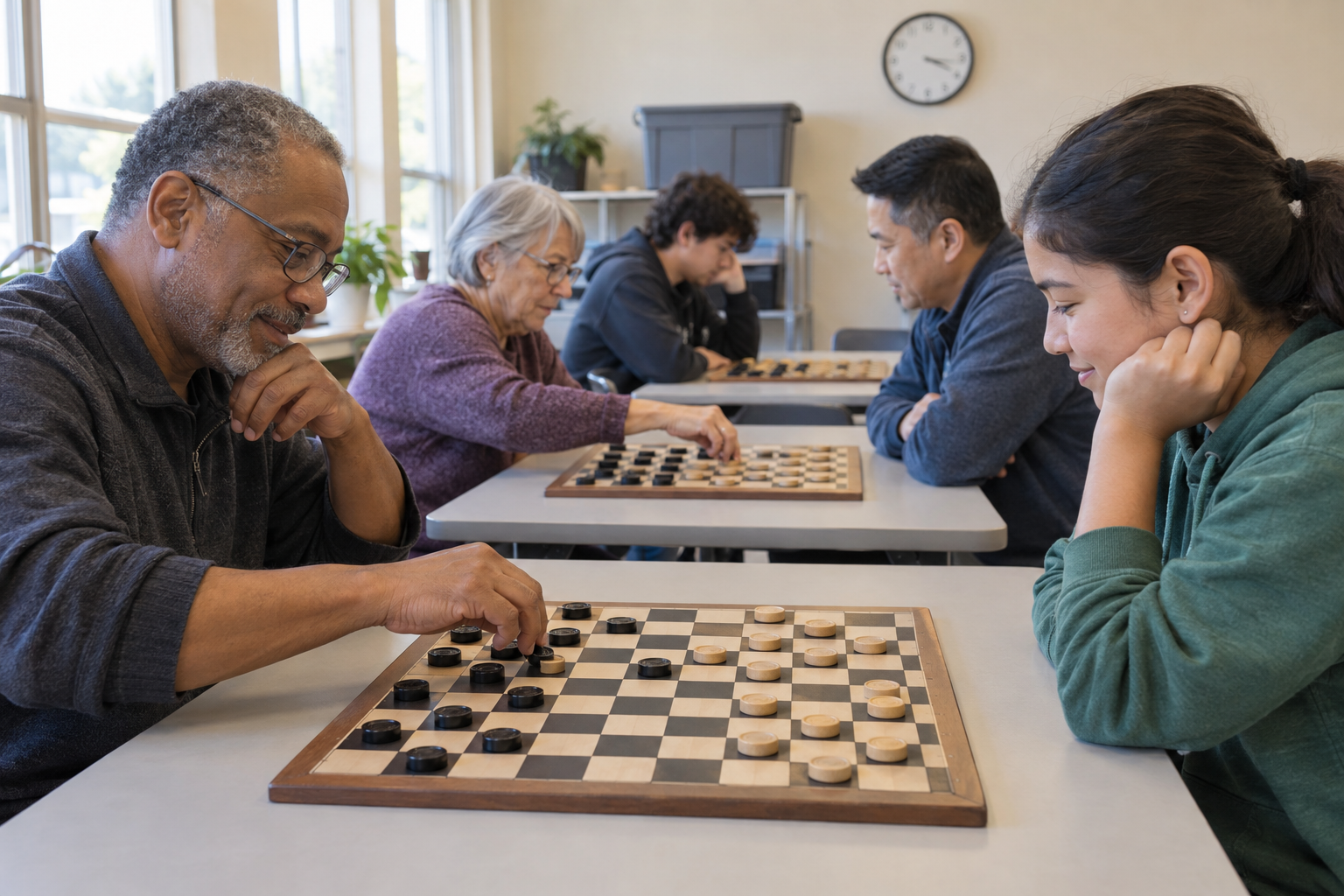
Quick verdict: join, trial, delay, choose an alternative, or skip
- Join when you enjoyed a real session, can attend consistently, understand the costs, and found suitable opponents or beginner help.
- Trial when a guest visit or pay-per-session option lets you test the room and routine without a long commitment.
- Delay when legal moves, required captures, or king movement still stop you from completing a friendly game.
- Choose an alternative when you mainly need rules instruction, a flexible opponent, or occasional social play rather than scheduled club sessions.
- Escalate to the organizer when you need clarity about minors, accessibility, supervision, accommodations, conduct, refunds, or competition rules.
- Skip when the travel, schedule, atmosphere, or recurring cost makes attendance unlikely.
Check these criteria before joining
| Decision check | Good fit | Reason to pause |
|---|---|---|
| Beginner welcome | The organizer explains how new players are paired and helped. | “All levels” is advertised, but nobody can describe a first visit. |
| Ruleset | The group names its version and explains captures, kings, board size, and local procedures. | You are expected to know unfamiliar rules without guidance. |
| Session format | Casual games, lessons, ladders, or events match what you want. | You want teaching, but sessions consist only of independent games. |
| Attendance | The meeting time and travel work often enough to build a routine. | You would pay for many dates you already know you will miss. |
| Complete cost | Dues, guest fees, travel, optional events, and equipment expectations are clear. | Extra charges or renewal terms appear only after registration. |
| Room fit | Seating, lighting, noise, access, and session length are comfortable. | A practical need is dismissed or cannot be confirmed. |
Cost, setup, and maintenance tradeoffs
Calculate the likely cost per visit, not merely the annual fee. Add registration, transport, parking, optional event charges, refreshments, and any required supplies, then divide by the number of sessions you can realistically attend. A free group can still be a poor fit if the trip consumes the evening; a modest fee can be reasonable when the venue is convenient and you use the sessions.
Ask whether boards and pieces are supplied. Most beginners do not need special club equipment. If you must bring a set, prioritize a readable 8-by-8 board, clearly contrasting pieces, easy king stacking or marking, and a container that keeps the full set together. The beginner checkers set guide explains those product-category tradeoffs without assuming club-grade extras are necessary.
Use one visit as a fit test
- Read the beginner checkers rules pillar and learn which ruleset the group uses.
- Ask what happens at a normal session, whether guests may attend, and whether equipment is provided.
- Play at least one ordinary game. Notice whether opponents explain unfamiliar procedures without taking over your moves.
- Observe the actual pace, room, match pairing, breaks, start time, and finish time.
- Afterward, decide whether you want that repeatable routine—not merely whether one game was enjoyable.
Red flags
- Fees, renewal dates, visitor access, refunds, or cancellation terms cannot be stated clearly.
- The organizer presents one checkers variant as universal but cannot explain which rules the group follows.
- Beginners are pressured into paid membership, events, travel, or equipment before seeing a normal session.
- Questions about conduct, accessibility, minors, supervision, or who handles concerns are brushed aside.
- The advertised beginner welcome does not match the level or tone of the session.
- Improvement, rankings, or competition results are promised rather than described as possibilities.
Who should skip a checkers club?
- A first-day player who needs step-by-step rules teaching that the group does not offer.
- Someone who wants occasional play but would be paying recurring dues for an unused calendar.
- A learner whose preferred checkers variant is not supported and who does not want to switch.
- A player who prefers a quiet home routine, flexible online games, or family play.
- Anyone who cannot get clear answers about the policies or accommodations that matter to them.
Alternatives that solve a narrower problem
Choose family games or a library drop-in when you want friendly opponents without membership. Use a free rules guide and one familiar partner when legal moves are still the obstacle. A paid app may fit short, flexible solo sessions; use the paid checkers app decision before accepting recurring terms. A structured course may suit someone seeking a sequence of lessons rather than a social playing group, while a strategy book can support self-paced study between games.
Bottom line
A local checkers club earns a beginner's time or dues when its real sessions are welcoming, its ruleset and format fit the learner, and attendance is practical. The safest decision is a guest visit followed by a calculation based on realistic use.
Join after the fit test, delay while the basic rules or logistics remain unsettled, choose a flexible alternative when scheduling is the main problem, and skip when unclear terms or an unwelcoming atmosphere outweigh the benefit of regular opponents.