
Private chess lessons can be worth it when an absolute beginner has a specific obstacle, likes the instructor's sample teaching, and will practise between meetings. Try one lesson before buying a package. Delay when the learner still needs the basic rules or has no repeatable practice time, and skip when a free guide, group class, club, or beginner book solves the same problem.
One-to-one attention is a format, not a guaranteed result. The useful question is whether a particular instructor can address a clear need under terms you understand. This guide does not rank instructors or promise rating gains.
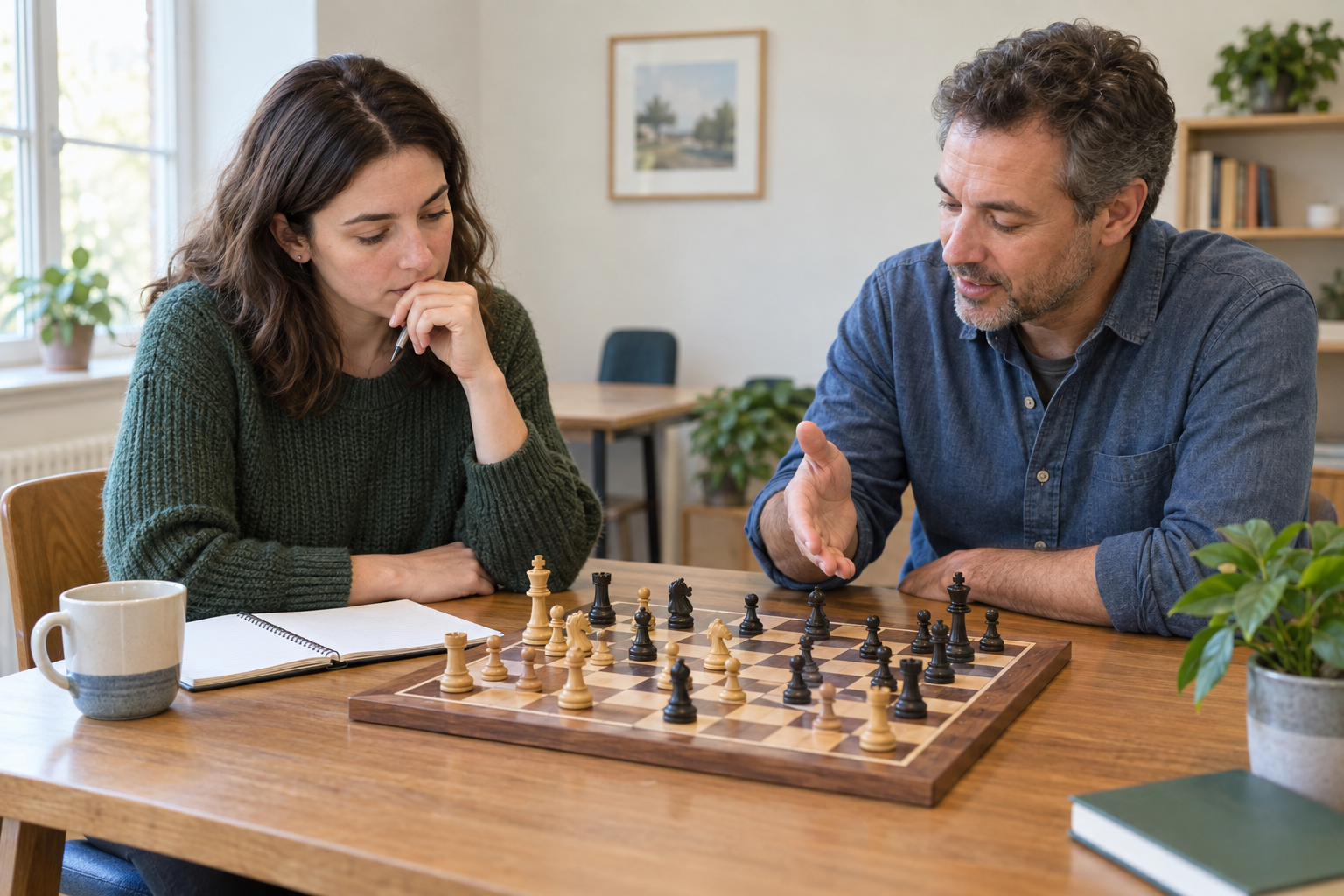
Quick verdict: book, trial, delay, or skip
- Book a short series after a useful trial when the goal, meeting schedule, practice plan, full cost, and cancellation terms are clear.
- Try one lesson when you want feedback but do not yet know whether the instructor's explanations or pace fit.
- Choose a group class or club when regular games and social practice matter more than individual attention.
- Delay when piece movement, check, checkmate, or completing a legal game still requires frequent help.
- Skip when there is no specific learning problem, practice time is unlikely, or paying would strain the budget.
Start with the problem a lesson must solve
“Get better at chess” is too broad to evaluate. A useful first goal might be finishing games without illegal moves, spotting when the king is in check, understanding why pieces are left undefended, or reviewing two confusing moments from a recent game. State the goal before booking and ask how the lesson would work on it.
If the learner has never played a complete game, first use the beginner piece-movement guide and play several slow games. That free step often reveals whether the real need is rules clarity, more practice, or personal feedback.
Seven checks before paying
- Teaching sample: Ask for a trial, sample explanation, or clear description of a typical first lesson. Promotional claims are not a teaching sample.
- Beginner fit: Ask what knowledge is assumed and whether the instructor regularly teaches people at your current stage. Verify any credentials that matter to you through the named issuer.
- Lesson plan: Confirm the likely length, format, materials, and what the learner should practise afterward.
- Complete cost: Check the current lesson charge, package rules, platform or travel costs, materials, and payment schedule directly with the provider.
- Policies: Read cancellation, rescheduling, missed-lesson, refund, recording, privacy, and communication terms before paying.
- Practical access: Confirm location or technology, scheduling, accessibility needs, and who supplies the board or digital tools.
- Appropriate arrangements: For a child or vulnerable learner, a parent or responsible organizer should verify supervision, communication, location, and safeguarding arrangements directly. Do not infer them from a profile.
Use one trial lesson as a real test
Bring one completed game, one rules question, or one position that caused confusion. During the lesson, notice whether unfamiliar terms are explained, the learner is asked to make decisions, and feedback leads to a small task that can be repeated alone. Afterward, the learner should be able to say what to practise next.
A pleasant conversation can still be a poor fit if the content is too advanced, the learner mostly watches, or the next step is vague. Conversely, a simple lesson on legal moves may be exactly right if it removes a recurring obstacle. Judge the match to the stated goal, not the amount of material covered.
Calculate value over a month, not one hour
Add lesson charges and any travel, platform, or required-material costs. Then estimate realistic practice sessions between lessons. Paying for weekly instruction while practising rarely may be less useful than meeting less often and completing the assigned work. Do not prepay for a large package merely because the per-lesson figure is lower.
Set a review point after one to three lessons. Ask whether the original problem is clearer, whether the practice tasks are being completed, and whether the format still fits the budget. Improvement is not guaranteed, so use observable routine and clarity—not promised outcomes—as the decision test.
When another path fits better
Use a free guide for setup, legal moves, check, and the first complete games. Choose a group class when a shared beginner sequence and lower individual cost matter more than tailored feedback; use the adult beginner group-class decision to check syllabus, participation, attendance, and total commitment. Try a club when the main need is regular opponents; first decide whether a local chess club membership is worth it. Choose a course or book when the learner mainly needs an ordered curriculum and can study independently; compare the online-course decision or use the beginner chess book guide.
If a readable physical board would make any of those routes easier, the absolute-beginner chess set guide explains piece recognition, board clarity, storage, and skip criteria.
Reasons to walk away
- Guaranteed rating gains, wins, scholarships, titles, or a fixed improvement timeline.
- Pressure to buy a large package before a trial or before current terms are available.
- Unclear fees, cancellation rules, communication boundaries, or lesson arrangements.
- Dismissive answers to beginner questions or teaching that repeatedly starts above the learner's level.
- Credentials or affiliations that cannot be checked with the named organization.
- No practical work between lessons, or assignments that the learner cannot understand independently.
Bottom line
Private chess lessons are most defensible when a beginner can name the problem, test the teaching first, afford the complete arrangement, and practise between meetings. Start with one lesson, verify every current term with the provider, and review the fit after a small number of sessions.
Delay when the learner still needs free rules help or a stable practice habit. Skip when individual instruction does not solve a clear problem. The planned beginner-chess pillar is not yet built, so the site's guide library remains the main route to rules, study formats, clubs, boards, and beginner equipment.