
How to Set Up a Beginner-Friendly Chess and Checkers Station for a Classroom or Club
A practical guide to arranging boards, pieces, rule cards, storage, and beginner pairings so chess and checkers feel welcoming in classrooms, clubs, libraries, and after-school spaces.
A chess and checkers station can look simple from the outside: put a board on a table, add pieces, and let people play. In a classroom, library, club, or after-school room, though, the small setup choices matter. If pieces are hard to tell apart, rules are unclear, boards are too crowded, or beginners feel watched too closely, the station can become intimidating instead of inviting.
The goal is not to create a serious tournament corner. The goal is to make a place where a new player can sit down, understand what is available, and start a game without needing a long explanation first.
As an Amazon Associate, The Good Chess & Checkers may earn from qualifying purchases.
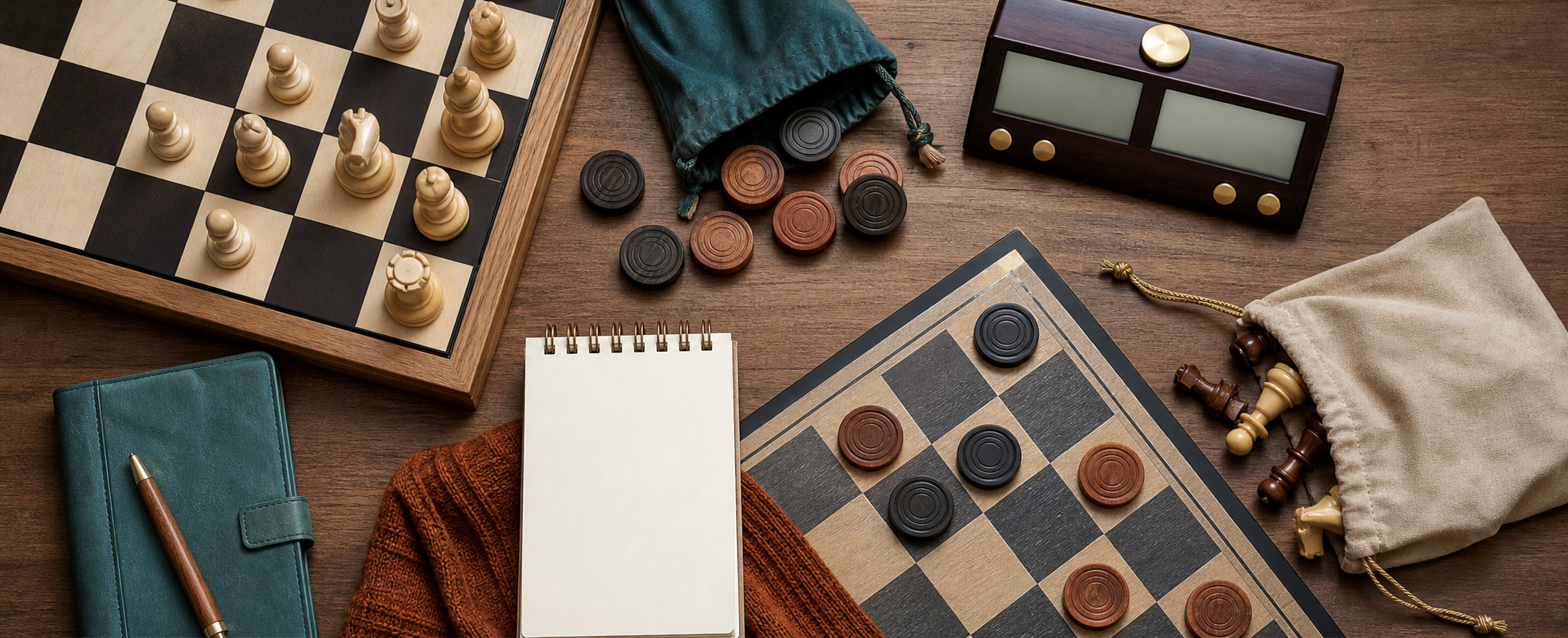
Product-first guide
Shop classroom and club supplies
Start with durable boards, repeatable pieces, and quick storage, then use the setup guide to decide quantities and station layout.
Helpful product path
Shop classroom and club supplies
Use the links below to compare durable classroom gear, then match quantities and storage to the number of players you support.
Start With the Kind of Play You Want to Support
Before buying or arranging anything, decide how the station will usually be used. A lunchroom chess and checkers table needs different choices than a quiet club shelf or a classroom rotation center.
For casual drop-in play, prioritize fast setup, durable pieces, and clear storage. For teaching, prioritize readable boards, extra queens for chess promotion, spare checkers, and simple rule references. For younger players, prioritize pieces that are easy to grip and hard to scatter. For mixed ages, choose equipment that does not make either game feel like an afterthought.
This matters because chess and checkers share the same board pattern, but they do not create the same practical problems. Chess has many piece types and more setup mistakes. Checkers has fewer piece types, but kings, captures, and local rule variations can still confuse beginners.
Use Boards That Are Easy to Read From Across the Table
For a shared station, readability beats novelty. Look for boards with strong contrast between light and dark squares, markings that are not distracting, and a size that gives hands room to move pieces without knocking everything over.
A very small board can work for travel, but it is not ideal for a classroom or club table where two beginners may lean in, point, ask questions, and reset positions. A very large board can be fun for demonstration, but it may take up too much table space if several players need to share the area.
A practical station usually works best with standard-looking boards that are large enough to read comfortably but not so large that one game takes over the whole table. If the same board will serve both chess and checkers, make sure the squares are large enough for the chess pieces first; checkers pieces are usually more forgiving.
Keep Chess Pieces and Checkers Pieces Separate
One of the easiest ways to make a shared station messy is to toss everything into one bin. It saves time at cleanup, but it costs time every time someone wants to start a game.
Use separate containers for chess pieces and checkers pieces. Clear bins, labeled bags, or divided storage boxes all work. The important part is that a beginner can tell where each game begins. If possible, keep one complete chess set and one complete checkers set paired with each board.
For chess, include all 32 pieces and consider keeping extra queens if your sets provide them. A pawn that reaches the far side of the board can become a queen in normal chess play, and beginners often ask what to use when the original queen is still on the board. For checkers, make sure there are 12 pieces per side for each board, plus a few spares if pieces tend to disappear.
Add Simple Rule Cards, Not Long Rule Books
A beginner-friendly station should answer the first questions quickly. A full rulebook can be useful elsewhere, but it is often too much at the table.
For chess, a small card can show the starting position and how each piece moves. Define the names before using them: the king moves one square, the queen moves in straight lines and diagonals, rooks move in straight lines, bishops move diagonally, knights move in an L shape, and pawns move forward but capture diagonally.
For checkers, a card can show that pieces move diagonally on dark squares, ordinary pieces move forward, captures jump over an opposing piece, and pieces that reach the far row become kings. It should also mention that checkers rules can vary by house, classroom, or region, especially around forced captures, multiple jumps, and whether regular pieces can capture backward. If your room uses one version, write it plainly on the card.
For cards that match common beginner questions, pair this station setup with how chess pieces move and do you have to jump in checkers?.
Make the First Game Shorter on Purpose
New players often learn more from a short, complete game than from a long game that never finishes. For both chess and checkers, you can make the station more approachable by offering a beginner version alongside the normal game.
For chess, try a first-game goal such as learning setup, playing until one side wins a queen, or practicing checkmate with only a few pieces after a teacher or helper sets the position. Avoid acting as if a beginner must understand every chess rule before touching a piece.
For checkers, beginners can start with fewer pieces or play a guided first game where the focus is on diagonal movement, jumps, and kinging. Once players understand those basics, full games become much smoother.
Arrange Seating So Helpers Can Help Without Taking Over
The physical layout affects the mood. If one confident player stands over the board while a beginner sits, the beginner may feel corrected instead of helped. If helpers can sit beside or near the players, it feels more collaborative.
Leave enough table space for captured pieces, rule cards, and a storage tray. If possible, place the rule card between the players instead of handing it to only one person. That small choice makes the station feel neutral and shared.
For clubs or classrooms, a good rhythm is one helper for several boards, not one helper hovering over one game. The helper can answer questions, reset boards, and encourage players to try moves, while still letting the game belong to the players.
Choose Durable Sets for Shared Use
Shared equipment gets handled more than a family set on a shelf. When choosing sets for a station, look at durability before decoration.
Useful buying criteria include board readability, piece size, piece weight, storage, portability, and age fit. Plastic pieces can be practical because they are light, replaceable, and easy to sort. Wooden sets can feel nicer, but some are less forgiving in busy rooms if pieces chip or storage is awkward. Magnetic sets are helpful when the station may move between rooms, but very small magnetic pieces can be harder for young beginners to handle.
If the station will be packed away every day, storage may matter as much as the board itself. A set that looks good but takes too long to count, fold, and repack may not survive regular classroom or club use.
For equipment choices, compare the classroom needs here with best chess and checkers sets for beginners, especially the durable classroom and club categories.
Post a Few Table Habits
Clear habits help beginners feel safe. Keep them short and positive.
- Set up the board before starting.
- Ask before giving advice during someone else's turn.
- Put captured pieces beside the board.
- Reset the pieces before leaving.
- Use the rule card when players disagree.
These habits work for both chess and checkers. They also avoid the common problem where the loudest or most experienced player becomes the rule authority for everyone else.
Plan for Rule Questions Before They Happen
Some questions will come up again and again. In chess, beginners may ask about castling, check, checkmate, stalemate, pawn promotion, and en passant. You do not need all of those on a first rule card, but you should know where to point players when the question appears.
In checkers, beginners may ask whether jumps are required, whether multiple jumps must continue, whether kings can move more than one square, and whether regular pieces can jump backward. Because different checkers traditions use different rules, the station should name the local house rule instead of pretending every table plays the same way.
If your classroom, club, or family group wants consistency, write a one-page house rules sheet and keep it near the station. Keep the tone practical: “For this station, we play this way.”
A Simple Starter Setup
For a small classroom or club corner, a strong starter setup might include two readable chess/checkers boards, two full chess sets, two full checkers sets, labeled storage, a chess setup card, a checkers movement card, and a small tray for captured pieces.
If the group grows, add more boards before adding novelty items. More playable seats usually help beginners more than one impressive display board that only a few people can use.
The Best Station Is the One People Can Use Without Permission
A good chess and checkers station should invite play without making beginners feel like they need to pass a test first. Clear boards, sorted pieces, short rule cards, and calm table habits do more than make the area tidy. They lower the social cost of trying.
When chess and checkers are both treated as worth learning, the station becomes more flexible, more welcoming, and easier to keep active. That is the real win for a classroom, club, library, or family game corner.
For more practical articles, visit The Good Chess & Checkers blog. For more on our editorial approach, read About The Good Chess & Checkers.