
The best chess board for a beginner is easy to read, large enough for the pieces, and simple to store where it will actually get used. A board that looks impressive but crowds the pieces, glares under a lamp, or needs a second storage plan can make the first few games harder than they need to be.
This guide compares chess board categories rather than ranking products by hype. It does not claim hands-on testing, current prices, ratings, tournament approval, or live availability. If the buyer wants one box that also includes checkers pieces, compare chess set vs chess and checkers combo set before choosing a chess-only board.
As an Amazon Associate, The Good Chess & Checkers may earn from qualifying purchases.

Product-first guide
Shop beginner chess board categories
Compare current boards by square size, contrast, coordinates, material, and whether the pieces you already own will fit comfortably.
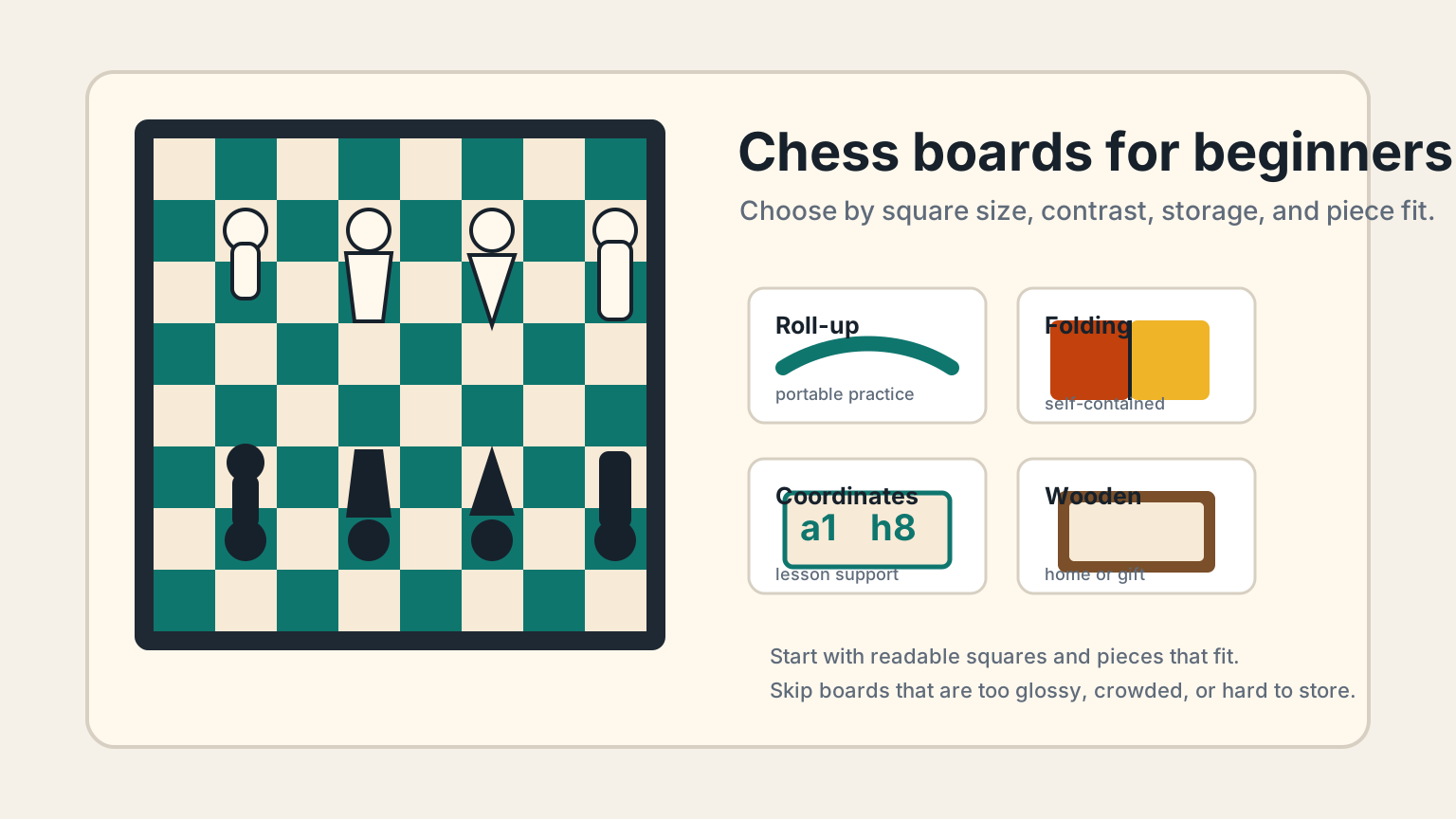
Shop chess board options
Use these product paths as comparison starting points, then check the current listing details against the criteria below.
How to Judge a Beginner Chess Board
A beginner board has one job: make the position clear enough that the player can think about moves instead of fighting the equipment. Use these checks before buying a board by style or price.
- Square size: pieces should sit comfortably on the squares without crowding neighboring pieces in the middle of the game.
- Piece-base fit: if you already own pieces, compare the king base and the board square size before buying.
- Readable contrast: the light and dark squares should be distinct without glare, busy patterns, or low-contrast novelty colors.
- Storage path: board-only purchases still need a place for pieces, captured pieces, and any rule card or lesson sheet.
- Coordinates: rank-and-file labels help with books and lessons, but they should not clutter the board for a true first game.
- Checkers limits: a chess board can sometimes host checkers, but it will not solve checker storage, stacking, or replacement-piece needs by itself.
Best Overall: A Readable Vinyl Board with Coordinates
A vinyl board with clear coordinates is the best first board for many beginners who are buying a separate chess board. It is practical, easy to store, and useful for lessons because the labels help players follow moves such as e4, Nf3, or Qh5 once notation enters the picture.
Look for square colors that are easy to distinguish, labels that are visible without being distracting, and a board that rolls or stores flat enough for regular use. If the player is still learning the piece names, keep the first games calm and use how chess pieces move beside the board.
Best for: students, club learners, families using lesson books, and beginners who need a low-fuss practice board.
Skip it if: the buyer wants a display board that stays out in a living room or one box for chess and checkers together.
Best for Home Practice: A Wooden Chess Board
A wooden chess board can be a good home choice when the board will stay on a table, shelf, or desk. It feels more permanent than a roll-up board and can make casual practice more inviting if the squares are still readable.
Do not choose wood only because it looks giftable. Some decorative boards use glossy finishes, low contrast, or square sizes that do not match beginner-friendly pieces. A plain readable wooden board is usually better than a dramatic board that makes bishops, queens, and pawns harder to spot.
Best for: home practice, gifts for new chess players, coffee-table play where readability still matters, and adults who want a board that can stay out.
Skip it if: portability, classroom storage, or low replacement cost matters more than display appeal.
Best for Classes and Clubs: A Roll-Up Board
A roll-up board is the practical club and classroom standard for a reason: it stores compactly, works well in duplicate sets, and can pair with durable plastic pieces. For a deeper material breakdown, use best roll-up chess boards for beginners.
For this broader board decision, the key question is whether a roll-up board solves the buyer's real problem. It is excellent for repeat setup, lesson tables, and club bags. It is less ideal when a family wants one tidy game box or a board that looks settled in a living room.
Best for: classrooms, clubs, library programs, students, and buyers who need practical duplicate boards.
Skip it if: the board will be used mostly as a family gift, a display piece, or a shared chess-and-checkers set.
Best Self-Contained Choice: A Folding Board
A folding chess board makes sense when storage is the main headache. Some folding boards include interior storage for pieces, while others are board-only formats that simply fold smaller. Either way, check the hinge, board flatness, and whether the center fold interrupts normal piece movement.
If checkers is part of the plan, a chess-and-checkers folding set may be more useful than a chess-only folding board. Compare the set format in best folding chess and checkers sets before assuming a chess board alone is enough.
Best for: families with limited shelf space, gift buyers who want contained storage, and casual players who do not want a roll-up board.
Skip it if: the hinge creates a raised center line or the interior storage forces pieces into a crowded jumble.
Best for Lessons: A Coordinate Board
A coordinate board labels the files and ranks around the edge, which helps beginners follow diagrams, books, online lessons, and club instruction. Coordinates are especially useful once the learner understands basic piece movement and starts hearing square names.
The labels should be clear but secondary. If the coordinate text overwhelms the squares, makes the edge visually busy, or uses tiny low-contrast letters, it can distract a true beginner. For families that also want rule reminders, pair the board with chess and checkers rule cards for families.
Best for: lesson books, club instruction, parent-child practice, and learners starting chess notation.
Skip it if: the player is still working on the names and movement patterns of the pieces.
Best Compact Choice: A Small Desk Board
A compact desk board can work for dorm rooms, small apartments, and players who want a board near a study space. The caution is crowding. Beginners need room to see threats, captures, and legal moves, so a tiny board can make chess feel harder than it is.
Choose compact only when the pieces still fit comfortably, captured pieces have somewhere to sit, and the board contrast remains clear. If the buyer also needs travel piece stability, a magnetic set may be a better match; compare best magnetic chess and checkers sets for travel.
Best for: desks, dorms, small practice tables, and adults who already know they prefer a smaller footprint.
Skip it if: kids, grandparents, classrooms, or true first-game beginners need larger pieces and a calmer board.
Quick Comparison Framework
- Choose vinyl with coordinates when you want a practical first lesson board.
- Choose wood when the board will live at home and still needs strong contrast.
- Choose roll-up when storage, clubs, classes, or duplicate boards matter most.
- Choose folding when the board needs to store neatly with minimal setup friction.
- Choose coordinates when books, lessons, or notation are part of the plan.
- Choose compact only when the smaller footprint does not crowd the pieces.
Who Should Skip a Board-Only Purchase?
Skip a board-only purchase if the buyer does not already have chess pieces that fit. A board and mismatched pieces can be more frustrating than a modest complete set. For true first purchases, best chess sets for absolute beginners may be the better starting point.
Also skip a chess-only board if checkers is equally important and the family needs stackable checkers, storage, and clear kinging support. In that case, compare best chess and checkers sets for beginners or best checkers sets for beginners instead.
Bottom Line
For most beginners buying a separate chess board, start with a readable vinyl board with coordinates or a simple wooden board that fits the pieces well. Move toward roll-up, folding, coordinate-focused, or compact boards only when the setting clearly calls for those tradeoffs.
The right board should make chess feel easier to see and easier to restart tomorrow. If it creates storage problems, crowds the pieces, or leaves checkers needs unsolved, choose a complete set instead.