
A beginner chess scorebook should make recording a game feel simpler, not add a second puzzle beside the board. The most useful formats provide roomy move columns, obvious spaces for both players, and just enough prompts to help a new player review the game later.
This is a category comparison, not a hands-on product ranking. We have not tested the books returned by the shopping links, and we do not claim that any scorebook meets a tournament, club, school, or federation requirement. Check the seller's current photos, page count, dimensions, binding, and sample layout before buying.
As an Amazon Associate, The Good Chess & Checkers may earn from qualifying purchases.
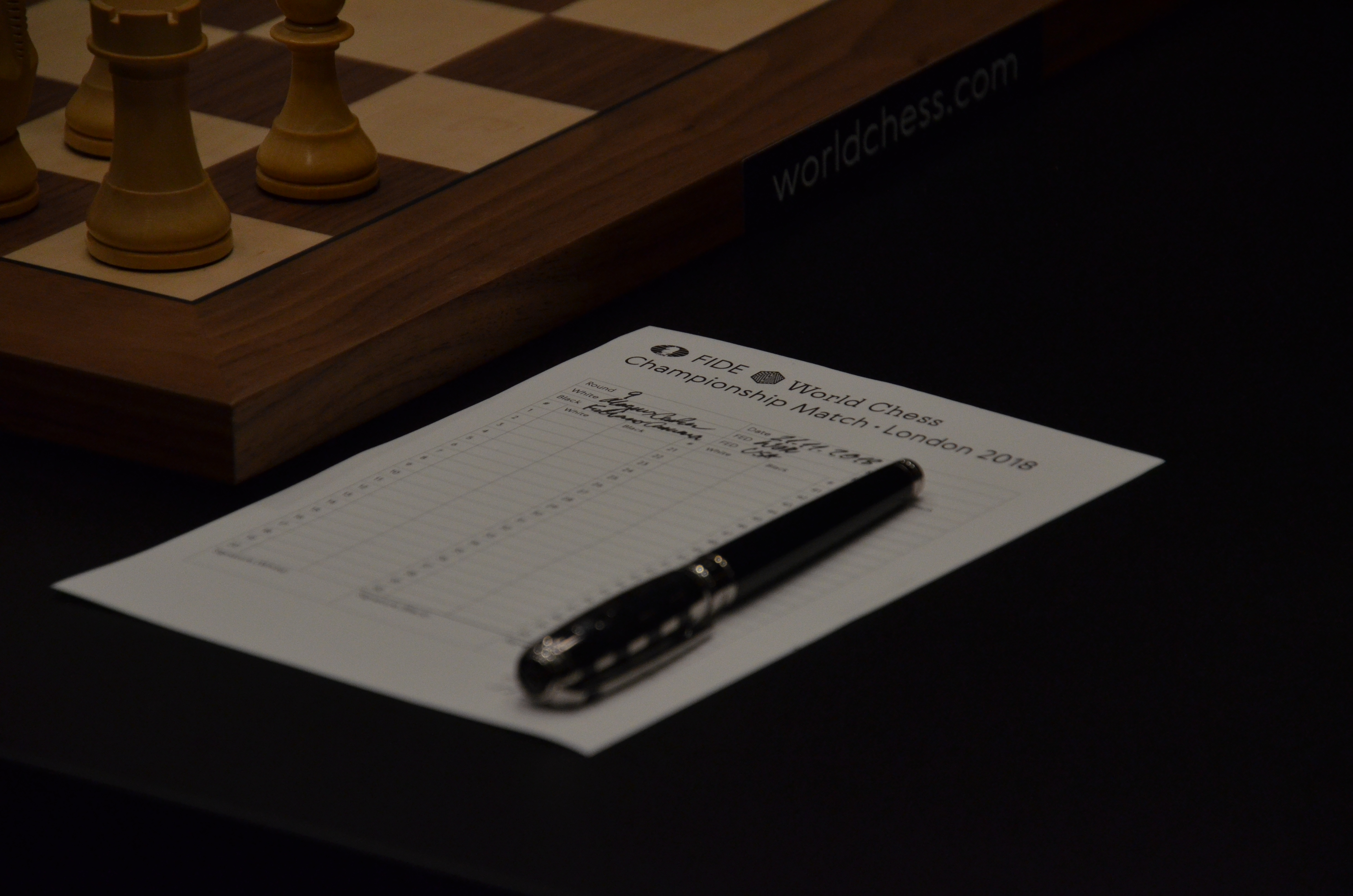
Choose by page layout
Compare the inside pages before the cover
Look for a visible sample page with comfortable writing space. A compact book is only useful if the learner can record both players' moves without crowding.
What to Look for in a Beginner Chess Scorebook
- Clear move pairs: each numbered row should give separate spaces for White's move and Black's move.
- Enough writing room: longer notation such as captures, checks, and promotions should fit without squeezing into the next row.
- Useful game details: player names, date, color, result, and optional event or opening fields make a game easier to find later.
- A practical binding: spiral or lay-flat formats are easier to keep open beside a board; stitched or glued books may pack more neatly.
- Sensible capacity: a learner does not need hundreds of games if the large book will never leave the shelf.
- Minimal distractions: reference pages can help, but tiny diagrams and dense theory should not take space away from recording games.
Best Overall Format: Roomy Two-Column Bound Scorebooks
For most beginners, the safest choice is a bound scorebook with one numbered line per full move and clearly labeled columns for White and Black. The page should be easy to scan from left to right, and the first page of each game should include a few basic details without turning into a form-filling exercise.
A bound book keeps games in order and is harder to scatter than loose sheets. It also makes progress visible: the learner can revisit an early game, reconstruct it on a board, and notice recurring missed captures or pieces left undefended. If the listing does not show an inside page, keep looking; the layout matters more than the cover design.
Best for: beginners who play regular practice games at home or in a casual club and want one durable record.
Skip it if: the book will not stay open, the lines are too narrow for the learner's handwriting, or most games will be recorded digitally.
Best for Writing Comfort: Spiral-Bound Scorebooks
A spiral binding lets the book lie flat and can fold the unused side behind the active page. That is helpful on a crowded table where a clock, captured pieces, and drinks already compete for space. Left-handed writers may also prefer a top-bound or carefully positioned spiral to avoid resting a hand on the coil.
The tradeoff is portability. Exposed coils can catch inside a bag, and a wide book may be awkward beside a compact travel board. Compare the closed dimensions with the table and carrying bag you actually use.
Best for: learners who value flat pages, larger writing spaces, and easy use beside a full-size board.
Skip it if: the coil looks vulnerable in a packed backpack or the book is wider than the available playing surface.
Best for Guided Review: Scorebooks with Notes or Diagram Space
Some scorebooks reserve room for a short post-game note, opening name, turning point, or board diagram. These prompts can make the record more useful when they remain simple. A beginner might write “lost a rook after move 18” or draw one position to rebuild later.
More prompts are not automatically better. Evaluation symbols, opening codes, and dense analysis boxes can intimidate someone who is still learning algebraic notation. Choose a layout that leaves the move record as the main feature.
Best for: learners who routinely review games with a parent, teacher, friend, or chess book.
Skip it if: the prompts shrink the notation area or make every casual game feel like homework.
Best for Occasional Practice: Tear-Off Scoresheet Pads
A pad of individual scoresheets is useful when several people share supplies or when a learner wants to file selected games in a folder. A full sheet can offer generous writing room without requiring a thick notebook on the table.
Loose pages need a system. Add the player's name and date immediately, then keep completed sheets in a folder or scan them. Without that habit, a bound scorebook is the better choice because the archive creates itself.
Best for: family practice stations, casual teaching sessions, and groups that distribute paper to several boards.
Skip it if: loose paper is likely to be lost, mixed between players, or damaged in a bag.
Best for Travel: Pocket Scorebooks
A pocket scorebook can work when the same small bag carries a compact chess set. Confirm that the page still provides distinct move columns and that the print is readable. Portability is not a win if the learner cannot comfortably write notation such as Rxe5+ or exd8=Q.
Best for: players with small handwriting who record games away from home and prioritize a compact kit.
Skip it if: the learner writes large, needs visual prompts, or wants to add review notes beside each game.
Quick Comparison Framework
- Choose a roomy bound scorebook for the simplest all-purpose practice record.
- Choose spiral binding when flat pages and writing comfort matter most.
- Choose review prompts when the learner already has a habit of replaying games.
- Choose a scoresheet pad when supplies are shared or pages will be filed separately.
- Choose a pocket book only after confirming that the notation lines remain usable.
Who Should Skip a Chess Scorebook?
Skip a scorebook for now if writing down moves interrupts the learner so much that they stop enjoying or understanding the game. First practice coordinates on a board, name the starting and ending squares aloud, and record only a few moves. The guide to chess boards with coordinates explains what makes those labels easy to follow.
Also skip paper if the player already records every game accurately in a chess app and regularly reviews it there. Paper is valuable when the physical act of notation improves attention or creates a useful archive; it is not a requirement for every casual player. Any official event rules should be confirmed with that event's organizer rather than inferred from a retail scorebook.
Bottom Line
The best first chess notation scorebook has a visible, uncluttered two-column layout, comfortable writing space, and a binding that stays manageable beside the board. Start with the page design, not the cover or claimed capacity. A simple book that helps a beginner replay one useful game is better than an elaborate one they avoid opening.