
Pawns are the pieces most likely to disappear from a busy family, classroom, or club practice set. A replacement pack can keep several otherwise complete boards in service, but only when its pawns fit the squares, resemble the surviving pieces, remain easy to handle, and come in the colors and quantities you actually need.
This is a category comparison, not a hands-on product ranking. Listings and pack contents can change, so confirm dimensions, construction, color, and count on the current product page before buying.
As an Amazon Associate, The Good Chess & Checkers may earn from qualifying purchases.
Product-category guide
Match the base and height before the color
Measure a surviving pawn and one board square. Then compare current packs by base diameter, height, weight, finish, quantity, and whether you need one color or both.
Selection Criteria for Replacement Pawn Packs
- Base diameter: measure across the widest point at the bottom of a surviving pawn. The replacement should leave visible space inside one board square and should not crowd neighboring pieces.
- Pawn height: a noticeably taller or shorter pawn can make a practice position harder to scan. Compare actual measurements rather than labels such as standard or tournament size.
- Weight and construction: check whether the surviving pieces are hollow, solid, weighted, magnetic, felted, or pegged. A normal loose pawn is not a reliable substitute for a magnetic or peg-based set.
- Color and finish: ivory, cream, white, black, and brown vary between makers and photographs. Exact matching matters less for casual practice than keeping the two sides unmistakable.
- Quantity: count missing pawns across every board, then leave a small labeled reserve. A complete chess army starts with eight pawns, but packs may contain one color, both colors, or an uneven count.
- Storage fit: confirm that spares fit the existing bag or box without forcing the board or other pieces against a hard closure.
Measure a Practice Set Before Shopping
Place one surviving pawn on paper and mark the widest edges of its base, then measure between those marks. Measure from the tabletop to the highest point for pawn height. Finally, measure one board square edge to edge. Record all three numbers in the same unit so a listing is easy to compare.
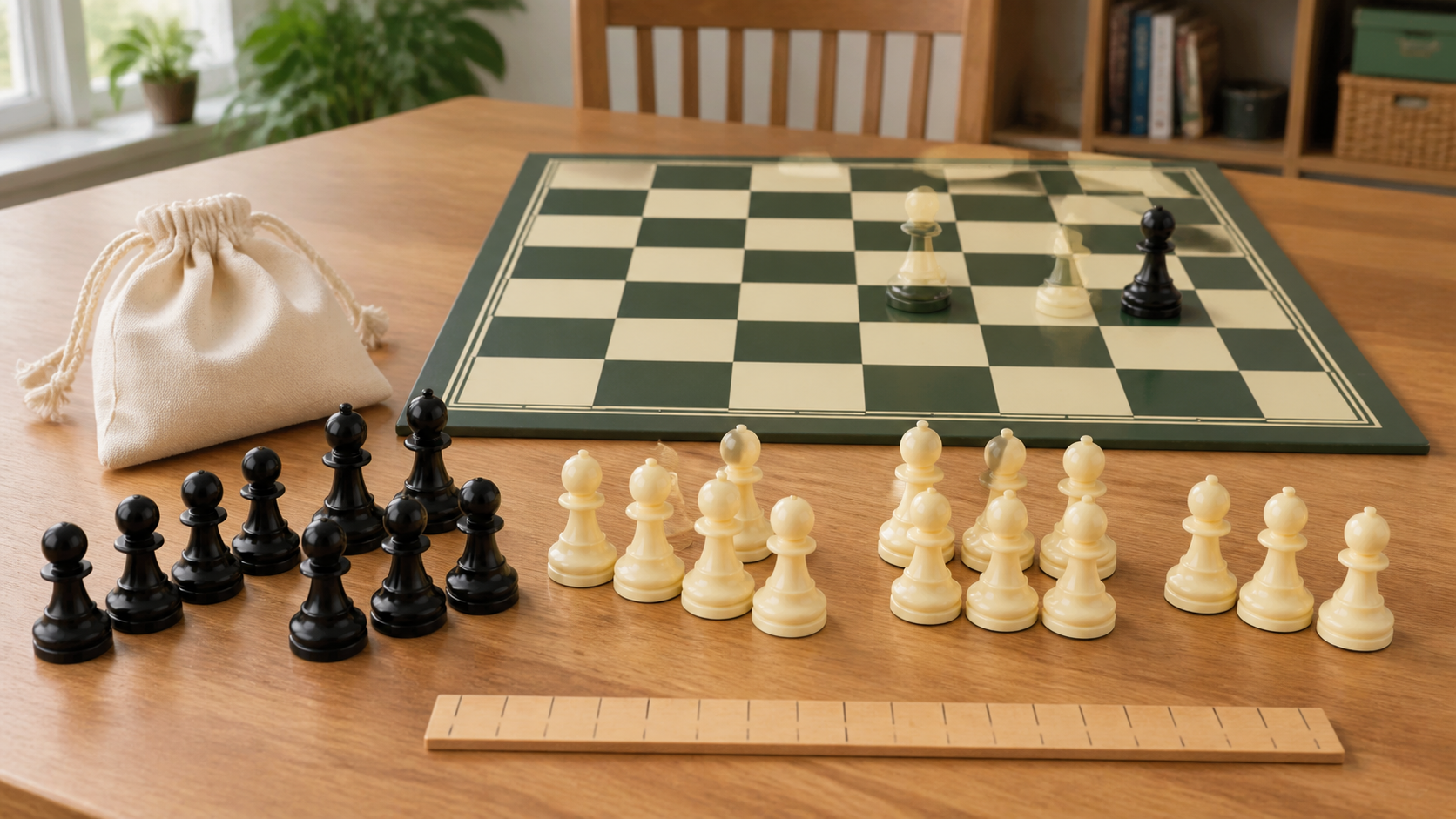
Photograph a surviving light pawn and dark pawn together in neutral daylight. The picture helps compare silhouette and contrast, but it cannot replace dimensions. If practice boards use different piece scales, label the measurements by board rather than assuming one spare pool will work everywhere.
Best Overall Category: Plain Plastic Pawn Packs
For common roll-up boards and general practice sets, plain plastic pawns with a familiar rounded head and flared base are usually the easiest category to integrate. Their simple shape is easy for beginners to recognize, and a modest mismatch in shine is less distracting than a major mismatch in height or base width.
Best for: family, classroom, library, and club sets where function and easy sorting matter more than a display-perfect match.
Skip it if: the original set is magnetic, pegged, unusually small, decorative, or fitted to a molded storage insert.
Best for Multiple Boards: Two-Color Bulk Pawn Packs
A pack containing both light and dark pawns can replenish several standardized boards and provide a labeled reserve. Compare the count per color rather than relying on the total count. Before combining spares, verify that all boards use the same square size and similar piece proportions.
Keep the reserve in its own bag with the compatible board size written on a card. This avoids gradually mixing short, wide pawns with taller, narrow ones during cleanup.
Best for: programs maintaining several matching practice sets.
Skip it if: the boards use mixed scales or only one side needs replacement; extra unmatched pieces can create more sorting work.
Best for One Side: Single-Color Pawn Packs
When losses are concentrated on one color, a single-color pack avoids buying a second group that may never be used. Prioritize shape and dimensions first, then choose a shade that remains clearly distinct from the opposing army. A close visual match is useful but not necessary for ordinary practice when the replacement is easy to identify as a pawn.
Best for: one or two home sets with repeated losses from the same side.
Skip it if: the listing does not state the number of pawns in the chosen color or gives no dimensions.
Best for Weighted Practice Pieces: Matching Weighted Pawns
A hollow pawn placed among weighted pieces can feel unusually easy to knock over. If the existing set is weighted, look for a stated weight or construction detail and compare it with a surviving pawn. Do not assume that felt on the base means a piece is weighted.
Best for: practice armies where consistent stability and handling are important.
Skip it if: the current listing does not explain weight or the original set uses a proprietary balance and storage system.
Best for a Near-Match: Same-Maker or Same-Line Spares
If the maker and product line are known, compatible spare pawns may offer the closest silhouette and finish. Confirm that the listing refers to the same size, not merely the same style name. Product lines can include several king heights and pawn sizes.
Best for: a known practice set where appearance matters and the exact size can be verified.
Skip it if: compatibility rests only on a photograph, color name, or general style label.
Quick Comparison Framework
- Choose plain plastic packs for ordinary non-magnetic practice sets.
- Choose two-color bulk packs when several standardized boards share a spare inventory.
- Choose a single-color pack when only one side is depleted.
- Choose weighted replacements only after confirming construction or piece weight.
- Choose same-line spares when the exact product scale can be verified.
Who Should Skip Pawn-Only Replacement?
Skip pawn packs when several non-pawn pieces are also missing, the two armies are already a confusing mixture, or the board itself is warped or hard to read. The broader replacement chess and checkers pieces guide explains when a complete army is the cleaner fix. If the whole set is uncomfortable or too small, compare chess set categories for absolute beginners instead of preserving a poor setup one piece at a time.
Also skip ordinary replacement pawns for magnetic, peg, electronic, miniature, themed, or fitted-insert sets unless compatibility is explicitly confirmed. A piece that looks right can still fail to attach, store, or sit properly on the board.
Maintain a Small Spare System
After refilling the boards, count eight pawns on each side and place only the remaining compatible spares in a labeled bag. Note pawn height, base diameter, and compatible board square size on the label. For group use, count boards at cleanup and keep spare inventory separate from active sets so a missing piece is noticed rather than silently borrowed from another board.
Bottom Line
The best replacement pawns are the ones whose measurements and construction fit the practice set you already own. Start with base diameter, pawn height, square size, weight, color count, and storage. A plain category pack is often enough for ordinary practice boards, while unusual sets need verified compatibility or a more complete replacement plan.