
How to Play Checkers for Beginners
Checkers is one of the easiest classic board games to start, but beginners still need a few rules to feel confident: where the pieces go, how diagonal moves work, when jumps are required, what kings can do, and how a game is won.
This guide explains common American checkers, also called English draughts, in plain language for families, classrooms, and casual players. Rule details can vary by country, app, or household, so agree on the version before the first move.
As an Amazon Associate, The Good Chess & Checkers may earn from qualifying purchases.
Product next step
Shop checkers sets that fit the rules
Use complete, high-contrast pieces for first games, especially when beginners are learning dark-square movement, jumps, and kinging.
Helpful product path
Shop checkers gear that fits the rule
Compare checkers boards and pieces by contrast, stacking comfort for kings, piece count, and storage before buying.
What You Need
Use an 8-by-8 board with alternating light and dark squares. Each player needs 12 checkers in one color. Most sets use red and black, but any two easy-to-tell-apart colors can work.
Checkers is played only on the dark squares. If the board also has chess coordinates or decorative markings, ignore them for now and focus on the dark diagonal paths.
How to Set Up the Board
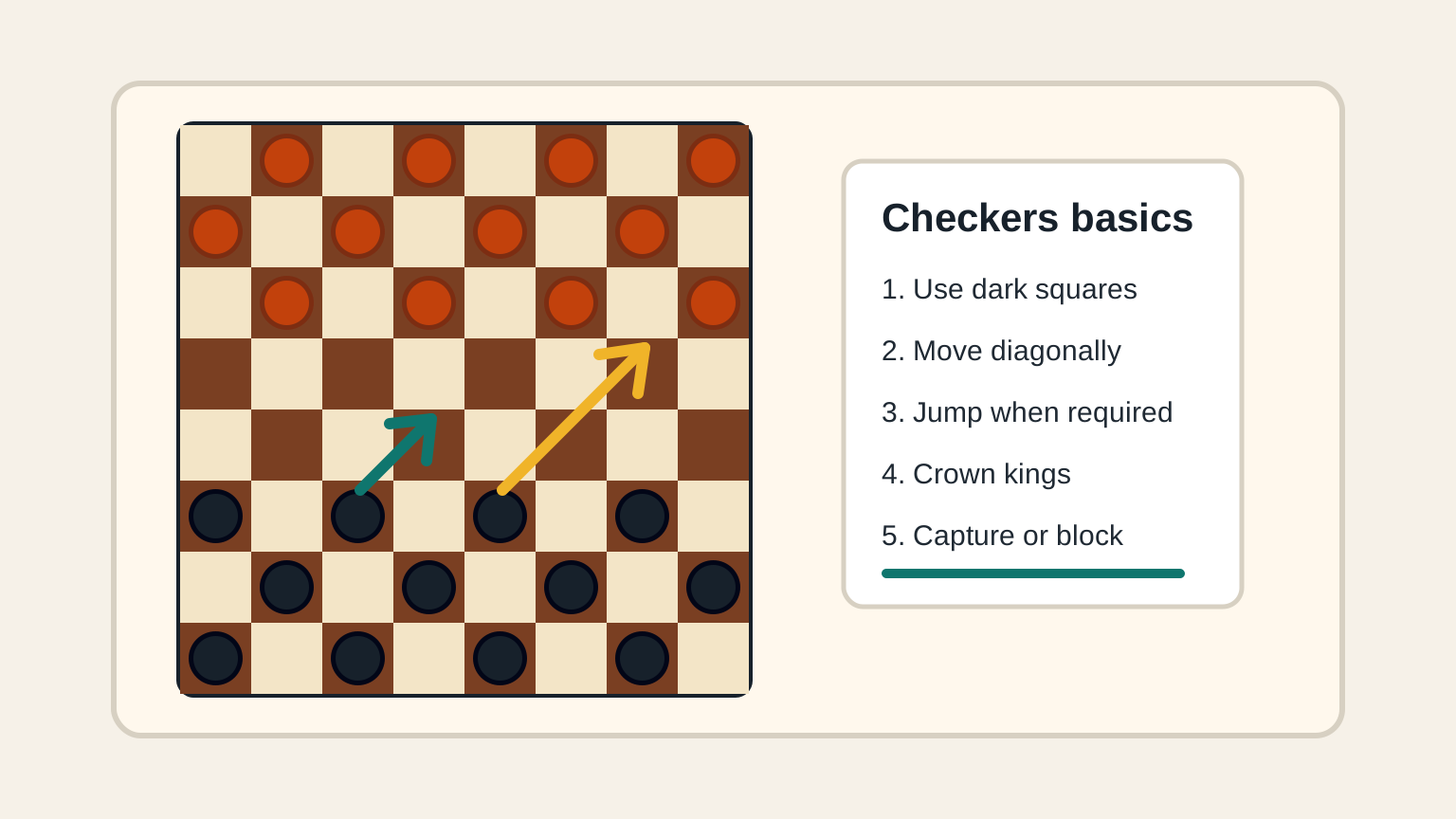
Place the board so each player has a dark square on the left corner closest to them. Put each player's 12 checkers on the dark squares of the first three rows nearest that player. The two middle rows stay empty at the start.
If board setup is still confusing, use how to set up a chess board and checkers board correctly for a side-by-side setup walkthrough.
The Goal of Checkers
The usual goal is to capture all of your opponent's pieces or block them so they have no legal move. You do not need to reach a special square to win, and you do not win just by making a king. Kings help you fight for the win, but they are not the win by themselves.
How Regular Checkers Move
A regular checker moves one dark square diagonally forward. Forward means toward the opponent's side of the board. Regular checkers do not move sideways, straight ahead, or backward in common American checkers.
Because every move is diagonal, checkers always stay on dark squares. If a piece appears to land on a light square, the move was set up incorrectly.
How Jumps and Captures Work
A capture happens when your checker jumps over an adjacent opposing checker and lands on the empty dark square immediately beyond it. After the jump, remove the captured checker from the board.
In common American checkers, if a legal jump is available, you must jump. If the same piece lands and can jump again, it must continue jumping as part of the same turn. For a deeper family-friendly explanation, read do you have to jump in checkers?.
What Makes a Checker a King?
When one of your regular checkers reaches the far row on the opponent's side, it becomes a king. Most families show this by stacking another checker of the same color on top of it.
In common American checkers, a king can move diagonally forward or backward one square at a time. Kings can also jump forward or backward when a legal capture is available. That makes them much more flexible than regular checkers.
One detail matters: in common American checkers, if a regular checker reaches the king row by jumping, it is crowned and that turn ends. Some other draughts variants handle this differently, so check the rules if you are using an app or a rule sheet from another country.
Who Moves First?
In standardized American or English checkers, the dark side moves first. Federation rules use red and white pieces and assign the first move to Red; some books and black-and-white sets call that same side Black. Check the included rules when a set or app uses different colors. For casual teaching games, families can alternate the starting player between games, but that is a learning adjustment rather than the standard rule.
Common Beginner Mistakes
- Moving on light squares: Checkers stay on dark squares for the whole game.
- Forgetting forced jumps: In common American checkers, a legal capture is required.
- Stopping a multiple jump too early: If the same piece can jump again after landing, it keeps going.
- Moving regular pieces backward: Regular checkers move and capture forward only in common American checkers.
- Confusing kings with regular pieces: Kings move both forward and backward diagonally.
Beginner Strategy That Helps Right Away
Start with simple habits instead of advanced traps. Keep pieces connected so one checker protects another. Look for your opponent's possible jumps before moving. Try not to rush every piece to the edge, because edge pieces have fewer diagonal choices.
When you can choose between several captures, pause and ask what the board will look like after the jump. A capture that wins one piece but loses two on the next turn may not be the best path.
Good First Games for Kids and Families
For very new players, play a short practice round with four checkers per side before using all 12 pieces. This makes diagonal movement and jumps easier to see. You can also allow one reminder per player when someone misses a forced jump.
If you are teaching both chess and checkers, keep the sessions short and friendly. How to teach chess and checkers to kids without overwhelming them has mini-game ideas and pacing tips.
Rule Variations to Agree On
Before a family game, agree on these points:
- Are jumps required? In common American checkers, yes.
- If more than one jump is available, can the player choose any legal jump path?
- Do regular checkers capture backward? In common American checkers, no.
- Do kings move one square at a time, or are you playing a variant with longer king moves?
- What happens if someone misses a jump during a teaching game?
Writing these rules on a small card can prevent most beginner arguments.
Choosing a Set That Makes Learning Easier
A readable board helps beginners more than a decorative one. Look for strong contrast between dark and light squares, checkers that are easy to pick up, and pieces that stack neatly for kings. If you are buying a first set, compare best checkers sets for beginners for practical category advice.
Bottom Line
To play checkers, set 12 pieces per player on the dark squares, move diagonally forward, jump when a capture is available, crown pieces that reach the far side, and try to capture or block your opponent's pieces. Keep the first games short, agree on rule variations early, and use a board that is easy to read.