
A chess and checkers combo set is worth it when you want one simple board for casual play, family game night, a first gift, or a shared shelf. It is usually not worth it when one game has a more specific job: serious chess practice, checkers-first play with better stacking pieces, a classroom kit with many boards, or a travel setup that needs magnets and secure storage.
The useful answer is not "combo sets are good" or "combo sets are cheap." The better question is whether one shared 8-by-8 board will make the games easier to start, or whether it will quietly frustrate beginners. For the broader buying framework, pair this verdict with how to choose a chess and checkers set everyone can actually use. If you are checking whether one board can serve both games, read one board for chess and checkers next.
As an Amazon Associate, The Good Chess & Checkers may earn from qualifying purchases.
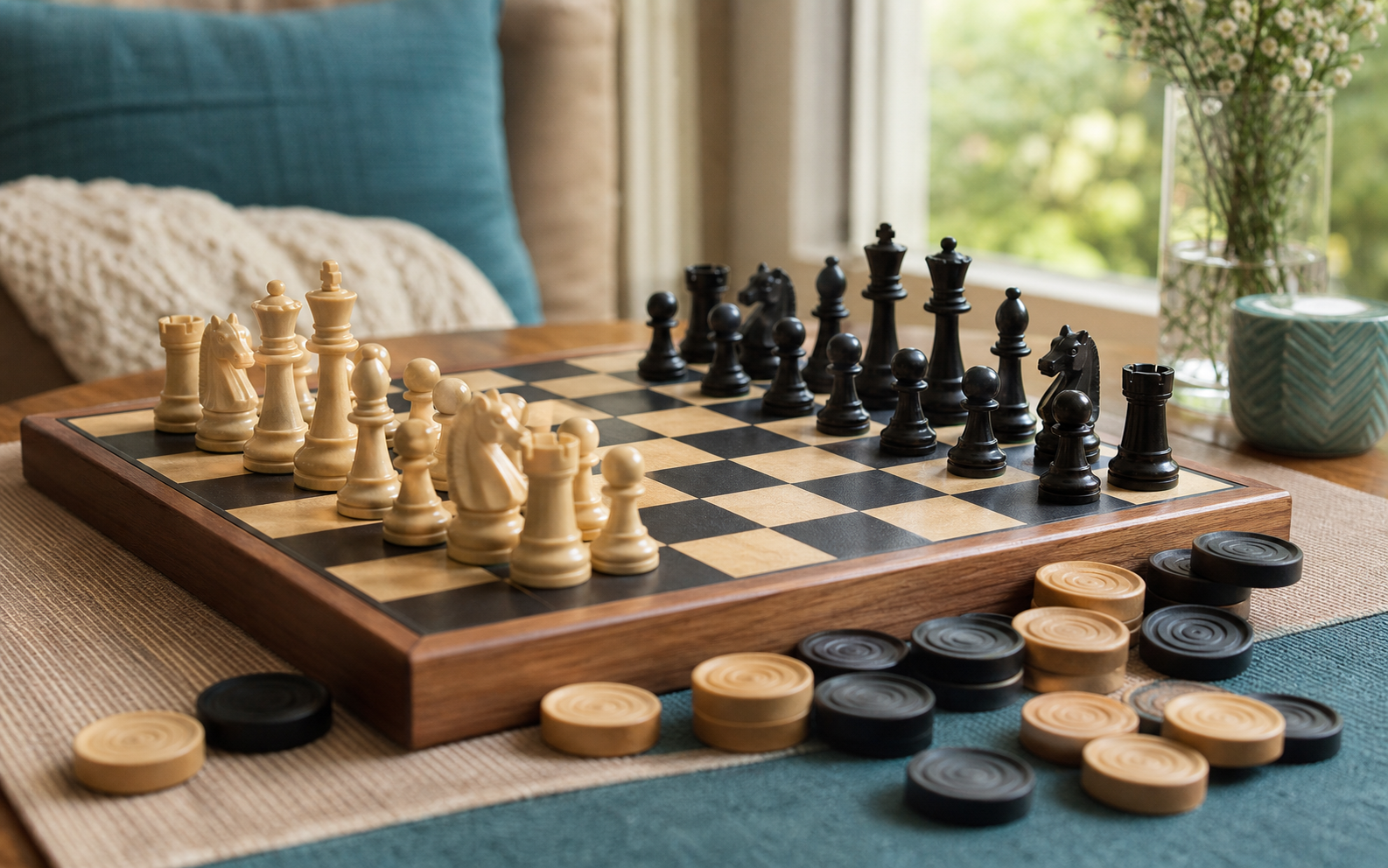
Product-first verdict
Shop combo sets before deciding
Look at current combo sets beside chess-only and checkers-first options, then use the verdict below to decide when one shared box is enough.
Helpful product path
Shop the beginner set criteria
Use these tagged Amazon searches to compare current sets against the sizing, storage, readability, and skip criteria in this guide before choosing.
Quick verdict
Buy a combo set if the goal is casual beginner play, a family shelf, a practical gift, or a low-friction way to try both games without buying several boards.
Skip it if the chess pieces are hard to recognize, the checkers do not stack well, the board is too small, the storage is messy, or the set includes one game as an afterthought.
Delay the purchase if the player is not sure which game they like yet. Borrow a board, use a school or library set, or try short lessons first. Once the preferred setting is clear, the right format is easier to choose.
Choose an alternative if the use case is specific: a roll-up chess board for club-style chess practice, a checkers-only set for clearer crowning, a magnetic set for trips, or multiple durable sets for classrooms and clubs.
When a combo set is worth buying
A combo set makes the most sense when simplicity matters more than specialization. Beginners do not need a perfect board. They need a board that is readable, complete, easy to store, and not annoying to set up.
- For first family games: one box can hold the board, chess pieces, and checkers pieces, which lowers the chance that play stalls before it starts.
- For gifts: a combo set gives the recipient two familiar games without forcing the buyer to guess which one will stick.
- For shared shelves: one set takes less space than separate chess and checkers boxes, especially in apartments, classrooms, waiting rooms, and grandparents' homes.
- For nervous beginners: checkers can be a gentler first game before chess because every starting checker moves the same way.
- For occasional play: casual players usually benefit more from easy setup than from specialized equipment.
When a combo set is not worth it
Combo sets fail when the shared format makes both games feel worse. The most common problems are cramped boards, decorative chess pieces that beginners cannot identify, flimsy checkers that do not stack, and storage that mixes everything into one loose pile.
Skip the combo set if the board is mostly decorative, if the chess pieces crowd the squares, or if the checkers pieces are too thin to crown clearly. Also skip it if the buyer already knows the main goal is chess club practice, checkers-focused play, or a group setup that needs many matching boards.
Red flags before you buy
- Unclear piece shapes: beginners should be able to tell the king, queen, bishop, knight, rook, and pawn apart quickly.
- Tiny board squares: cramped chess pieces make legal moves harder to see, especially for new players.
- Weak checkers support: a combo set should include 12 checkers for each side and pieces that stack cleanly for kings.
- No real storage plan: loose pieces disappear faster when the set includes both games.
- Low contrast: busy boards, glossy finishes, or similar piece colors can make casual play more tiring.
- Vague product listing: confirm that both chess pieces and checkers pieces are included before buying.
Cost, maintenance, and setup tradeoffs
A combo set can save money and space because one board serves both games. The tradeoff is that it may not be the best version of either game. A low-cost combo set can be perfectly fine if the board is readable and the pieces are complete. A more expensive combo set is not automatically better if it sacrifices clarity for decoration.
Maintenance is mostly about keeping pieces together. Folding boards with internal storage can work well for families, but only if the pieces fit securely. For classrooms or clubs, separate labeled bags or bins may be easier to count and reset. For travel, a non-magnetic combo set may be frustrating because bumps and small tables can scatter pieces.
Setup should be simple enough that a beginner can start without sorting through a jumble. If cleanup takes too long, the set will be used less often.
Who should skip a combo set?
- Chess-first learners who want coordinate notation, club-style boards, or larger standard chess pieces should consider a chess-only starter setup.
- Checkers-first families who care most about stacking, crowning, and quick setup may be happier with a dedicated checkers set.
- Teachers and club helpers buying for many players should compare group kits and storage before buying individual combo boxes.
- Frequent travelers should usually choose a magnetic travel set instead of a normal combo set.
- Display-focused gift buyers should be careful: a beautiful set that is hard to read is a poor beginner gift.
Better alternatives by situation
For serious beginner chess practice: choose a readable chess set or roll-up board with clear pieces. The site has a separate guide to best chess sets for absolute beginners.
For checkers-first play: choose stackable pieces with strong contrast. Start with best checkers sets for beginners if checkers is the main game.
For travel: choose magnetic pieces, a secure closure, and a board that is still large enough to read. Compare options in best magnetic chess and checkers travel sets.
For classroom or club use: buy for durability, quantity, replacement pieces, and storage first. A helpful next step is how to set up a beginner-friendly chess and checkers station.
A practical combo-set checklist
- The board has 64 clear alternating squares.
- The chess set includes 16 pieces per side.
- The checkers set includes 12 pieces per side.
- The chess pieces are familiar and easy to recognize.
- The checkers pieces are easy to pick up and stack.
- The board size fits the table where it will be used.
- The storage keeps chess and checkers pieces from getting lost.
- The material fits the setting: sturdy for kids, organized for groups, secure for travel, readable for gifts.
Bottom line
A chess and checkers combo set is worth it for most beginners when it is clear, complete, and easy to put away. It is a practical buy for families, gift buyers, grandparents, and casual players who want two classic games without building a whole game shelf around them.
It is not worth it when the combo label hides weak pieces, cramped squares, poor storage, or a mismatch with the real use case. Buy the combo set when shared casual play is the goal. Choose a separate chess, checkers, travel, or classroom setup when the equipment needs to solve a more specific problem.