
A first chess tournament can be worth entering when you can finish a legal game without regular help, understand the event's published format, and want several focused games on a fixed schedule. Observe first if the setting is unfamiliar. Delay if basic rules or clock use still interrupt most games, and skip if the cost, time commitment, or competitive setting does not serve your goal.
You do not need to be an advanced player to consider an event, but “beginner-friendly” is not a universal category. Eligibility, ratings, time controls, equipment, notation, supervision, accessibility, and withdrawal rules vary. Verify every requirement on the organizer's current event page before registering.
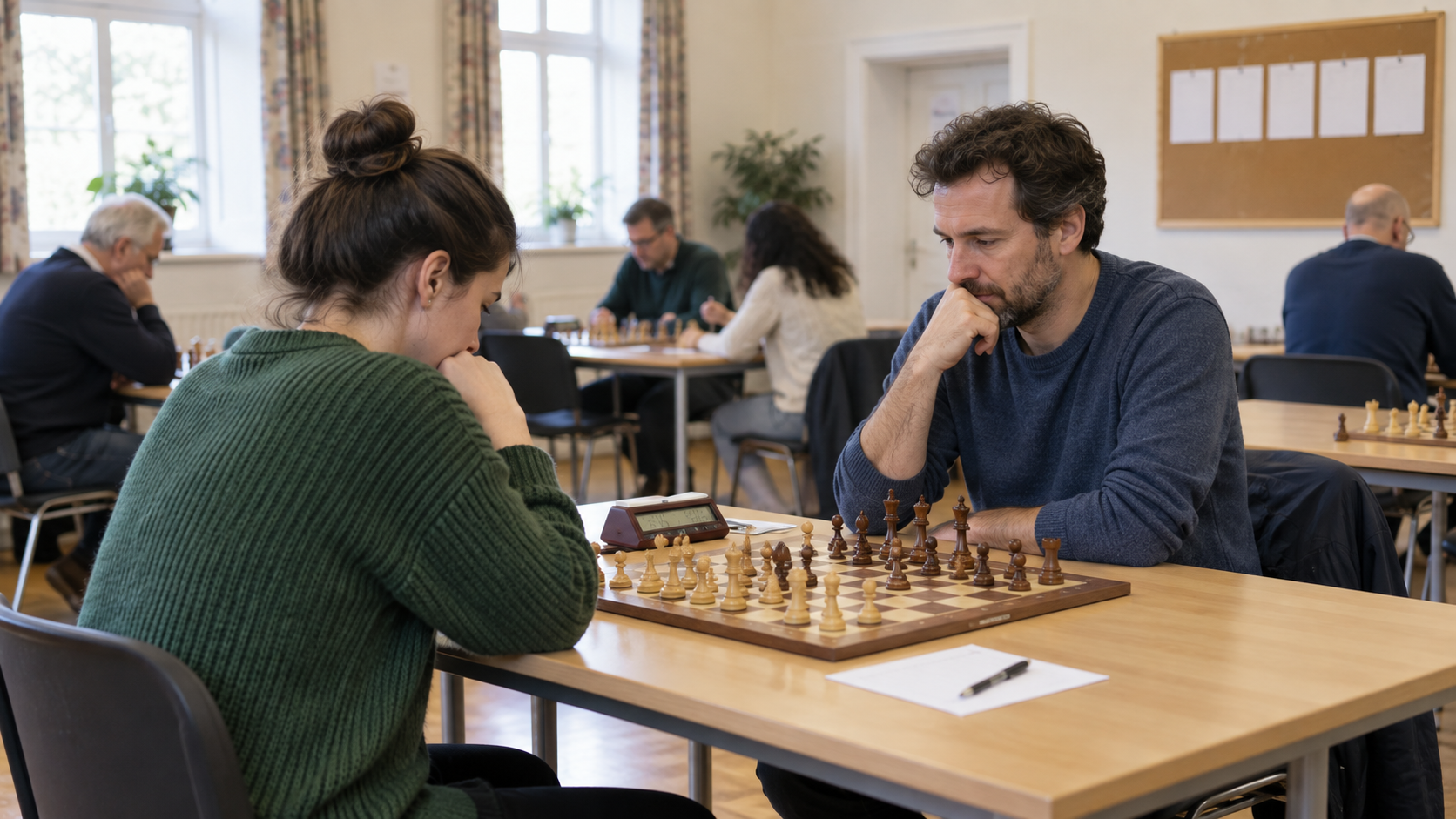
Quick verdict: enter, observe, delay, or skip
- Enter when you can play a complete legal game, can follow the stated time control, have read the current event terms, and genuinely want the experience.
- Observe or volunteer first when the room routine, check-in process, pairings, or clock procedure feels more uncertain than the chess.
- Choose a casual club session when your main goal is meeting opponents without committing to a full competitive schedule.
- Delay while you are still learning legal movement, check, checkmate, or how to complete a game independently.
- Skip when the total cost strains the budget, the schedule is a poor fit, or you prefer untimed and social play.
Use a rules-readiness check, not a skill label
A beginner does not need a promised rating or a particular opening repertoire. A more useful readiness test is whether you can set up the board, make legal moves, recognize check and checkmate, finish a game without outside advice, and accept that mistakes will happen. Start with how the chess pieces move if any of those basics are uncertain.
Read the event's published time control in plain language. If a clock will be used, practise starting it, pressing the correct side after each move, and noticing how much time remains. An ordinary practice clock or app may be enough; do not buy equipment until the organizer says players must supply it.
Check the exact event before registering
- Eligibility and section: Confirm age, membership, rating, residency, or invitation requirements and ask the organizer which section fits an unrated entrant.
- Format: Check the number of rounds, time control, pairing method as described by the organizer, and whether all rounds are expected.
- Schedule: Note check-in, round times, breaks, likely finish, late-arrival policy, and what happens if you must leave early.
- Equipment and recording: Verify whether boards, pieces, clocks, score sheets, or pencils are supplied and whether move recording is expected in your section.
- Terms: Read the current entry fee, deadline, refund or cancellation language, withdrawal procedure, venue access, and contact route.
- Personal arrangements: Confirm transport, food options, accessibility needs, and—where relevant—caregiver, pickup, and supervision arrangements directly with the organizer.
Calculate the full commitment
The entry fee is only one part of the decision. Add travel, parking or transit, food, any required membership, and only the equipment the event explicitly requires. Then count the hours from departure to the likely finish, not just playing time. A lower entry fee can still be poor value if the journey or all-day schedule makes the experience stressful.
Do not buy a tournament-style set, clock, notation book, or membership because it merely seems official. Borrow first where allowed. If you later need a clock for repeated practice, the analog-versus-digital chess clock guide explains the everyday tradeoffs without claiming a universal event requirement.
Try a lower-pressure alternative
Ask whether spectators are welcome, or attend an open club night before choosing an event. Watching check-in, pairings, clock handling, room noise, and the time between rounds can answer practical questions that a registration page cannot. Do not assume observation is permitted; contact the organizer first.
A casual club may be the better next step when you mainly need complete games and friendly feedback. Use the local chess club membership decision to compare guest access, schedules, complete cost, and skip criteria. A small informal event may suit you later, but there is no obligation to turn a hobby into tournament play.
Red flags and reasons to walk away
- The organizer cannot clearly explain eligibility, section placement, schedule, entry terms, or who to contact on the day.
- Marketing promises guaranteed rating gains, prizes, titles, scholarships, or rapid improvement.
- Extra fees or required memberships appear only late in registration.
- Equipment, accessibility, withdrawal, or supervision questions receive vague or dismissive answers.
- You feel pressured to enter a stronger or longer section than you want.
- The plan depends on buying several accessories before you know whether tournament play suits you.
Questions to send the organizer
- Is this section open to an unrated first-time player?
- What rules knowledge and clock familiarity do you expect?
- What is supplied, and what must the player bring?
- What are the check-in, round, break, and likely finish times?
- What are the current cancellation, refund, late-arrival, and withdrawal terms?
- Who should handle accessibility, caregiver, or other practical arrangements?
Bottom line
Enter when the specific event fits your present rules knowledge, schedule, budget, and reason for playing. Observe or try a casual club when the event routine is the main unknown. Delay when legal play and clock basics still need practice. Skip when competitive structure would make chess less enjoyable or when the complete commitment does not make sense.
The planned beginner-chess pillar is not yet built, so use the site's guide library for rules, clubs, clocks, learning formats, and beginner equipment. Always treat the organizer's current page and direct answers—not general advice—as authoritative for that event.