
A paid checkers app can be worth it when you already play regularly and one verified paid feature solves a specific problem, such as unwanted ads, a needed rules variant, offline play, or a suitable opponent mode. Try the free version first when one exists. Delay or skip payment when you cannot name the feature you need, rarely return to the app, or mainly want face-to-face games.
This is a buying framework, not a ranking of named apps. App features, billing, device support, advertisements, accounts, and cancellation terms can change, so confirm each detail on the current official store listing and publisher support pages before paying.
As an Amazon Associate, The Good Chess & Checkers may earn from qualifying purchases.
Compare the no-subscription route
Keep a physical checkerboard in the decision
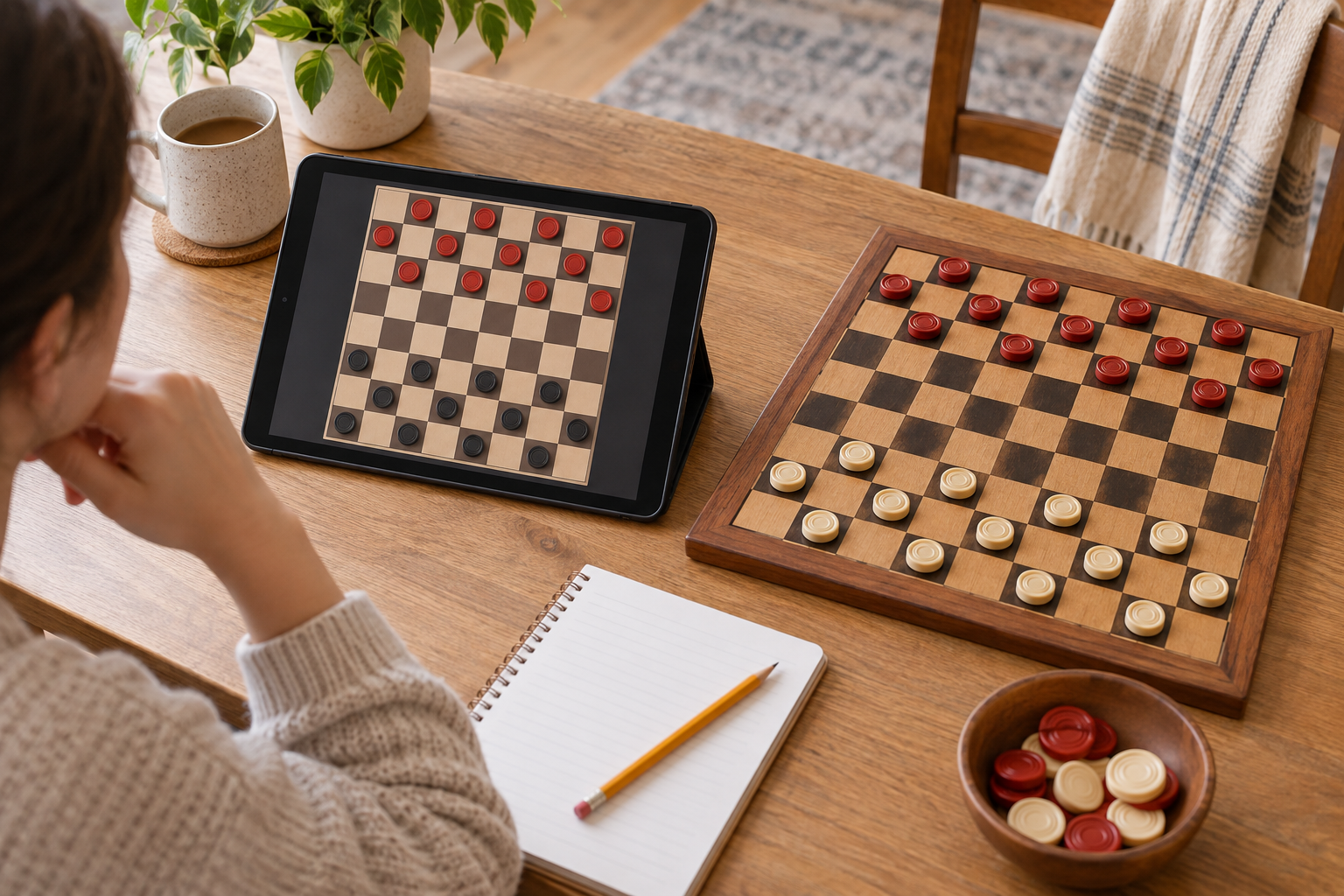
A readable board with stackable pieces can support face-to-face play without another account or renewal. Check board contrast, piece diameter, kinging method, storage, and table fit before buying.
Quick verdict: pay, try free, delay, or skip
- Pay when you use the app repeatedly, the exact paid feature is documented, and the current charge and cancellation route are clear.
- Try free first when a free tier lets you test the ruleset, controls, opponent level, advertisements, and device fit.
- Delay when you are still deciding whether you enjoy checkers or which variant you want to play.
- Choose a physical board when your real goal is a shared, device-free game with another person in the room.
- Skip when the upgrade mainly adds features you will not use, the account terms are unclear, or payment pressure arrives before a useful trial.
Start with the exact checkers ruleset
“Checkers” can refer to more than one game. Common American checkers uses an 8-by-8 board and differs from international draughts and other variants in board size and some movement or capture rules. A polished interface is not useful if it teaches or matches players under a ruleset you did not intend to learn.
Before considering payment, locate the app's current rules or help page. Confirm the board size, who moves first, whether captures are compulsory, how multiple captures work, how men and kings move, and when crowning ends a turn. Compare those details with the beginner checkers rules guide. If the app does not identify its variant clearly, do not use it as your only rules reference.
Six checks before paying
- Payment model: Confirm whether the offer is a one-time purchase, subscription, trial that converts, or an in-app upgrade. Check the billing period and renewal language at the final purchase screen.
- Feature boundary: Identify what remains free and what payment unlocks. Look for the exact feature you need rather than assuming every advertisement-free or premium label means the same thing.
- Opponent options: Check whether the app offers computer play, local pass-and-play, or online opponents in the mode you expect. Do not assume multiplayer means two people can share one device.
- Offline behavior: If travel or unreliable internet matters, verify which modes actually work after the device is disconnected. An app being installed does not prove every feature works offline.
- Account and device fit: Confirm sign-in requirements, supported devices, family-sharing terms where applicable, data practices, communication features, and any age requirements on official pages.
- Exit route: Find the cancellation or purchase-management steps for the store or provider that processes payment. Save the receipt and set a reminder before any renewal or trial deadline.
Run a seven-session free test
Use a free tier, a free app, or a physical board for seven short sessions before upgrading. This tests the habit rather than the sales page.
- Choose one named ruleset and confirm that the board and capture rules match it.
- Play two untimed games against the available computer or another person.
- Try one local two-player session if shared play matters.
- Disconnect the device and test the mode you expect to use offline.
- Write down every moment when an advertisement, locked feature, account limit, or missing mode interrupts the session.
- Separate a real repeated obstacle from a feature that merely looks interesting.
- Pay only if a currently documented paid feature removes that repeated obstacle at terms you accept.
When free or physical play is the better fit
Stay with free digital play when you want occasional solo games and the available ruleset and opponent are sufficient. Paying does not guarantee better decisions or faster improvement.
Use a physical board when the goal is conversation, family play, teaching setup, or getting comfortable moving and kinging real pieces. If you are deciding whether to buy equipment at all, the app-before-board guide compares that separate decision.
Use a book or puzzle format when you want explanations you can revisit away from notifications. The checkers puzzle-book versus strategy-book guide helps separate short position practice from broader instruction.
Red flags and reasons to walk away
- The app or offer does not state which checkers variant it uses.
- The displayed charge is unclear about billing period, renewal, trial conversion, or who processes payment.
- A promised mode appears in marketing but cannot be confirmed in current official documentation.
- Basic play requires permissions, communication features, or an account setup you do not want.
- The upgrade is promoted with pressure, a countdown, or broad improvement promises before you can test the core play.
- You are paying mainly to preserve a streak, status marker, or unused content library.
- The app makes casual play more distracting than a free alternative or physical board.
Who should skip a paid checkers app?
- Occasional players who are satisfied with a free option.
- Families whose main goal is sitting together around one board.
- Beginners who have not yet chosen a checkers or draughts variant.
- Anyone who cannot confirm the current payment, renewal, account, and cancellation terms.
- Players expecting payment alone to produce a guaranteed learning result.
- People who already have an unused subscription or a backlog of digital lessons.
Bottom line
Pay for a checkers app only after repeat use exposes a specific limitation and a verified paid feature removes it. Confirm the ruleset first, test the free experience, check offline and opponent modes, read the current official terms, and decide how you will cancel or reassess.
Choose free play or a physical board when those already serve the routine. The planned beginner-checkers pillar is not yet built, so continue through the checkers guide path for rules, learning formats, boards, and accessories.