
A magnetic chess and checkers set is usually better when pieces need to stay put in a car, waiting room, hotel room, or small table. A folding chess and checkers set is usually better when the main problem is storage, a larger readable board, or one simple box for home and casual trips.
This comparison is for buyers choosing between two portable formats, not for ranking specific models or claiming hands-on testing. If you still need the broader travel checklist, start with how to choose a travel chess and checkers set. If you already know you want one format, use best magnetic chess and checkers sets for travel or best folding chess and checkers sets next.
As an Amazon Associate, The Good Chess & Checkers may earn from qualifying purchases.
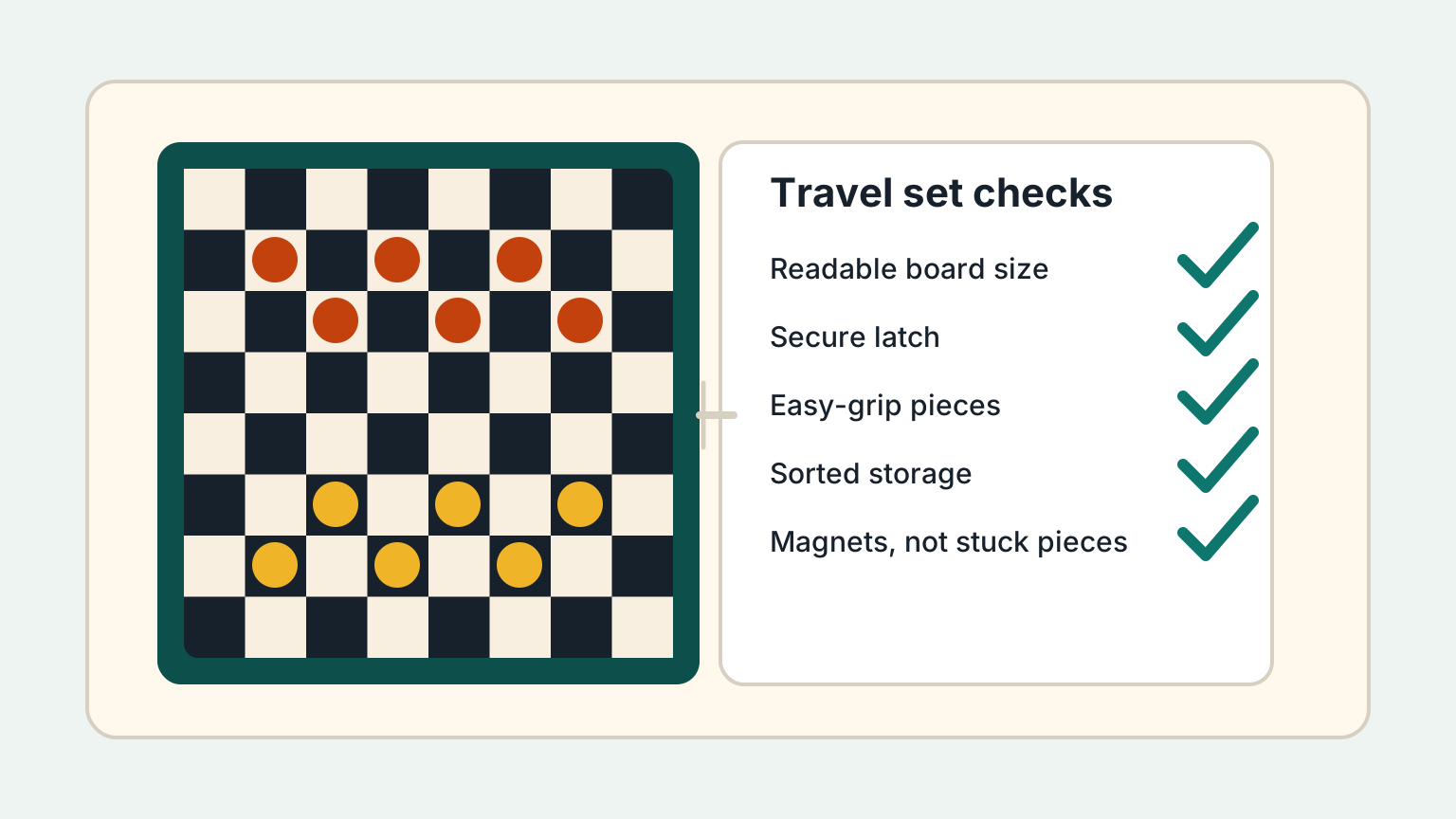
Travel format comparison
Compare current portable set options
Use these affiliate product routes to compare board size, closure style, piece storage, and whether the set includes both chess pieces and usable checkers.
Helpful product path
Shop the comparison categories
Compare current listings against the criteria below before choosing. Check the board dimensions, piece size, checkers count, closure, and storage photos rather than buying by the travel label alone.
Quick Answer
Choose a magnetic set when the board will be bumped, carried between places, played on laps, used in waiting rooms, or packed for car trips where pieces may slide.
Choose a folding set when the set will mostly be opened on a stable table and the buyer wants a larger board, clearer squares, easier storage, or a more giftable home setup.
Skip both travel formats if the main use is a classroom, club, or repeated group setup. In that case, a few durable boards, labeled bags, and replacement-friendly pieces may work better than one compact travel box.
What a Magnetic Set Does Better
A magnetic chess and checkers set solves the most obvious travel problem: pieces move when the board gets nudged. The magnets do not need to be strong enough to survive rough handling, but they should reduce sliding during normal play on a small table, car tray, hotel desk, or waiting-room chair.
That makes magnetic sets especially useful for families who start games in imperfect places. A child can pause a game more easily. A grandparent can shift the board without rebuilding every position. A travel bag can hold a compact set that is ready when a normal game table is not available.
Best fit: road trips, waiting rooms, vacation rentals, small tables, lap play, grandparents and kids, and families that want one set to stay packed between outings.
Where Magnetic Sets Can Frustrate Beginners
Many magnetic sets get small quickly. Tiny squares and thin pieces can make chess harder to learn because beginners need to identify pieces, see diagonals, and move without knocking everything over. A cramped magnetic board may technically travel well but feel tiring during a full game.
The magnets can also create false confidence. A magnetic set is not spill-proof, child-proof, or safe to shake while a game is in progress. If pieces are stored loosely inside the folded board, they can still get lost when the latch opens or when the box is carried upright.
Skip magnetic if: most play happens at a normal table, the pieces are too small to identify quickly, the checker pieces do not stack well for kings, or the closure looks weak in product photos.
What a Folding Set Does Better
A folding chess and checkers set is about storage first. The board becomes the case, so pieces can stay with the set, the box can sit on a shelf, and the board can usually be larger than a pocket magnetic board. That extra space often matters more than magnet strength when a beginner is learning at a kitchen table.
Folding sets also make sense as gifts because they feel complete. A medium folding combo set can support chess and checkers, close after play, and look more like a household game than a tiny travel gadget.
Best fit: family game night, casual home play, shared shelves, gifts, homeschool tables, small apartments, and buyers who want portable storage more than piece grip.
Where Folding Sets Can Frustrate Beginners
The hinge is the weak point. If the board does not open flat, the center line can tip chess pieces, interrupt diagonal checkers moves, or make the set feel cheaper than it looked online. A latch that pops open easily can also dump pieces into a bag or cabinet.
Interior storage matters too. A folding case with no trays, straps, bags, or compartments may turn cleanup into a sorting job. That is annoying at home and worse in a classroom, library, or waiting room where missing pieces are hard to track.
Skip folding if: the board ridge is raised, the case closure looks flimsy, the set will be used mostly in a moving car, or the storage mixes chess pieces and checkers into one loose pile.
Side-by-Side Tradeoffs
- Piece stability: magnetic sets are better when bumps are likely; folding sets need a stable surface.
- Board readability: medium folding sets often have more room; compact magnetic sets can feel crowded.
- Storage: folding sets can keep everything in one case, but only if the compartments are useful.
- Travel size: magnetic sets usually pack smaller; folding sets may be easier to shelve at home.
- Checkers support: either format can fail if the checkers are too thin, too few, or hard to stack into kings.
- Gift feel: folding sets often look more presentable; magnetic sets are more practical when travel is the point.
Setup and Maintenance Issues to Check
For either format, confirm that the set includes a full chess set and enough checkers for the version your family plays. Common American checkers uses 12 checkers per side on an 8-by-8 board, but families may use house rules or different regional games, so the visible contents should match your plan.
Look at how pieces are stored after play. Magnetic pieces may stick to the board, sit in foam slots, or rattle inside the case. Folding sets may use elastic straps, molded trays, cloth bags, or simple open compartments. The best choice is the one that makes setup fast and missing pieces obvious.
Also check board orientation and square contrast. If beginners are still learning setup, pair the set with how to set up a chess board and checkers board correctly so the first game starts cleanly.
Which Format Fits Each Situation?
- Car trips: choose magnetic, but only if the board is still readable and closes securely.
- Hotel or vacation rental play: choose either; magnetic helps with small tables, while folding helps if the board size is more comfortable.
- Family game night at home: choose folding unless pieces often get bumped or the board needs to stay packed for outings.
- Waiting rooms: choose magnetic or a contained folding magnetic set so games can pause and reset quickly.
- Beginner chess lessons: choose the clearer board and more recognizable pieces, even if that means skipping a tiny magnetic set.
- Checkers-first kids: choose the format with the best checker visibility, stacking, and storage rather than the most attractive chess pieces.
Who Should Skip Magnetic and Folding Sets?
Skip both if you are outfitting several tables. A club, classroom, or library program usually needs repeatable equipment, labeled storage, spare pieces, and easy replacement more than one clever travel set. Start with how to set up a beginner-friendly chess and checkers station or best chess and checkers sets for club starter kits.
Also skip both if the real need is a larger home board. Some beginners learn faster when the board is calm, spacious, and easy to read. For that decision, use how to choose the right chess and checkers board size before narrowing by travel features.
Bottom Line
Choose magnetic when movement is the problem. Choose folding when storage and board comfort are the problem. The best travel set is not the smallest one; it is the one that stays readable, keeps pieces together, supports both games properly, and matches where people will actually play.
For most families, a medium folding set is the easier home choice, while a magnetic set is the better travel choice. If you need both, look for a folding magnetic combo set with a secure latch, readable squares, recognizable chess pieces, and checkers that stack clearly for kings.