
A prebuilt classroom kit is the easier choice when matching equipment and faster ordering matter most. A DIY setup is usually the better fit when group size, storage, mixed chess-and-checkers use, or replacement planning calls for a custom system. The useful comparison is not bundle versus bargain; it is convenience versus control.
As an Amazon Associate, The Good Chess & Checkers may earn from qualifying purchases.
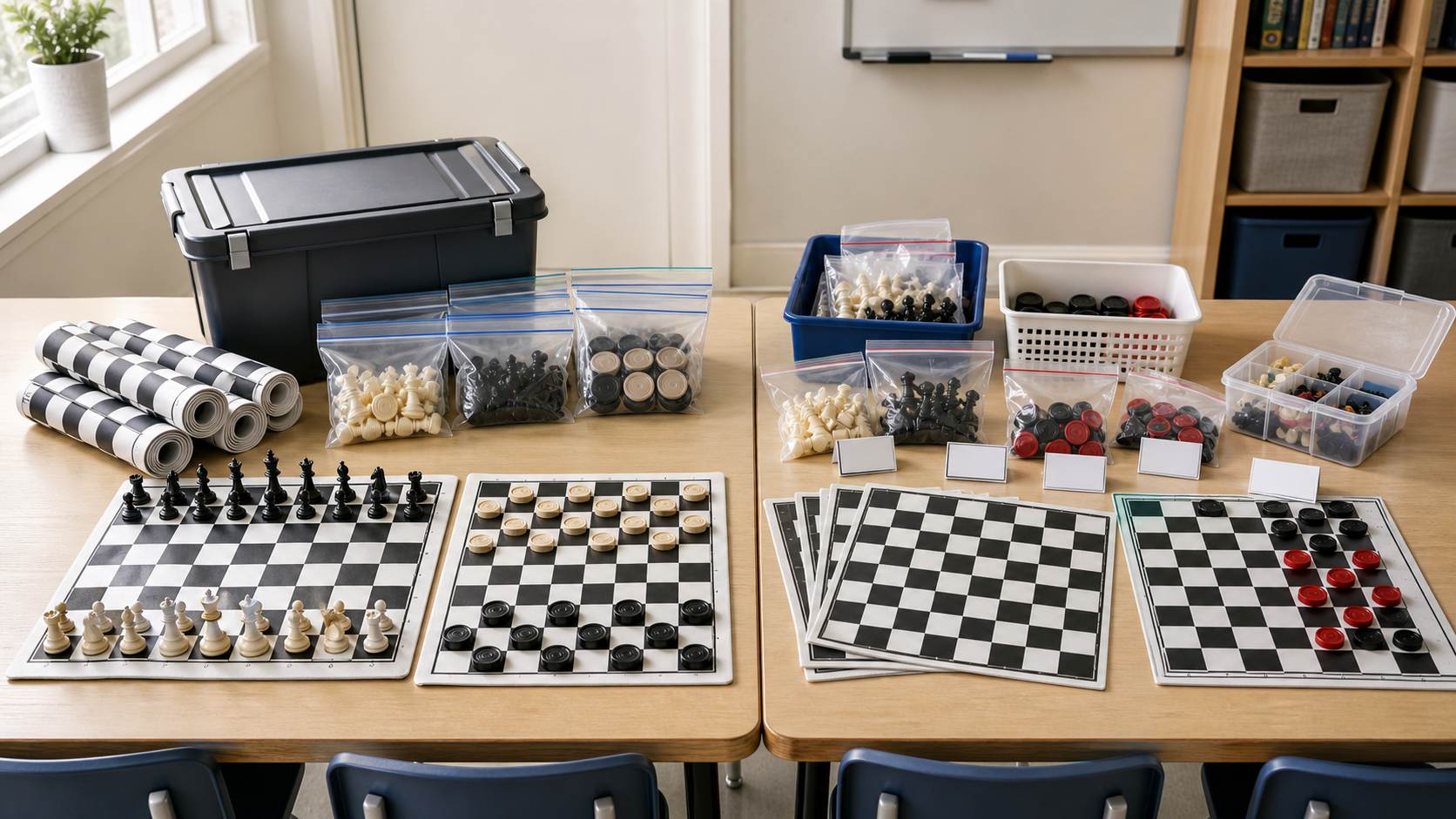
Compare the two equipment paths
Check actual set counts, board dimensions, piece contents, bag closures, and storage photos before ordering. A classroom label does not guarantee that checkers pieces, spare parts, or a useful tote are included.
Quick answer
- Choose a prebuilt kit when you need one order, consistent boards and pieces, a known set count, and a simple handoff to another adult.
- Choose DIY when you need to match an exact number of tables, support both games properly, reuse equipment already on hand, or make replacements easy.
- Use a hybrid when a reliable chess bundle covers most tables but separate stackable checkers, labels, and spare-piece bags solve the gaps.
- Delay the purchase when attendance, storage space, and the session format are still unknown. Borrow enough equipment for one meeting and count what is actually used.
What a prebuilt classroom kit does well
A coherent kit removes procurement steps. Matching boards help beginners follow a demonstration without translating between colors or coordinate styles. Matching pieces speed sorting, and a fixed quantity makes it easier to know how many simultaneous games the purchase supports.
A bundle also creates a cleaner routine for shared programs. A volunteer can open one tote, distribute identical bags, and use the same cleanup count at every table. That consistency can be worth more than small savings when several adults rotate through the room.
Best fit: a new program with stable attendance, a short ordering window, limited staff time, and enough storage for the complete bundle.
Where prebuilt kits fall short
Some kits are chess kits first. They may omit checkers, include pieces that do not stack clearly for kings, or pair checkers with squares that are too small. Others bundle a clock, demonstration board, or carrying case that the group will rarely use while leaving out spare pawns, kings, or checker pieces.
A fixed bundle can also create the wrong capacity. Ten boards do not help much if the room has six usable tables, while four boards may force a larger club into long rotations. Confirm every included item instead of relying on terms such as classroom pack or club kit.
Skip a prebuilt kit when much of the bundle duplicates equipment you own, the contents do not support checkers well, replacement pieces are hard to match, or the tote will not fit the available shelf.
What a DIY setup does well
DIY means assembling a system from separate boards, chess pieces, checkers, bags, bins, and labels. It gives the organizer control over capacity. A six-table room can buy six playable sets plus one spare instead of accepting a bundle size chosen by a seller.
It also makes chess and checkers easier to balance. You can choose recognizable chess pieces, stackable checkers with strong contrast, and boards that work for both games. Separate spare-parts bins make a missing pawn or checker a quick fix instead of a reason to retire a whole set.
Best fit: mixed-age programs, changing attendance, existing equipment that can be reused, unusual storage limits, and organizers willing to build a repeatable labeling system.
Where DIY creates extra work
Every separate choice needs a compatibility check. The widest chess-piece base should sit inside a square with visible room around it. Checkers should fit the same squares and stack without sliding. Bags need enough space for the full contents, and bins must fit the cabinet or cart.
DIY can also become a collection of mismatched bargains. Different board colors, piece shapes, and bag sizes slow setup and make missing items harder to notice. Standardize each new purchase whenever possible and document what belongs in one complete table set.
Skip DIY when nobody has time to count, label, assemble, and maintain the equipment or when purchasing rules make several separate orders impractical.
Side-by-side tradeoffs
- Ordering time: prebuilt wins with one defined bundle; DIY requires several compatibility decisions.
- Capacity: DIY can match the room and attendance; prebuilt limits you to available bundle sizes.
- Consistency: prebuilt usually starts more uniform; DIY stays consistent only when the organizer sets a standard.
- Chess and checkers balance: DIY makes it easier to choose suitable pieces for both games; inspect bundles carefully for checkers support.
- Replacement parts: DIY can use a deliberate spare-parts system; a proprietary bundle may be harder to match later.
- Storage: either can work, but measure the actual shelf, tote, cart, and bag sizes before ordering.
- Future growth: DIY expands one table at a time; a prebuilt system is simpler when matching add-on packs remain available.
Setup and maintenance plan
Start with one set for each pair that plays at the same time. Add one clearly marked spare set or spare-parts bag if the budget and storage allow. Programs that rotate through stations may need fewer boards than programs where everyone plays for the full session.
Give every table set a number or color. Keep its board, chess pieces, and checkers together, and put a contents card inside the bag: 16 light chess pieces, 16 dark chess pieces, and the correct checker count for the version you teach. Common American checkers uses 12 pieces per side on an 8-by-8 board, but other draughts variants use different boards and counts.
Choose a cleanup routine that a new helper can follow: return pieces to the assigned bag, stack boards consistently, move incomplete sets to a repair bin, and replenish them before the next meeting. Wipe boards and pieces according to their material instructions; avoid assuming that every printed or foam-backed board tolerates the same cleaner.
Which option fits your setting?
- One classroom with steady enrollment: a prebuilt kit is efficient if its table count and contents match the room.
- Library drop-in program: DIY or hybrid equipment makes it easier to scale for uncertain attendance and replace individual parts.
- Homeschool co-op: DIY works well when families already own some sets, provided the group standardizes readable pieces and board orientation.
- Beginner chess club: a matching chess bundle may be enough at first; add checkers only with suitable stackable pieces rather than treating any discs as interchangeable.
- Mixed chess-and-checkers station: choose DIY or a verified combo bundle so both games have complete, readable equipment.
- Program run by rotating volunteers: favor the option with the clearest contents cards, labels, and one-bin handoff.
When neither option is ready
Do not buy in bulk merely because the per-set cost looks lower. Pause if you cannot answer how many people play at once, where the equipment will live, who checks incomplete sets, and whether chess, checkers, or both will be taught.
Test one table first when piece readability, board flatness, bag capacity, or checker stacking is uncertain. A small trial is especially useful when children of different ages share the equipment or when tables have limited space.
Next steps for a complete group setup
Use our beginner-friendly chess and checkers station guide to plan the room, lesson flow, and cleanup routine. Then compare classroom chess and checkers set categories if a bundle still looks right, or use the chess and checkers storage guide to refine a DIY bin-and-bag system.
When the kit also needs a separate surface for pairings, move prompts, or lesson questions, use the portable whiteboard guide to match a lap board, tabletop easel, or folding board to the actual viewing distance and storage plan.
Bottom line
Choose a prebuilt kit when matching equipment and a fast, repeatable rollout are worth more than customization. Choose DIY when exact capacity, balanced support for chess and checkers, easier replacements, and storage fit matter more than one-order convenience.
For many classrooms and clubs, the practical answer is hybrid: buy consistent boards and chess pieces together, then add stackable checkers, labels, and a modest spare-parts supply. Whatever route you choose, make the system easy to count, easy to store, and clear enough for the next helper to run.