
Choose Staunton-style pieces when a beginner needs to recognize the six piece roles quickly, follow diagrams, or move between home, school, and club boards. Choose themed pieces when a favorite story makes the learner eager to play and every role remains easy to identify. For most first sets, Staunton is the lower-friction choice; a fully sculpted theme usually works better as a second set.
This is a category comparison, not a product ranking or a claim that one design teaches chess better by itself. We have not tested the products returned by the shopping links. Confirm current piece photos, dimensions, materials, contents, storage, and maker guidance before buying.
As an Amazon Associate, The Good Chess & Checkers may earn from qualifying purchases.
Compare the two formats
Browse category: Browse Staunton-style chess pieces or Browse category: browse themed chess sets. Use listing photos to identify every king, queen, bishop, knight, rook, and pawn before ordering.
Quick comparison
- Choose Staunton-style pieces for a first set, lessons from books or apps, group play, easy replacements, and quick role recognition.
- Choose themed pieces for a learner who already knows the standard shapes, values the story or display, and can identify every role on both sides.
- Use both when a plain set handles lessons and travel while a themed set makes casual home games feel special.
- Skip the purchase when the listing hides pieces, omits base measurements, or makes the two armies difficult to separate.
What Staunton-style means
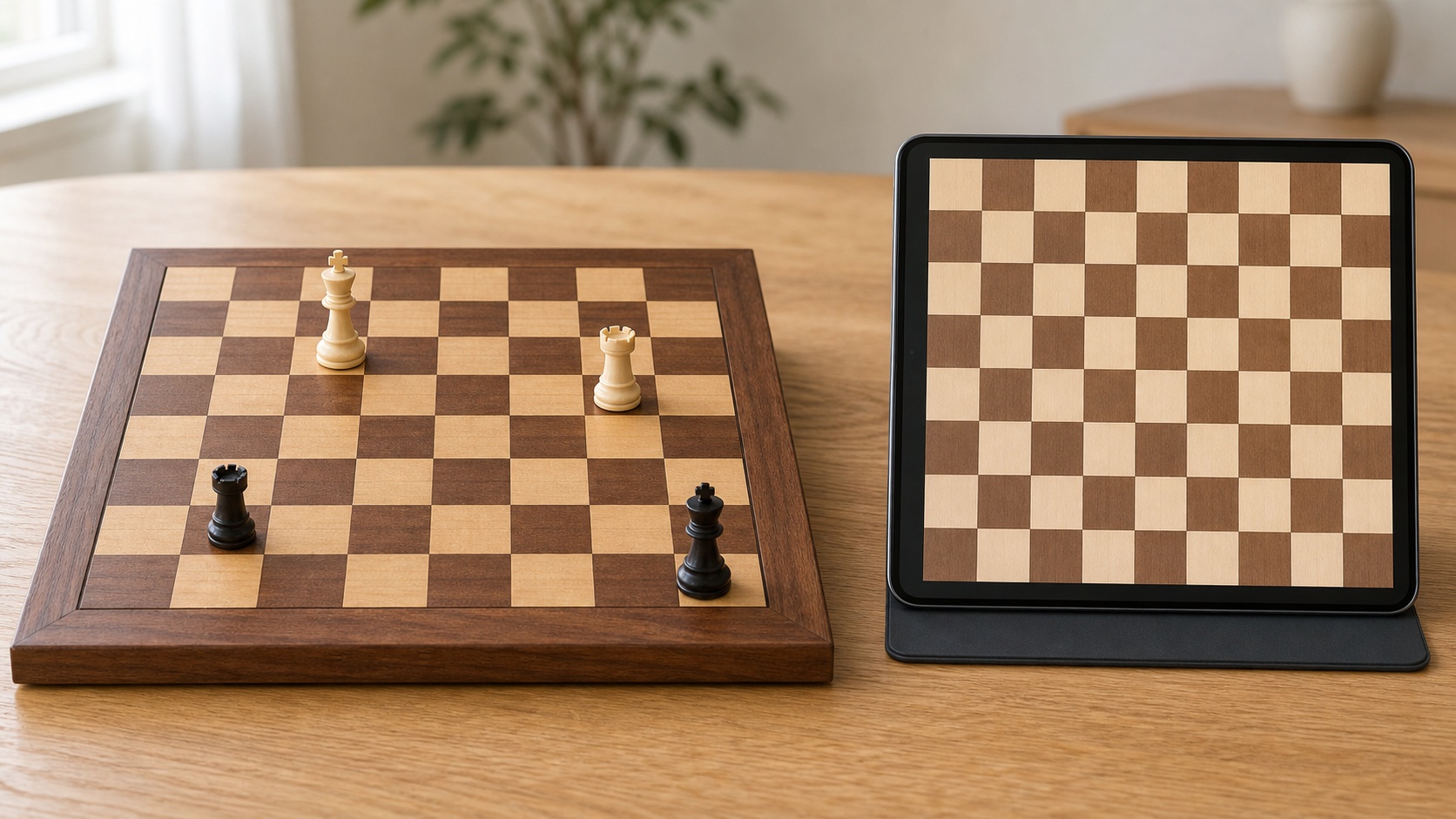
Staunton-style pieces belong to the familiar design family used in most chess diagrams, teaching sets, and casual club equipment: a cross-topped king, crown-like queen, split-topped bishops, horse-shaped knights, castle-shaped rooks, and simple pawns. The label describes recognizable silhouettes; it does not guarantee a material, weight, size, quality level, or official approval.
That shared visual language is the main beginner advantage. A learner can watch a lesson, open a book, visit a library, or sit at another board without translating characters back into chess roles. Plain shapes also make crowded positions easier to scan.
Best fit: first sets, family teaching, classrooms, clubs, learners using diagrams, and households that want easy-to-replace pieces.
What themed pieces do differently
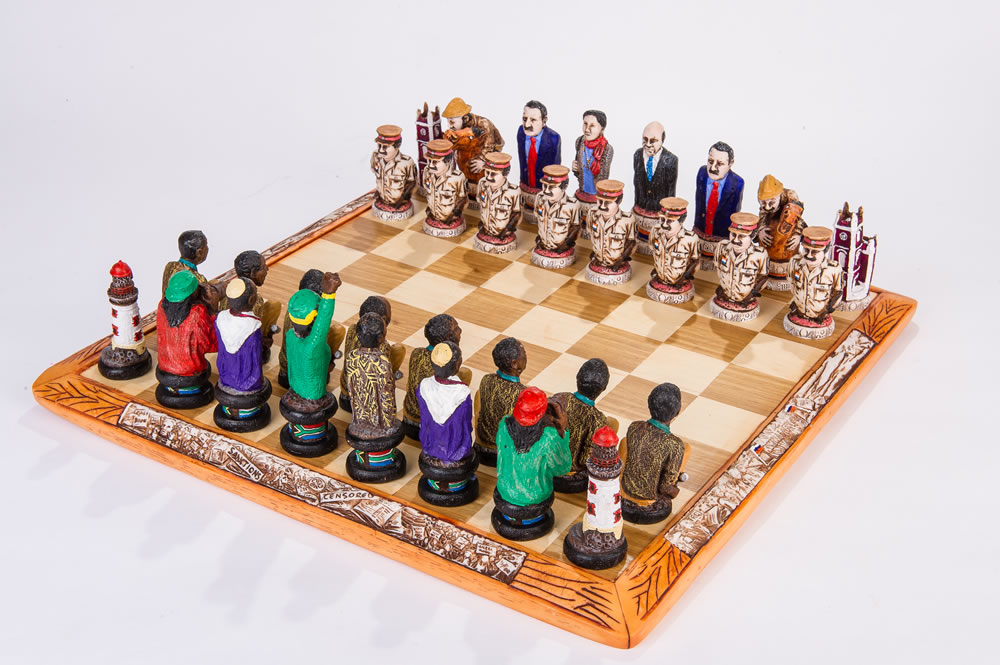
Themed sets replace some or all standard silhouettes with characters, buildings, animals, or other sculpted figures. A strong design maps the same visual logic to both armies: each king is unmistakable, each queen differs from the king, paired pieces match, and pawns are simpler than the major pieces.
A theme can make a reluctant learner curious enough to begin. It can also turn a set into a meaningful gift or display object. The tradeoff is translation: the player may need to remember that one character acts as a bishop and another as a rook before thinking about the position.
Best fit: learners already comfortable with standard roles, collectors, story-driven family play, and gifts where the recipient values the theme as much as repeated practice.
Recognition and learning tradeoffs
For a true beginner, the useful question is not whether a set looks exciting in an empty starting position. It is whether the learner can identify every role when pieces are scattered, captured, or crowded in the center. Staunton pieces usually reduce that visual workload because the shapes repeat across teaching materials.
A themed set can still work if its design preserves hierarchy. Ask the learner to find both kings, both queens, all four rooks, all four bishops, and all four knights from a complete-set photo. Then show a standard diagram. If the mapping is quick and consistent, the theme may support rather than interrupt play.
Do not treat momentary confusion as proof that a child cannot learn chess. It is evidence about the equipment. A readable set should make the game easier to see, not add a second memory test.
Board fit and compatibility
Measure square width and compare it with the widest piece base. Leave visible space around the king and queen bases so adjacent pieces do not touch in crowded positions. King height helps describe scale, but base diameter is the more useful board-fit measurement.
Staunton replacements are available in many common sizes, although color and proportions still vary. Themed pieces may be designed for one matching board and can look cramped or lose contrast elsewhere. Check both armies against light and dark squares; detailed carving is difficult to read when piece and square colors blend.
If the household also plays checkers, confirm whether the board and storage can support a separate set of stackable checkers. A decorative chess set is often chess-only. Families wanting one practical box can compare a chess-only set with a chess and checkers combo set.
Setup, storage, and maintenance
Staunton-style pieces
Simple pieces can usually share a divided box, tray, or labeled bag. Common shapes make counting and replacement straightforward. Check the maker's care instructions for the actual material: plastic, painted wood, and unfinished wood should not be assumed to clean the same way.
For a group kit, consistency across boards matters. Matching sets help players reset faster and prevent one unfamiliar replacement from becoming a recurring distraction.
Themed pieces
Sculpted projections, painted details, and tall narrow figures may need fitted storage instead of a loose bag. A shaped insert protects pieces but takes longer to inventory and can make a missing figure harder to replace. Confirm that the box has a clear place for all 32 pieces and that the board closes without pressing against them.
Dust and handling can be more involved on detailed surfaces. Follow the current material and care instructions rather than assuming that a display set can handle frequent transport, spills, or rough cleanup.
Who should choose each format?
- A child learning the piece names: choose Staunton-style pieces, then add themed accessories or a second set after recognition is automatic.
- A child motivated by one story: consider themed pieces only after previewing every role together; restrained theme details on standard silhouettes are the safest compromise.
- An adult beginner using an app or book: choose Staunton so physical pieces resemble the instructional diagrams.
- A family sharing one everyday set: choose recognizable, stable pieces with simple storage. Theme appeal should not make setup or cleanup harder.
- A gift recipient who already plays: themed pieces can be appropriate when the recipient has a practical set and genuinely values the subject or artwork.
- A classroom or club: standardize on Staunton-style sets so players can change tables without decoding new pieces.
Skip criteria
Skip Staunton pieces when the learner has repeatedly ignored plain sets but engages with a specific readable theme, or when the purchase is primarily a display gift for an experienced player. Even then, verify board fit, complete contents, and storage.
Skip themed pieces when this will be the learner's only set, the listing does not show both complete armies, bishops and rooks look alike, the king and queen are hard to separate, pieces crowd the squares, or a lost character cannot be replaced practically.
Skip both for now if you already have a readable complete set. Borrowing or using that board for several games reveals whether recognition, stability, storage, or theme is a real problem before you spend money.
A five-minute preview before buying
- Find a listing image showing all 32 pieces, not only the kings and queens.
- Name all six roles on both sides without relying on character names.
- Compare the widest base with the board's square width.
- Check contrast on both light and dark squares and imagine a crowded center.
- Confirm the piece count, material, storage method, dimensions, and current maker guidance.
If the learner still needs help with standard roles, continue with how chess pieces move. For a broader fit checklist covering boards and complete sets, use the beginner chess set guide. Readers specifically drawn to character designs can continue to themed chess sets for kids who are learning.
Bottom line
Staunton-style pieces are the practical default for beginners because their shared silhouettes make lessons, diagrams, replacements, and group play easier. Themed pieces make sense when their characters create genuine motivation without hiding the chess roles.
Buy for the next hundred moves, not only the unboxing moment. If every piece is clear, fits the board, stores safely, and invites the learner back to play, either format can earn its place.