
A chess-only set is usually the better buy when the main goal is learning chess clearly, practicing with familiar pieces, or joining a chess class or club. A chess and checkers combo set is usually the better buy when a family, classroom, grandparent, or gift recipient needs one simple box that can start two classic games without building a bigger game shelf.
This page is about the before-you-buy decision between a dedicated chess set and a two-game combo set. If you already know you want one shared board, read one board for chess and checkers. If you are asking whether combo sets are worth it in general, use is a chess and checkers combo set worth it for beginners? as the follow-up.
As an Amazon Associate, The Good Chess & Checkers may earn from qualifying purchases.

Quick decision aid
Choose the products in this guide
Compare these affiliate product routes first, then use the guide criteria to choose the board, pieces, storage, clock, or learning aid that fits the player.
Helpful product path
Quick Answer
Choose a chess-only set when chess is the clear priority, the learner needs recognizable pieces, the board may be used with notation or lessons, or the buyer wants equipment that feels closer to a club or school chess setup.
Choose a chess and checkers combo set when the goal is casual family play, a flexible beginner gift, a shared game shelf, a grandparent-and-kids table, or a classroom corner where both games should stay easy to start.
Do not choose by the label alone. A good combo set can teach both games well. A poor chess-only set can still frustrate beginners if the pieces are decorative, cramped, or hard to identify.
What a Chess-Only Set Does Better
A chess-only set can focus every part of the purchase on chess: piece recognition, board size, square contrast, storage for 32 pieces, and sometimes coordinate labels around the board. That focus helps when a beginner is learning how the king, queen, rooks, bishops, knights, and pawns each move.
Chess-only sets also make sense when the learner is likely to practice from books, diagrams, apps, clubs, or classes. Familiar Staunton-style pieces reduce the mental translation between a lesson diagram and the board on the table. A dedicated chess set may also pair better with a roll-up board, larger pieces, or a clock later on.
Best fit: chess-first beginners, students joining a chess club, adults learning from lessons, gift buyers who know the recipient wants chess, and families that already own usable checkers equipment.
Where a Chess-Only Set Can Be the Wrong Buy
A chess-only set is less useful when the buyer is not sure which game will stick. If a child, family, or classroom wants low-pressure table games, checkers may get played just as often as chess because the first rules are easier to explain. In that setting, buying chess-only can quietly leave half the likely use case uncovered.
Chess-only sets can also become awkward gifts when the recipient expected something more flexible. A beautiful chess board may look generous, but it does not help a family that wanted one box for chess, checkers, and casual game night.
Skip chess-only if: the players are trying both games, storage space is tight, checkers is part of the plan, or the gift buyer does not know which game the recipient will actually choose.
What a Combo Set Does Better
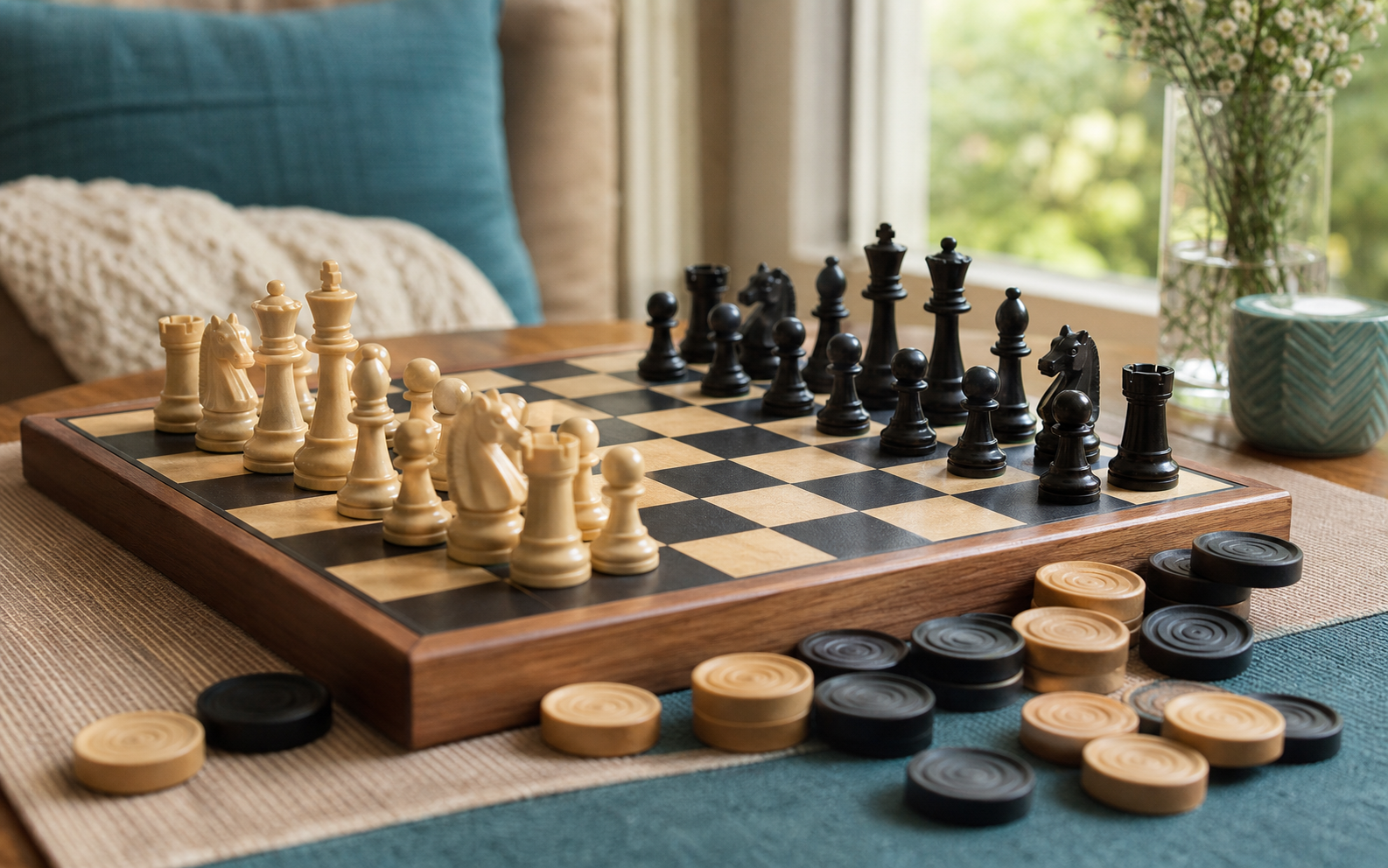
A chess and checkers combo set trades specialization for flexibility. One 8-by-8 board can support a full chess game and common American checkers play when the set includes all required pieces. That makes a combo set practical for beginners because it lowers the cost, storage, and decision friction of starting both games.
Combo sets are especially helpful for families. A child who is not ready for all six chess piece movements can still play checkers on the same board. A grandparent can teach one game today and the other later. A shared shelf can hold one box instead of separate chess and checkers sets that drift apart over time.
Best fit: family game night, beginner gifts, grandparents and kids, casual players, homeschool shelves, small homes, waiting rooms, and classrooms that need a simple first station rather than specialized chess equipment.
Where a Combo Set Can Frustrate Beginners
Combo sets fail when one game is included as an afterthought. Some sets include chess pieces but no useful checkers pieces. Some include checkers pieces that are too thin to stack into kings. Others use decorative chess pieces that look nice in a box but slow down beginners who are still learning which piece is which.
Storage can also be weaker in combo sets because the box has to hold two games. If chess pieces and checkers pieces are tossed into one loose compartment, cleanup takes longer and missing pieces are harder to notice.
Skip a combo set if: the board is cramped, the chess pieces are hard to recognize, the checkers do not stack cleanly, the product listing does not clearly include both games, or the main goal is serious chess practice.
Piece Completeness and Board Setup
Before buying either type, confirm what is actually in the box. A chess-only set should include 16 chess pieces for each side: one king, one queen, two rooks, two bishops, two knights, and eight pawns. A common American checkers setup uses 12 checkers per side on an 8-by-8 board, though checkers variants and house rules can differ.
A combo set should support both without guesswork. Look for a full 64-square board, a full chess set, a full checkers set, and storage that keeps the two groups easy to separate. If the set does not clearly show or list the checkers pieces, do not assume they are included.
If board direction or setup is the confusing part, pair this comparison with how to set up a chess board and checkers board correctly.
Beginner Learning Tradeoffs
For chess learning, a dedicated chess set has one big advantage: visual consistency. Beginners see similar pieces in diagrams, videos, puzzles, and club rooms, so a clear chess-only set can make practice smoother.
For family learning, a combo set has a different advantage: it gives adults more ways to meet the learner where they are. Some children enjoy checkers first because every starting piece moves the same way. Others jump straight into chess. A combo set lets the household move between those paths without another purchase.
For teaching both games without overload, the next useful guide is how to teach chess and checkers to kids without overwhelming them.
Storage, Maintenance, and Replacement Issues
A chess-only set is simpler to count and reset because every piece belongs to one game. That matters for clubs, classrooms, and students who carry a board back and forth. A roll-up board with a separate bag of plastic pieces may look plain, but it can be easier to replace and maintain than a decorative box.
A combo set asks storage to do more. The best versions separate chess pieces and checkers pieces, close securely, and make missing pieces obvious. The weakest versions mix everything together, which turns setup into sorting before anyone plays.
For families that already struggle with missing pieces, use best chess and checkers storage ideas for families before buying another set.
Gift and Shared-Shelf Fit
If the gift recipient specifically asked for chess, buy the clearest chess set you can. Favor recognizable pieces, readable square contrast, and a board size that fits the table. A fancy theme or tiny travel board is less helpful than a set the recipient can use without hesitation.
If the gift is for a family, grandparents, a classroom, or someone who may be new to both games, a combo set is often more forgiving. It lets the recipient start with checkers, try chess later, and keep both games in one place. For broader gift context, see best family chess and checkers gift sets.
Which One Fits Each Situation?
- Chess club or lessons: choose a chess-only set, especially if the learner will use notation, puzzles, or a club-style board.
- First family game shelf: choose a combo set if both chess and checkers are likely to be played casually.
- Checkers-first learners: choose a combo set only if the checkers stack well; otherwise consider a dedicated checkers set.
- Small homes and shared shelves: choose a combo set when one box is easier to store and reset.
- Display gifts: choose carefully either way. Looks should not outrank readable pieces and usable storage.
- Classroom groups: choose based on the activity. Chess lessons may need chess-only boards; mixed game stations may need durable combo sets.
Who Should Skip Both Options?
Skip both standard choices when the real problem is travel, group capacity, or a specialized format. A frequent traveler may need a magnetic set with a secure closure. A club helper may need multiple roll-up boards instead of one nicer box. A checkers-focused buyer may need thicker stackable checkers more than a full chess setup.
Also skip any set that hides basic information. If the listing does not show piece size, board size, what pieces are included, or how storage works, it is hard to judge whether beginners will actually enjoy using it.
Bottom Line
Buy a chess-only set when chess is the clear priority and the learner will benefit from a board and pieces built around that one game. Buy a chess and checkers combo set when flexibility, shared storage, family play, and beginner choice matter more than specialized chess practice.
The better set is the one that matches the job. For chess-first learning, choose clarity and familiar pieces. For families and casual beginners, choose the setup that keeps both chess and checkers easy to start, easy to reset, and welcoming enough to return to next week.