
American checkers and international draughts belong to the same game family, but they are not interchangeable rules for the same board. American checkers is the more practical first choice when you already own a common 8-by-8 chess-and-checkers set. International draughts fits a learner who has access to a 10-by-10 board, a teacher or club using that ruleset, or a particular interest in its longer-range kings and deeper capture choices.
Helpful equipment path
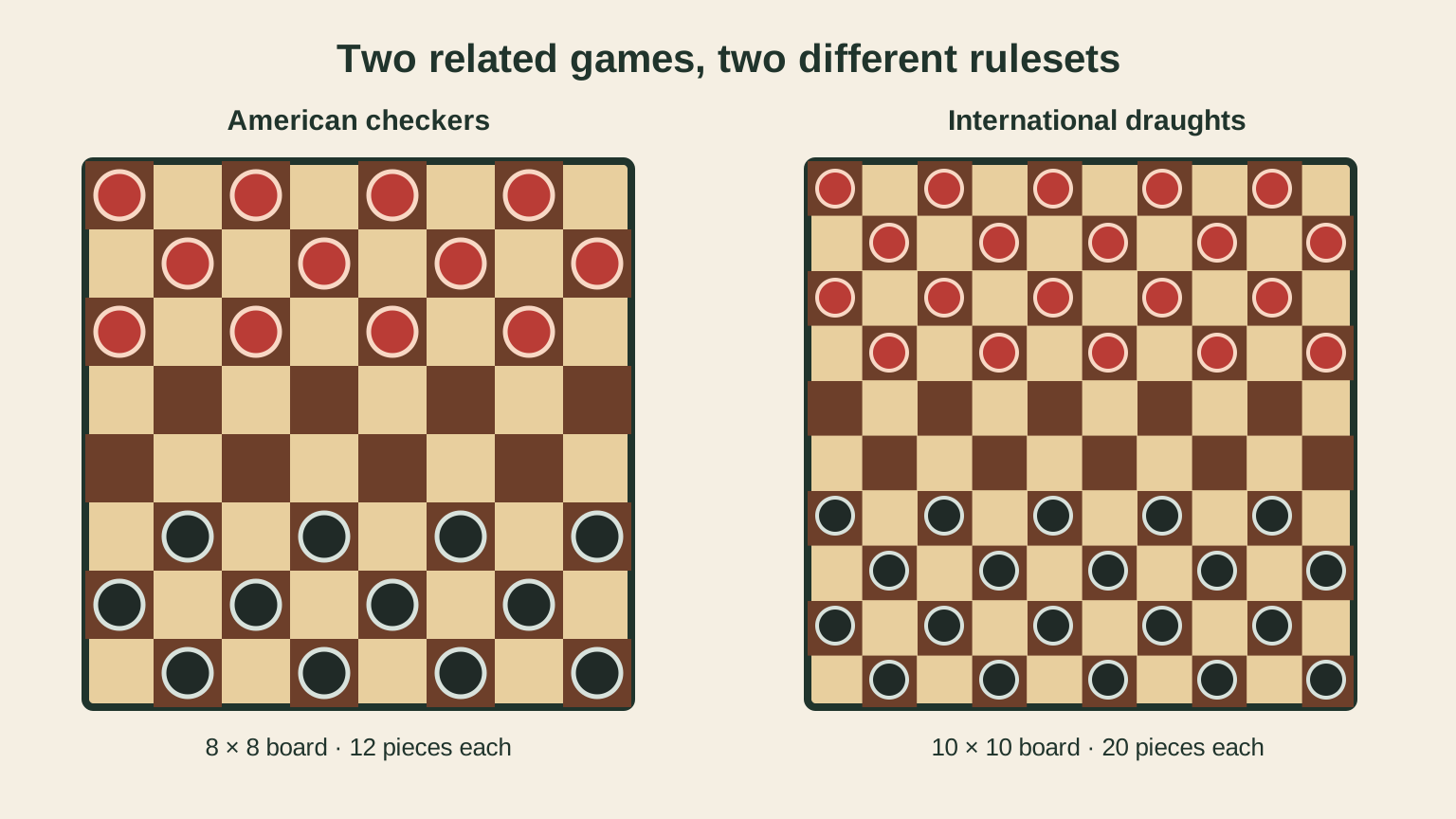
Before buying another board, confirm which ruleset the learner will actually use. A standard combo board suits American checkers; international draughts needs a 10-by-10 board and 20 pieces per side.
Quick answer
Start with American checkers when the learner wants the version commonly supplied with an 8-by-8 family set, needs the smaller starting position, or will play with people who already use those rules. Start with international draughts when the learner's app, teacher, family, or club explicitly uses the 10-by-10 game. Familiar opponents and matching equipment matter more than declaring one version universally easier.
The differences at a glance
| Rule or setup | American checkers | International draughts |
|---|---|---|
| Board | 8 by 8; 32 playable dark squares | 10 by 10; 50 playable dark squares |
| Starting pieces | 12 per player, filling three rows | 20 per player, filling four rows |
| Ordinary move | One diagonal step forward | One diagonal step forward |
| Ordinary-piece captures | Forward | Forward or backward |
| Kings | Move and capture one diagonal step or jump at a time | “Flying” kings travel across multiple empty diagonal squares |
| When captures exist | A capture is required; the player may choose a legal sequence when alternatives exist | A capture is required; the sequence taking the greatest number of pieces must be chosen |
These are standardized-rule comparisons, not a promise about every app, country, family table, or event. House rules and other draughts variants differ. Check the named ruleset before teaching, and use the organizer's current rules for formal play.
Who American checkers fits
American checkers—closely related to the rules often called English draughts—fits families and beginners who want to use an ordinary 8-by-8 board. The smaller board and 12-piece starting army create fewer occupied squares to scan. Kings remain short-range pieces, so a beginner does not have to trace an entire diagonal every time a king moves.
It is also the sensible default when the learner's likely opponents say “checkers,” own combo sets, and already agree on American rules. For a complete first-game walkthrough, use how to play checkers for beginners.
Skip American checkers as the starting ruleset when the learner is joining an international-draughts group, using a 10-by-10 curriculum, or repeatedly practicing in an app labeled international draughts. Switching board sizes and capture priorities later is possible, but mixing them during the first lessons creates avoidable arguments.
Who international draughts fits
International draughts fits a learner who wants the 10-by-10 game and has matching equipment and opponents. Its 20 pieces per side create a broader opening position. Ordinary pieces can capture backward, kings can travel along open diagonals, and the maximum-capture rule makes counting every available sequence part of choosing a legal move.
Those features are not automatically “too advanced,” but they do add board-scanning work. A beginner can learn them well when the teacher names the variant, demonstrates the long king movement, and practices two competing capture routes before playing a complete game.
Skip international draughts for now when only an 8-by-8 board is available, casual opponents expect American rules, or the learner is still working on diagonal movement and seeing a single jump. Do not squeeze the international starting position onto a chessboard; it changes the game.
Capture tradeoffs cause the most confusion
Both standardized games require a capture when one is available. The important difference is what happens when several routes are possible. In American checkers, a player can choose among legal capture sequences. In international draughts, the player must choose a route that captures the greatest number of opposing pieces. That means “I found a jump” is not enough in the 10-by-10 game; the player must scan for a longer one.
Ordinary pieces also capture differently. American men capture forward, while international men may capture forward or backward. If a family remembers different rules, pause before moving pieces and write these two choices on a rule card. The guide to required jumps in checkers explains why naming the variant matters.
Kings change the shape of the board
An American-checkers king moves diagonally one square and captures by jumping an adjacent piece into the empty square immediately beyond it. An international king can move across open squares on a diagonal and can land farther beyond a captured piece when the legal route permits it. The international king therefore makes distant diagonals relevant in a way the short-range king does not.
Promotion details can also affect a capture sequence. Do not borrow a remembered crowning rule from another variant. Use the current rule sheet for the named game, especially if a piece reaches the promotion row during a multi-capture.
Setup and maintenance
American checkers needs 24 pieces total and an 8-by-8 board; international draughts needs 40 pieces and a 10-by-10 board. Store the sets separately or label the bags with the board size and piece count. Check that pieces fit comfortably inside the playable squares and can show kings clearly without unstable stacks.
For teaching, keep a one-page reference with the board size, capture direction, king movement, and capture-choice rule. Numbered squares can help when following written positions, but confirm that the numbering system matches the rules source. A board labeled for one game is not automatically labeled correctly for every draughts variant.
A simple first lesson for either game
- Name the ruleset and show its full board.
- Practice one ordinary diagonal move.
- Set up one required capture.
- For international draughts, compare a one-piece capture with a two-piece capture.
- Add one king and demonstrate its exact range.
- Only then build the complete starting position.
This sequence keeps the lesson about visible differences rather than memorizing a long rules list. If the learner needs shorter sessions, continue with small chess and checkers teaching activities.
Rules references
This comparison follows the standardized game descriptions published by the World Checkers/Draughts Federation for English/American checkers and the World Draughts Federation (FMJD) for international draughts. Governing bodies may update documents or event procedures, so consult their current rules before organized play.
Bottom line
Choose American checkers for an accessible 8-by-8 family start and international draughts for the established 10-by-10 game with backward captures by ordinary pieces, flying kings, and maximum-capture decisions. The best beginner version is the one whose board, rule sheet, and future opponents all match.