
Teaching chess or checkers to a child can go sideways when adults try to explain the whole game at once. Children do not need every rule, tactic, and exception on day one. They need a board they can understand, pieces they can recognize, and small wins that make them want to play again.
The goal is not to create a perfect player in one afternoon. The goal is to help a beginner feel comfortable moving pieces, making choices, and enjoying the game.
As an Amazon Associate, The Good Chess & Checkers may earn from qualifying purchases.
Quick decision aid
Choose kid-friendly learning sets
Choose large, readable pieces and quick storage before teaching both games, then use the mini-games below to keep first sessions short.
Helpful product path
Start With Checkers If You Want the Easiest First Game
Checkers is often the simpler starting point because every piece begins the same way. A checker moves diagonally on the dark squares, and in many common versions, it captures by jumping over an opponent's piece into an empty square.
That gives children a clear pattern to learn:
- Use only the dark squares
- Move diagonally
- Jump to capture
- Stack a checker to make a king
Rule variations matter in checkers. Some families require a player to capture if a capture is available. Some allow different king movement depending on the version being played. For family or classroom play, pick one simple rule set and say it out loud before starting. If forced jumps are the confusing part, use do you have to jump in checkers? as the rule refresher before the first full game.
Introduce Chess One Piece at a Time
Chess has more moving parts, so it helps to avoid explaining all six pieces at once. A chess piece is any item on the board that belongs to one player. Each type of piece moves in its own way.
Start with just pawns and kings, then add more pieces over time. This keeps the board from becoming visual noise. For a fuller family reference, keep how chess pieces move nearby and come back to it one piece at a time.
A Good Chess Teaching Order
- King: Moves one square in any direction. The king is the piece each player must protect.
- Pawn: Moves forward, usually one square, and captures diagonally.
- Rook: Moves in straight lines across rows and columns.
- Bishop: Moves diagonally.
- Queen: Moves in straight lines and diagonals.
- Knight: Moves in an L shape and can jump over pieces.
The knight is often the trickiest piece for beginners, so it is fine to save it until the child is comfortable with the board.
Use Mini-Games Before Full Games
Mini-games let children practice one idea without carrying the whole rulebook in their head.
Mini Checkers Game
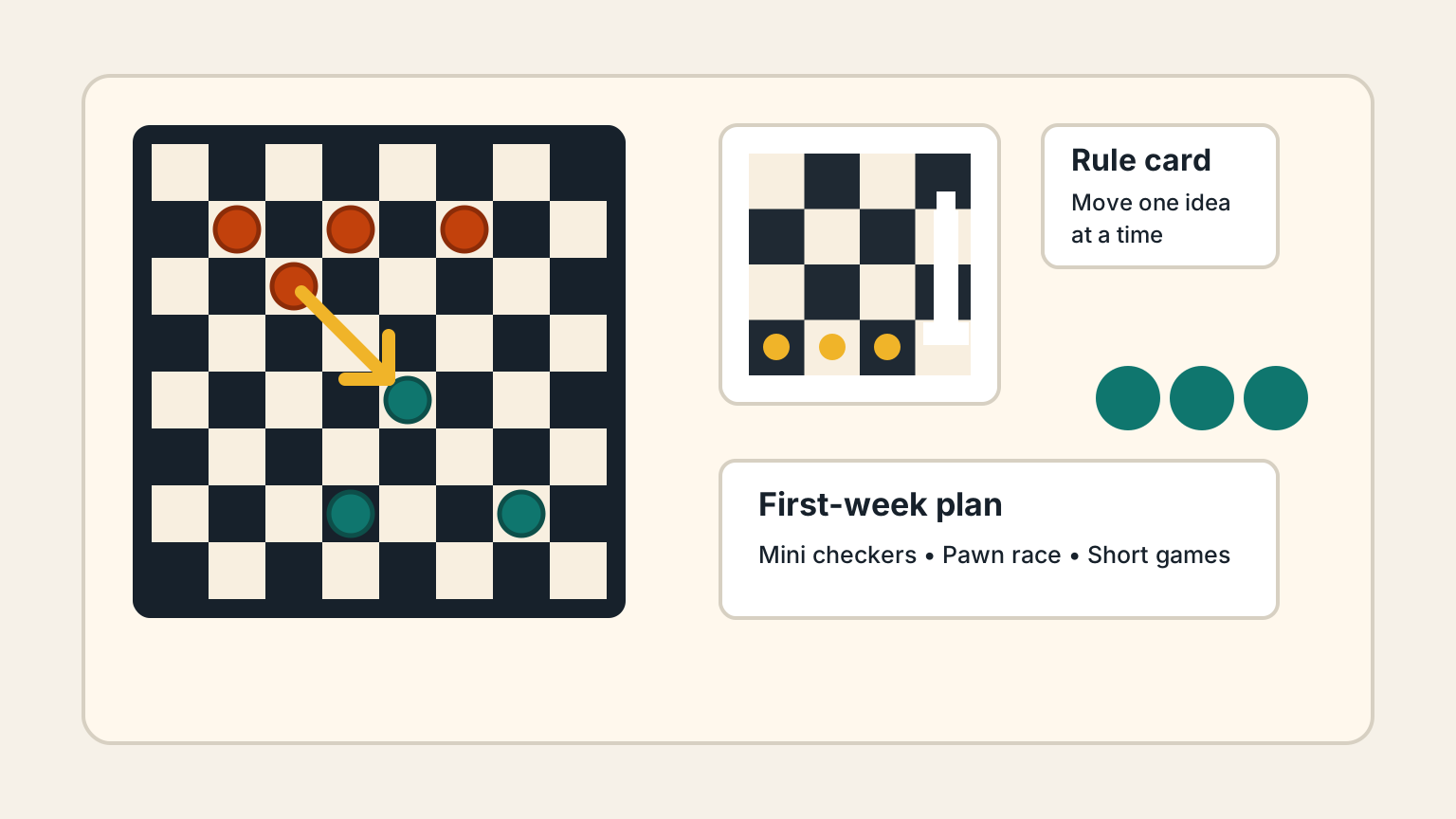
Set up only four checkers per side. Play on the dark squares and practice diagonal moves and jumps. This teaches movement and captures faster than a full board.
Pawn Race
In chess, place only pawns on their starting squares. The first player to get a pawn to the far side wins. This teaches forward movement, diagonal captures, and planning without introducing checkmate yet.
Rook Chase
Place one king and one rook for the adult, and one king for the child. Show how the rook controls rows and columns. Keep it playful and short.
Choose Equipment That Helps Beginners
The right set can make teaching easier. Children should not have to squint at the board or guess which chess piece is which.
Useful features include:
- A clear 8-by-8 board with strong contrast between light and dark squares
- Chess pieces with recognizable shapes
- Checkers that stack neatly for kings
- Pieces large enough for small hands to pick up
- A board that does not slide around during play
- Storage that makes cleanup simple
For classrooms, clubs, and busy family rooms, durable plastic pieces can be more practical than decorative wooden sets. For travel, magnetic pieces can help, but very small pieces may be harder for young children to handle. For child-focused buying cautions, compare best chess and checkers sets for kids.
Keep the First Sessions Short
A full chess game can be too long for a new child player. Even a full checkers game can drag if the child is tired or frustrated. Ten to fifteen minutes of cheerful practice is usually better than a long session that ends badly.
Stop while the child still has energy. It is much easier to build a habit when the last memory is positive.
Explain Winning Clearly
Children handle games better when they understand what they are trying to do.
In checkers, the usual goal is to capture or block the opponent's pieces so they cannot move. In chess, the goal is checkmate. Check means the king is under attack. Checkmate means the king is under attack and has no legal way to escape.
For very new chess players, you can delay checkmate and first teach simple ideas like protecting the king, capturing safely, and noticing threats.
Let Beginners Take Back Moves Sometimes
For learning games, takebacks can be useful. If a child makes a move and immediately sees the problem, letting them try again can teach more than forcing a loss.
You can use a simple house rule: each beginner gets one or two takebacks per game, but only before the next move is made. This keeps the game friendly without making choices meaningless.
Avoid These Common Teaching Mistakes
- Explaining every rule first: Start playing sooner and add rules as needed.
- Correcting every move: Pick one lesson at a time.
- Winning too hard: Adults should model good play without turning every game into a lesson in losing.
- Using hard-to-read sets: Fancy pieces can confuse beginners.
- Ignoring checkers: Checkers builds pattern recognition and board confidence too.
Make Both Games Feel Welcome
Chess and checkers teach different skills. Chess introduces varied piece movement, king safety, and long-term planning. Checkers builds diagonal movement, forced choices, promotion, and capture patterns.
For many families, the best approach is to keep both games available. A child may want checkers on a tired school night and chess on a quiet weekend morning. That is not a step backward. It is how games become part of normal life.
Simple First-Week Plan
- Day 1: Play mini checkers with four pieces per side.
- Day 2: Play a pawn race in chess.
- Day 3: Add kings and practice protecting them.
- Day 4: Play a short checkers game with the agreed house rules.
- Day 5: Add rooks and bishops to chess mini-games.
- Day 6: Let the child choose chess or checkers.
- Day 7: Play one relaxed game with no pressure to finish.
Bottom Line
The best way to teach chess and checkers to kids is to make the first steps small. Use clear pieces, short sessions, mini-games, and patient explanations. Define the goal, agree on simple rules, and let children build confidence before expecting full games.
If they ask to play again, the lesson worked.