
Do You Have to Jump in Checkers? Forced Captures Explained for Families
Updated October 25, 2026 by The Good Chess & Checkers editorial desk
Reviewed July 27, 2026 by The Good Chess & Checkers editorial desk
In common American checkers, yes: if you can legally jump an opponent's checker, you have to make a jump. The tricky part is knowing what counts as a legal jump, what happens after the first capture, and which house rules your table wants to use.
This question comes up fast in family games because a player may see a simple diagonal move and a jump at the same time. If one person learned "jump if you want" and another learned "jumping is required," the game can stall before anyone is trying to be difficult.
The cleanest answer is to name the version you are playing before the first move. This article explains the common American checkers rule most families in the United States expect, then points out the rule choices that can vary by set, app, classroom, or household. If you need the full beginner path first, start with how to play checkers for beginners.
As an Amazon Associate, The Good Chess & Checkers may earn from qualifying purchases.
Quick decision aid
Choose checkers pieces for clear jumps
Good checkers gear makes forced jumps, multiple jumps, and crowned kings easier to see before family rule questions slow the game down.
Helpful product path
The Short Answer: Jumps Are Required in Common American Checkers
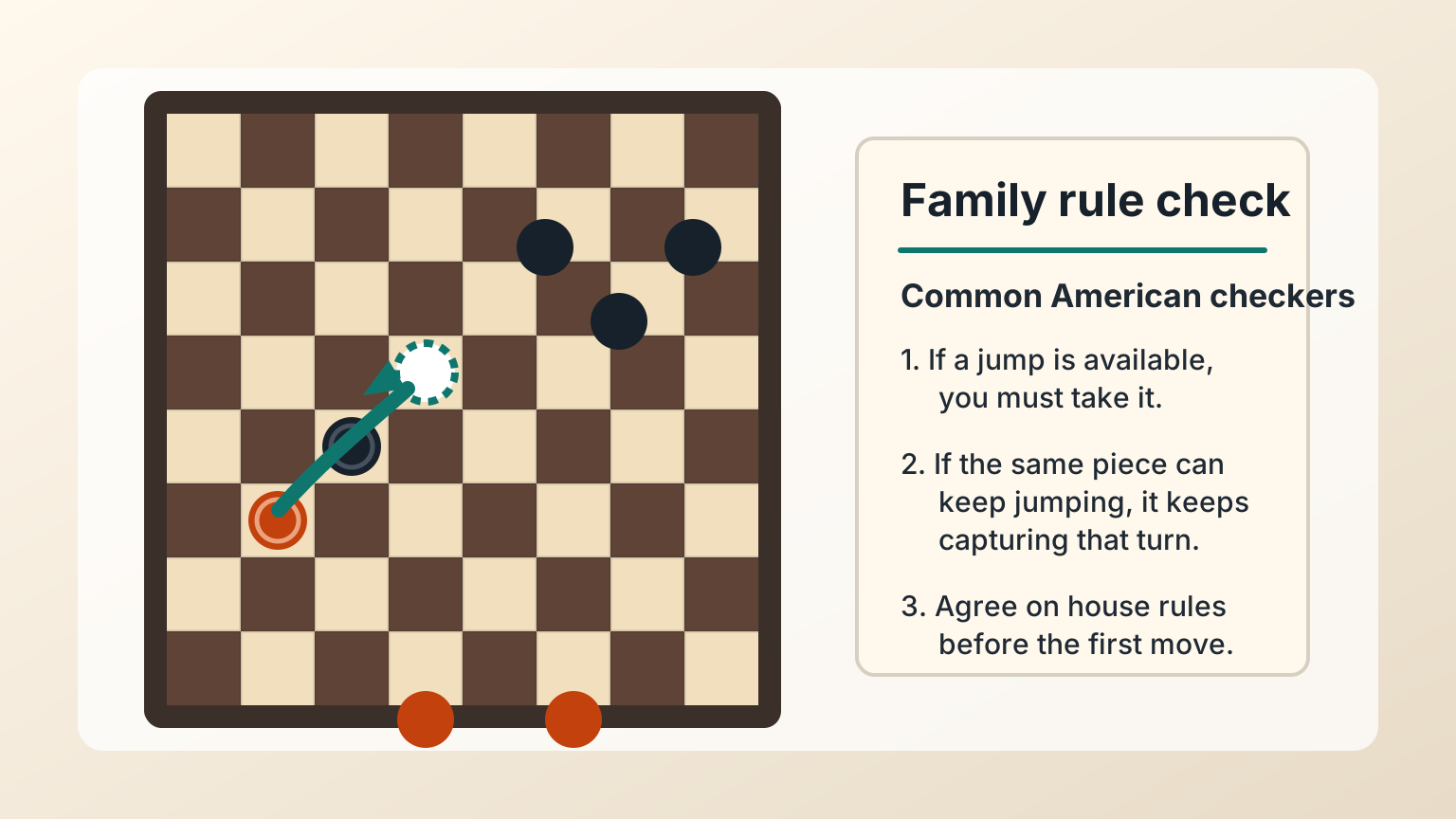
In common American checkers, a legal capture is mandatory. If one of your checkers can jump over an opponent's adjacent checker and land on the empty dark square immediately beyond it, you must make a capture on that turn.
You do not get to ignore the jump and slide a different checker one square instead. That forced-capture rule is part of what makes checkers tactical: players can offer, block, and sometimes bait jumps to change the position.
For a beginner table, use this simple wording: if you can jump, you must jump. Then add the next rule before it matters: if that same piece can keep jumping after the first capture, it must continue jumping until no more legal captures are available for that piece.
What Counts as a Legal Jump?
A normal checker, sometimes called a man, moves diagonally forward on the dark squares. In common American checkers, a normal checker also captures forward. It jumps over one adjacent opposing checker and lands on the empty dark square directly beyond it.
A jump is legal only when all of these are true:
- Your checker is next to an opponent's checker on a diagonal it is allowed to use.
- The square immediately beyond the opponent's checker is empty.
- The landing square is still on the board and on a playable dark square.
If the landing square is occupied, off the board, or on a direction that piece cannot use, that jump is not available. In that case, the player may make a regular legal move if no other checker has a legal capture.
Multiple Jumps: Do You Have to Keep Going?
Yes, in common American checkers, a multiple jump continues when the same checker lands and has another legal capture available. The player removes each captured checker and keeps jumping with that same piece until no further capture is available from its new square.
This is the part many family games miss. A player may think the turn ends after one jump, but the forced-capture idea continues through the whole capturing move. If the next jump is open, the player takes it.
If two different jump paths are available, common family play usually lets the player choose which legal capture path to take. Some versions or house rules may require a player to take the line that captures the most pieces. That is why it is worth agreeing before a close game begins.
What About Kings?
A checker becomes a king when it reaches the far side of the board. Families usually mark a king by stacking a second checker on top of it. In common American checkers, kings can move and capture diagonally forward or backward, one square at a time.
The forced-capture rule still applies to kings. If your king has a legal jump, it must jump. If it lands and has another legal jump, it continues the multiple jump from there.
One detail is easy to miss: in common American checkers, if a normal checker reaches the king row by jumping, it is crowned and the turn ends. It does not immediately continue jumping backward as a new king on that same turn. Some other draughts/checkers variants handle kings differently, so do not assume every app or printed rule sheet plays this detail the same way.
Can You Choose Which Checker Jumps?
If more than one of your checkers has a legal capture, common American checkers requires you to make a capture, but families often allow you to choose which legal jumping piece to use. Once you choose that piece, you continue any required multiple jumps with that same piece.
That choice can matter. One jump may win a checker but leave your piece exposed. Another jump may create a king, open a second capture, or trade pieces in a better way. Beginners do not need advanced strategy language here; they just need to pause and look for every available jump before touching a piece.
House Rules That Families Should Agree On
Checkers has several related games and plenty of household traditions. That does not make one family "wrong"; it means players should say the rules out loud before starting, especially when kids, guests, or a classroom group are playing together.
Agree on these points before the first move:
- Forced jumps: Are all available jumps required? For common American checkers, yes.
- Multiple jumps: Must the same piece keep jumping when another capture opens? For common American checkers, yes.
- Choice of capture: If several jumps are possible, can the player choose any legal path, or must they take the path with the most captures?
- Backward captures: Can ordinary checkers capture backward, or only kings? In common American checkers, ordinary checkers capture forward only.
- King movement: Do kings move one diagonal square at a time, or are you playing a version with long-range "flying kings"?
- Crowning during a jump: Does a checker stop when it reaches the king row, or continue as a new king? In common American checkers, it stops and is crowned.
For family game night, the best rule set is the one everyone understands before the first disagreement. If younger players are learning, write the capture rule on a small card: "Jump if you can. Keep jumping with that piece if you can."
A Simple Example for Beginners
Imagine your red checker is on a dark square. A black checker sits one diagonal step in front of it, and the dark square just beyond the black checker is empty. Red has a legal jump. Red must jump over the black checker, land on the empty square, and remove the black checker from the board.
Now look from red's new square. If another black checker can be jumped legally from there, red keeps going as part of the same turn. If no further jump is available, the turn ends.
This example also shows why checkers is more than sliding pieces forward. Sometimes you can place a checker where your opponent must jump, then use that forced move to set up your own capture next turn.
How to Handle Mistakes Without Spoiling the Game
Beginners will miss jumps. Adults will too, especially in a noisy room or when a board is crowded. Decide how friendly you want the correction to be.
- Teaching game: Point out the missed jump and let the player make it.
- Family game: Give each player one or two reminders, then start enforcing the rule normally.
- Competitive casual game: Announce before the start that forced jumps are enforced as soon as a move is released.
Older rule traditions sometimes mention removing a piece when a player fails to jump. Many modern family tables skip that penalty because it turns a beginner lesson into a rules argument. If you want to use any penalty for missed jumps, agree on it before playing.
Quick Rule Card for the Table
Use this version when you want a short rule everyone can remember:
- If a legal jump is available, you must jump.
- If the same piece can jump again after landing, it must keep jumping.
- Regular checkers move and capture forward only in common American checkers.
- Kings can move and capture forward or backward.
- If more than one jump is possible, agree before the game whether any legal jump is allowed or the longest capture path is required.
If the board itself is the confusing part, start with how to set up a chess board and checkers board correctly. If you are teaching children, pair the forced-jump rule with short games and reminders from how to teach chess and checkers to kids without overwhelming them.
Primary rules source
The forced-capture, continuation, and short-range king rules described here follow the World Checkers/Draughts Federation Rules of Checkers. That document governs the named English/American ruleset; it does not make every household or app variation identical.
Bottom Line
For common American checkers, forced captures are part of the game: jump if you can, and keep jumping with the same piece if another capture is available. The family-friendly move is to say that clearly before the game starts, then decide together how strict you want to be with missed jumps while beginners are still learning.
For more practical articles, visit The Good Chess & Checkers blog. For more on our editorial approach, read About The Good Chess & Checkers.