
The best chess and checkers set for kids is usually not a novelty board, a tiny travel set, or the heaviest wooden set in the room. It is a set children can read, handle, reset, and put away without turning the first game into a chore.
This guide compares practical set categories for parents, grandparents, teachers, and gift buyers. It does not claim hands-on testing, live prices, ratings, or a ranked product review list. If you are choosing a first family set for mixed ages, it may also help to compare this page with best chess and checkers sets for beginners.
As an Amazon Associate, The Good Chess & Checkers may earn from qualifying purchases.

Quick decision aid
Choose the products in this guide
Compare these affiliate product routes first, then use the guide criteria to choose the board, pieces, storage, clock, or learning aid that fits the player.
Helpful product path
How to Judge a Kids Chess and Checkers Set
For children, the buying criteria are a little different from adult display sets. Start with the friction points that can stop a game before it becomes fun:
- Piece recognition: chess pieces should be easy to tell apart, especially kings, queens, bishops, and pawns.
- Board contrast: children should be able to see the light and dark squares without guessing.
- Handling: pieces and checkers should be large enough to grip, but not so large that the board feels crowded.
- Storage: boxes, trays, pouches, or folding boards should make cleanup simple and missing pieces obvious.
- Durability: family and classroom sets need to survive repeated setup, sorting, and short attention spans.
- Age fit: always check the manufacturer age label and small-parts warnings before buying for younger children.
Best Overall for Kids: A Medium Folding Combo Set
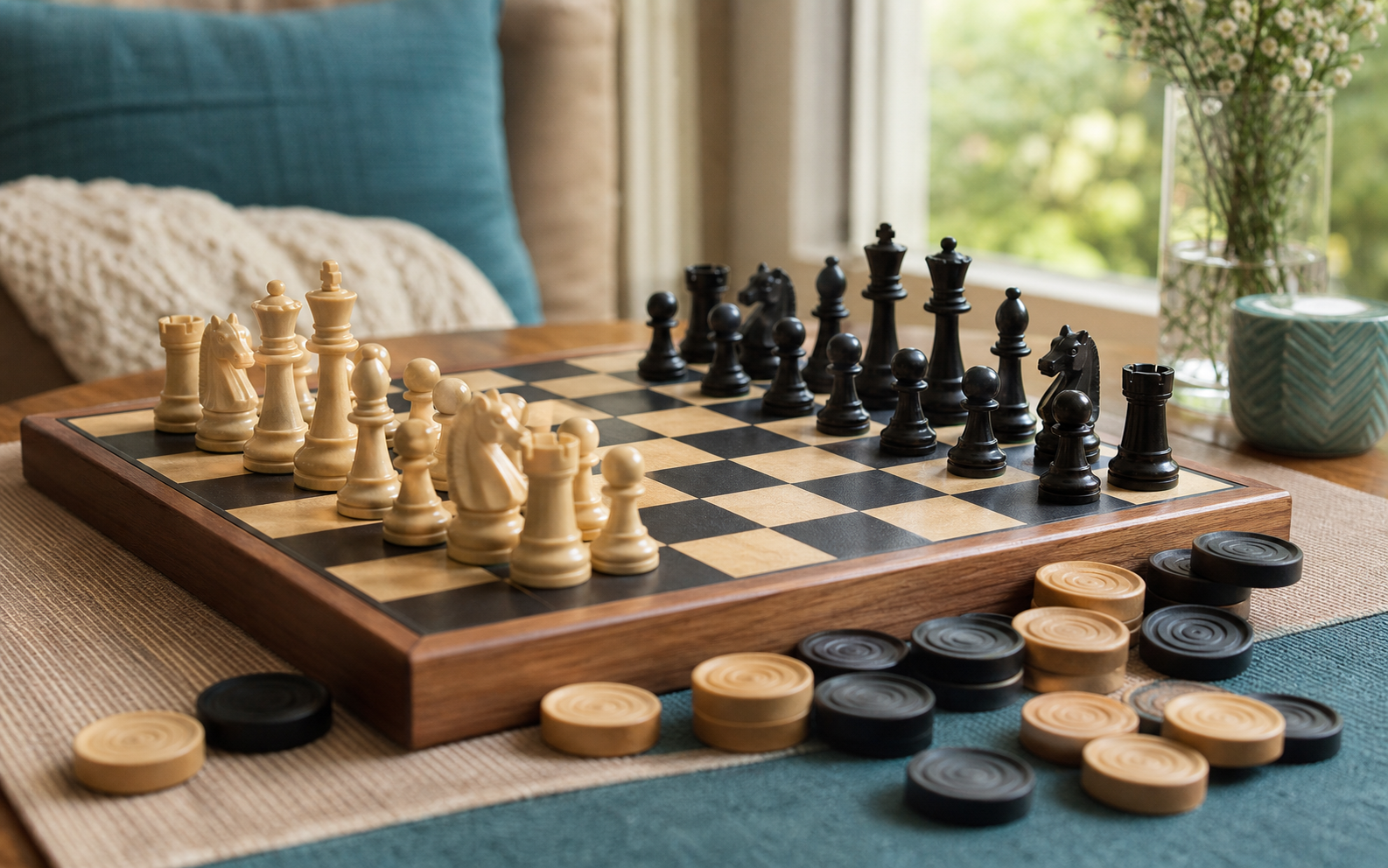
A medium folding chess and checkers set is the safest category for many families because it keeps the board, chess pieces, and checkers together. It is usually easier for children to manage than a loose board with separate bags, and it feels more playable than a pocket-sized travel set.
Look for clear Staunton-style chess pieces, stackable checkers for kings, a board that opens flat enough for stable play, and interior storage that does not dump every piece into one confusing pile.
Best for: first family sets, grandparents buying one shared board, and kids who are learning both games.
Skip it if: the hinge feels flimsy, the board does not sit flat, or the storage compartments are too shallow to hold both games neatly.
Best for Younger Beginners: A Large-Piece Set
Large pieces can make chess and checkers less fiddly for children who are still learning how to sort, place, and move pieces. The goal is simple: make the board easy to read and the pieces easy to pick up.
Large does not automatically mean better. The board squares still need enough room for the chess piece bases, and the checkers still need to stack securely when a piece is crowned as a king. If the pieces crowd the squares, children may knock over more pieces than they move.
Best for: early elementary learners, family rooms, and adults who want fewer tiny pieces under the table.
Skip it if: the set takes over the whole table or becomes too bulky for the shelf where it needs to live.
Best for Learning Piece Names: A Simple Staunton-Style Chess Set with Checkers
When a child is learning chess, recognizable pieces matter more than decoration. Staunton-style pieces are common because the shapes are familiar: pawns look like pawns, knights look distinct, and bishops do not have to be decoded every turn.
This does not mean the set needs to look formal or expensive. A plain, readable combo set is often better than a themed set where a child has to remember which character is supposed to be the rook. For movement practice, pair the set with how chess pieces move.
Best for: children starting chess from scratch and gift buyers who want the set to help with learning.
Skip it if: the pieces are novelty shapes, nearly identical silhouettes, or colors that blend into the board.
Best for Fast Cleanup: A Set with Clear Storage
Storage is not a small detail with kids. A set that shows where pieces belong can prevent lost checkers, missing pawns, and cleanup arguments after a short game.
Folding boards with molded slots, labeled trays, zipper pouches, or separate bags for chess pieces and checkers can all work. The best option is the one a child and adult can reset in under a minute. For shared shelves and family storage habits, see how to choose a chess and checkers set for a shared game shelf.
Best for: families with younger siblings nearby, classrooms, after-school programs, and game shelves used by several people.
Skip it if: the box looks nice but gives no clear place for each type of piece.
Best for Trips: A Readable Magnetic Set
A magnetic chess and checkers set can help during car trips, waiting rooms, hotels, and small tables where pieces slide easily. For kids, though, a travel set still has to be readable. Very tiny magnetic pieces can turn the game into pinching and squinting.
Check that the board has enough contrast, the pieces are not too small for the child using them, and the case closes securely. If travel is the main reason for buying, use how to choose a magnetic chess and checkers set for travel for a deeper checklist.
Best for: family trips, waiting rooms, vacation rentals, and kids who already understand the basics.
Skip it if: the child is still learning piece names and would benefit from a larger home board first.
Best for Classrooms and Groups: Durable Sets with Matching Parts
Classroom and group sets need to be sturdy, repeatable, and easy to reset. Matching boards and pieces help children move between tables without relearning the layout, and durable materials matter more than gift-box presentation.
If several children will share the sets, choose pieces that are easy to replace or sort. Keep boards readable from both sides of a table, and avoid sets with lots of decorative parts that slow down cleanup. For setup beyond the set itself, use how to set up a beginner-friendly chess and checkers station.
Best for: classrooms, libraries, clubs, homeschool groups, and family gatherings with several boards going at once.
Skip it if: the buyer wants one special-looking gift for a single child rather than repeat-use group equipment.
Quick Comparison Framework
- Choose a medium folding combo set when you want one dependable first set for both chess and checkers.
- Choose a large-piece set when grip, visibility, and reduced frustration matter more than compact storage.
- Choose simple Staunton-style chess pieces when the child is learning what each piece is and how it moves.
- Choose clear storage when missing pieces and cleanup are the biggest family problem.
- Choose magnetic travel when the set needs to work in cars, waiting rooms, hotels, or small tables.
- Choose classroom-style durability when several children will handle the same sets repeatedly.
Who Should Skip a Kids Chess and Checkers Set
Skip a standard kids chess and checkers set if the child is below the manufacturer age label, if small-parts warnings are a concern in the home, or if the pieces are likely to be used without adult supervision around younger siblings. In that case, wait, choose an age-labeled alternative, or use supervised pretend play with larger pieces until a real set makes sense.
Also skip highly decorative sets for first learning. Themed boards can be fun later, but they often make the first lessons harder. If the main goal is teaching, start with clear shapes, strong contrast, and short sessions. How to teach chess and checkers to kids without overwhelming them can help keep those first games short and welcoming.
Bottom Line
For most children, start with a medium folding chess and checkers set that has readable squares, recognizable chess pieces, stackable checkers, and storage that makes cleanup obvious. Move toward large pieces, magnetic travel, classroom durability, or a special gift set only when that specific setting matters.
A good kids set does not need to impress adults in the box. It needs to help a child say, “I know where this goes,” and want to play again.