
The best beginner chess and checkers set is not always the fanciest board or the cheapest box on the shelf. It is the set that makes both games easy to start: clear squares, recognizable chess pieces, stackable checkers, sensible storage, and a size that fits the place where people will actually play.
This shortlist compares practical set categories rather than pretending one product is best for every home, classroom, trip, or gift. If you are still deciding what features matter, start with how to choose a board game set for chess and checkers beginners, then use this guide to match the category to the situation.
The Good Chess & Checkers may earn commissions from qualifying purchases.

Quick decision aid
Choose the products in this guide
Compare these affiliate product routes first, then use the guide criteria to choose the board, pieces, storage, clock, or learning aid that fits the player.
Helpful product path
How We Chose the Categories
This guide does not claim hands-on testing, live pricing, ratings, or a ranked review list. Instead, it uses beginner-friendly buying criteria that matter across many current sets:
- Readability: clear light and dark squares, strong piece contrast, and chess pieces beginners can identify quickly.
- Complete play: a full chess set plus enough checkers for standard American checkers, usually 12 pieces per side.
- Storage: a box, tray, pouch, or folding board that makes missing pieces obvious.
- Handling: pieces that are large enough to grip without crowding the board.
- Durability: materials that match the setting, especially for classrooms, clubs, travel, and children.
- Skip criteria: clear reasons a category may be wrong for a buyer even if it looks appealing.
Best Overall Beginner Category: A Medium Folding Combo Set
For many families and gift buyers, a medium folding chess and checkers set is the safest first choice. It usually gives beginners enough board space, keeps all pieces together, and feels more complete than a tiny travel set.
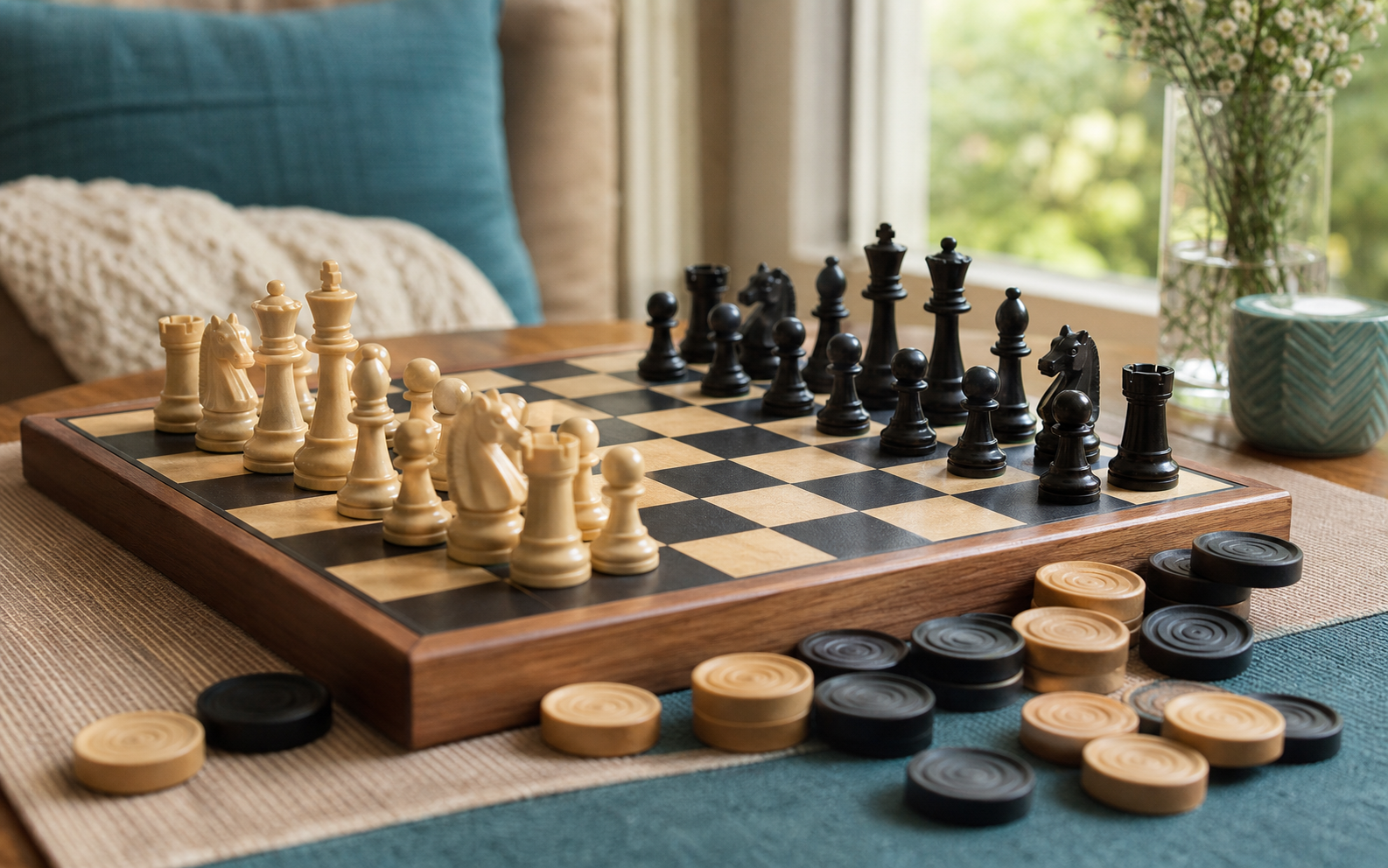
Look for recognizable Staunton-style chess pieces, checkers that stack cleanly for kings, and interior storage that holds both games without a messy pile. A medium board is especially useful when one player is learning chess while another prefers checkers.
Best for: families, casual adults, grandparents, babysitters, and gift buyers who want one dependable board.
Skip it if: the board will be used mainly in a car, carried daily in a backpack, or managed by a classroom with many boards at once.
Best for Family Game Night: A Full-Size Home Set
A full-size home set works well when the board can live on a shelf, table, or cabinet near where people play. The advantage is comfort: larger squares, easier piece recognition, and checkers that are less fiddly for younger players.
Choose usability before decoration. A beautiful board with low contrast or novelty chess pieces can frustrate beginners. A simple board with clear colors and sturdy pieces will usually get played more often.
Best for: kitchen tables, family rooms, mixed-age play, and people who want a set that feels pleasant enough to bring out often.
Skip it if: storage space is tight or the set needs to travel between homes, classrooms, or club meetings.
Best for Classrooms and Clubs: Durable Plastic Pieces with Easy Storage
Classroom and club sets need to survive repeated setup, quick cleanup, and mixed beginner skill levels. Durable plastic chess pieces, stackable checkers, and boards that can be packed quickly usually matter more than premium materials.
If you are buying several sets, consistency helps. Matching boards and pieces make it easier for helpers to reset games and spot missing parts. For broader setup planning, pair this buying decision with how to set up a beginner-friendly chess and checkers station.
Best for: teachers, librarians, after-school helpers, clubs, and families hosting several players at once.
Skip it if: the set is meant to be a special-looking gift or a quiet display piece for a living room.
Best for Trips: A Readable Magnetic Chess and Checkers Set
Magnetic sets are useful when pieces need to stay put on small tables, hotel desks, waiting-room chairs, or family trips. The strongest choice is usually not the tiniest one. Beginners need enough room to see the board and move pieces without nudging everything around.
Check the closure, storage compartments, and magnet feel. Pieces should resist small bumps but still move easily when a child or beginner picks them up. For a deeper travel checklist, see how to choose a magnetic chess and checkers set for travel.
Best for: road trips, hotels, waiting rooms, vacation rentals, and compact family bags.
Skip it if: most play happens at home and a larger board would be easier to read.
Best for Younger Players and Mixed Ages: A Large-Piece Set
Large-piece sets can reduce friction for children, older relatives, and anyone who dislikes tiny pieces. The point is not to make medical or accessibility promises; it is simply easier to learn when pieces are visible, grippable, and not crowded.
Make sure the board grows with the pieces. Large chess pieces on small squares become frustrating fast, and oversized checkers still need to stack cleanly when crowned as kings.
Best for: young beginners, grandparents and kids playing together, family rooms, and casual teaching sessions.
Skip it if: the board footprint would overwhelm a small table or storage shelf.
Best for Small Shelves: A Compact Folding Set
A compact folding set is a good compromise when storage matters but the players still need a real game board. It is usually more comfortable than a pocket set and easier to keep complete than a board with loose bags.
Watch the square size. If chess pieces touch neighboring pieces or checkers are hard to pick up, the set may be too small for beginners. Our board size guide can help compare table fit against piece comfort.
Best for: apartments, shared game shelves, dorm rooms, and casual players who need the set to pack away neatly.
Skip it if: the main players have trouble seeing small boards or handling compact pieces.
Quick Comparison Framework
- Choose a medium folding set when you want the safest all-around beginner option.
- Choose a full-size home set when comfort and table play matter more than portability.
- Choose classroom-style materials when several people will handle the sets often.
- Choose magnetic travel when bumps, small tables, or packing space are the main problems.
- Choose large-piece sets when visibility and grip matter more than compact storage.
- Choose compact folding when the set needs to disappear onto a small shelf after play.
Who Should Skip a Beginner Combo Set
A chess and checkers combo set is not the best choice for every buyer. Skip the all-in-one category if the player is joining a chess club that expects a roll-up chess board and notation-friendly pieces, if the family plays a checkers variant that needs a different board or piece count, or if the set will be used outdoors where weather-resistant materials matter more than appearance.
Also skip novelty boards for first learning. Themed pieces can be charming, but beginners should not have to decode which figure is the bishop or queen before every move.
Bottom Line
For most beginners, start with a medium folding chess and checkers set that has clear Staunton-style chess pieces, stackable checkers, readable squares, and storage people will actually use. Move toward a classroom set, magnetic travel set, large-piece set, or compact folding set only when the setting makes that tradeoff worthwhile.
The right beginner set does not need to feel impressive in the box. It needs to make the first game easy to start and the next game easy to say yes to.