
Worn, loose, or missing base felt can make an otherwise usable chess piece sit unevenly or expose its base to the board. The sensible replacement is not a universal “chess felt” winner: it is a pad or sheet whose diameter, thickness, adhesive format, and color suit the actual pieces.
This is a category comparison, not a list of products we claim to have tested. Measure more than one piece before shopping, and treat valuable, antique, unusually weighted, or already repaired chessmen as restoration work rather than a routine craft project.
As an Amazon Associate, The Good Chess & Checkers may earn from qualifying purchases.
Quick decision aid
Choose replacement felt formats
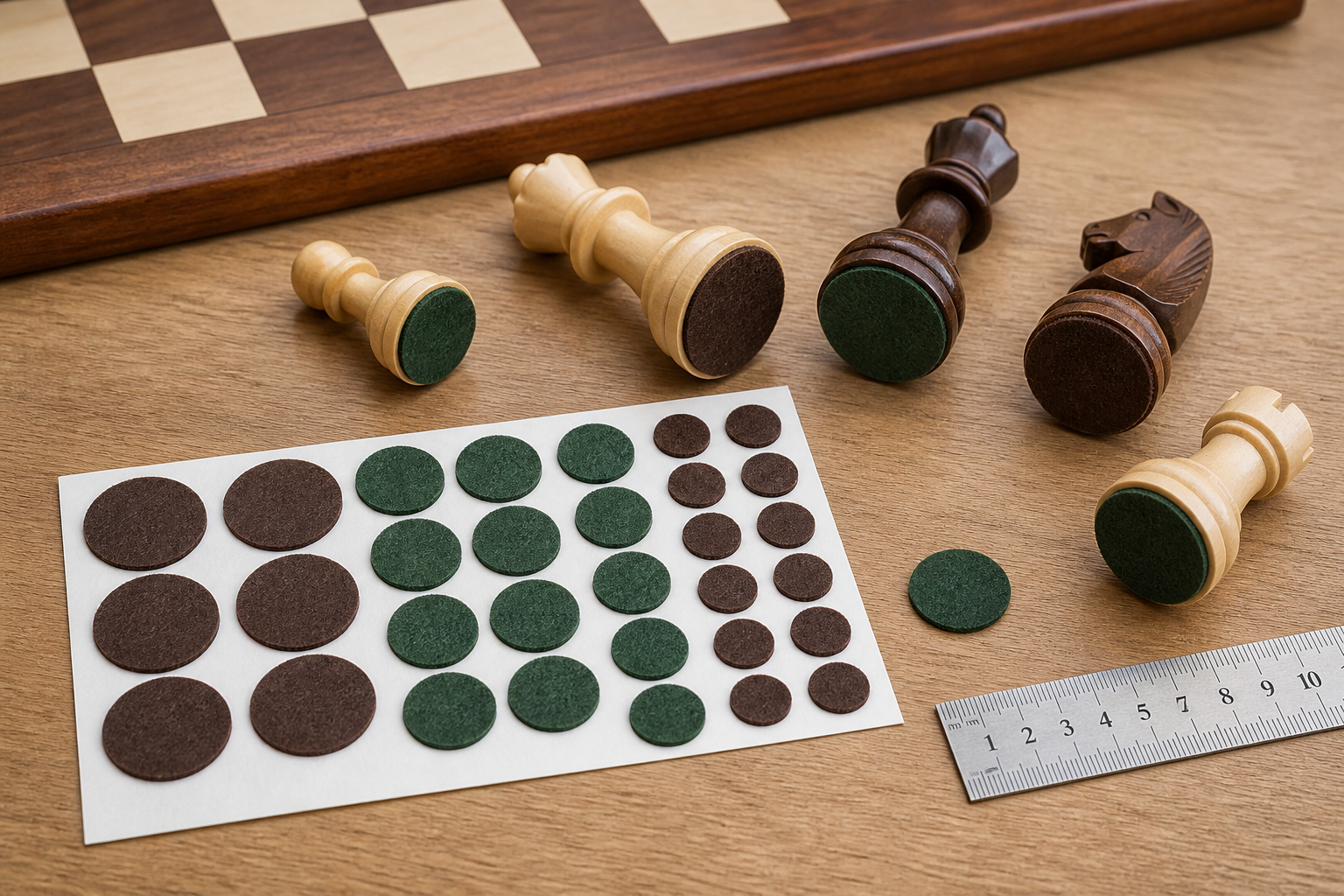
Compare pre-cut adhesive circles for a close size match with felt sheets for mixed base sizes. Check the listing for actual diameter, thickness, material, adhesive, and quantity rather than relying on “chess” in the title.
How to compare replacement felt
- Base diameter: measure the flat underside, not the widest decorative ring above it. Pawns, rooks, and kings may use different diameters.
- Coverage: a circle should stay just inside the base edge so felt and adhesive do not overhang.
- Thickness: match the existing felt closely enough that all pieces stand at a consistent height and weighted pieces keep their expected balance.
- Adhesive format: peel-and-stick pads are tidy and quick; plain felt requires a separate adhesive and a more controlled application.
- Color and texture: brown and green are common, but consistency across the set matters more than copying a listing photo.
- Quantity: count pieces by base size and allow extras for measuring or trimming mistakes.
Best easy-fit category: pre-cut adhesive felt circles
Pre-cut circles remove the hardest trimming step. They work best when their published diameter is slightly smaller than the clean, flat base and when one or two available sizes cover the set. Measure a pawn, a major piece, and the king before assuming every base matches.
Best for: ordinary modern sets with round bases and one or two consistent diameters.
Skip them if: the closest listed circle hangs over the edge, leaves too much base exposed, or the seller omits diameter and thickness.
Best for mixed base sizes: self-adhesive felt sheet
A sheet lets you trace each cleaned base and cut circles for pawns, major pieces, and kings separately. This flexibility helps with incomplete sets or pieces whose bases are not perfectly uniform, but careful marking and cutting take longer.
Best for: mixed diameters, oval bases, or a household maintaining several inexpensive sets.
Skip it if: you cannot produce smooth edges or the sheet is so thick that the pieces rock or sit noticeably higher.
Best for preserving the original adhesive choice: plain felt sheet
Unbacked felt keeps the felt and adhesive decisions separate. That can matter when a set maker, repair specialist, or known restoration method calls for a specific compatible adhesive. It also creates more opportunities for seepage, uneven coverage, and difficult cleanup.
Best for: a repair where the correct adhesive is already known.
Skip it if: you would be guessing about glue compatibility or working on valuable pieces without restoration experience.
Quick comparison framework
- Choose pre-cut circles when base diameters match a published pad size.
- Choose self-adhesive sheets when a set has several sizes or unusual outlines.
- Choose plain felt only when you have a verified adhesive plan.
- Replace the full set's felt when a color or thickness mismatch would leave pieces visibly or physically inconsistent.
- Pause and consult a restorer for collectible, antique, cracked, unstable, or unusually weighted chessmen.
Preflight the fit before attaching anything
- Photograph or note the original felt color, thickness, and placement.
- Measure representative pawns, rooks, queens, and kings with a ruler or caliper.
- Count how many circles each diameter needs, then add a small margin for errors.
- Dry-place one circle or paper template against each base group before removing any backing.
- Follow the piece maker's or felt seller's preparation instructions; do not soak wooden or weighted pieces.
- Attach one low-stakes piece first, set it upright on a flat board, and inspect the edge and stability before continuing.
Who should skip a do-it-yourself refelt?
Skip this project when the set may be valuable, the base covering hides screws or weight compartments, a piece is cracked or loose, or the original material may be something other than ordinary craft felt. Also skip any pad listing without dimensions and material details. A replacement that fits poorly can look worse than worn felt and may leave the set uneven.
Bottom line
Pre-cut adhesive circles are the simplest choice when their measured diameter fits. Self-adhesive sheets are more useful for mixed or unusual bases, while plain felt belongs in repairs with a known adhesive method. If the damage extends beneath the felt, use the felt-pad vs replacement-base diagnosis guide before buying parts. If you are replacing the pieces rather than repairing them, compare felted and bare-base chess pieces for a wooden board before assuming either finish suits the board. Measure first, trial one piece, and judge success by clean edge clearance and stable, consistent pieces—not by a generic product label.