
Choose a chess lesson-plan book when a new helper needs a coherent sequence with less preparation. Build a teacher-made binder when the group needs local pacing, mixed-level alternatives, or notes that change after each session. The binder is not automatically the cheaper choice: it trades a published sequence for ongoing selection, verification, permissions checks, printing, and maintenance.
This comparison is about the source of the curriculum, not whether a ring binder is better than another paper organizer. Preview the actual book or source pages, verify every chess position, and use only material you created or have permission to reproduce.
As an Amazon Associate, The Good Chess & Checkers may earn from qualifying purchases.
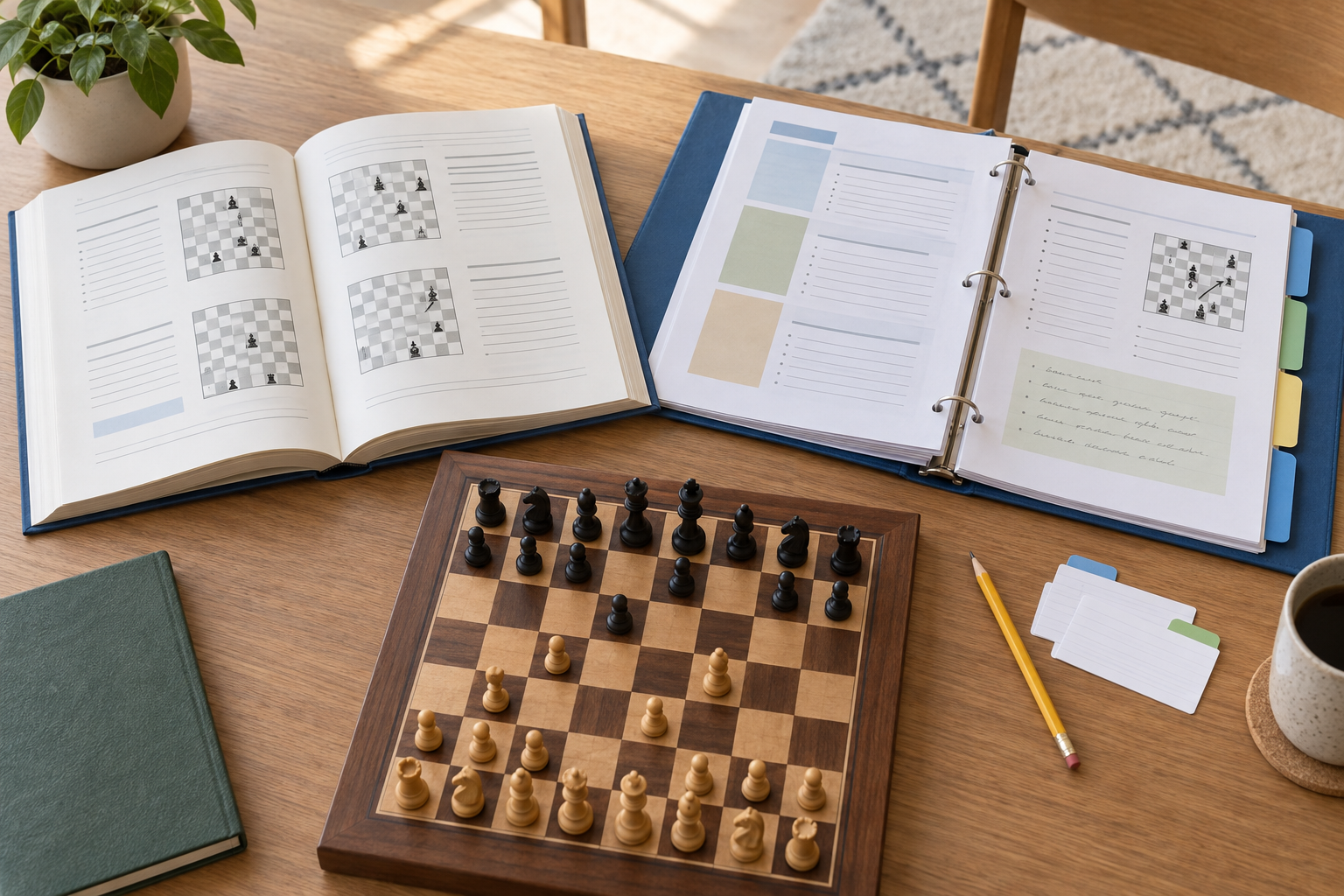
Ready sequence or maintained custom plan?
Compare the complete teaching workload
For a published book, inspect the learner level, lesson order, board activities, answers, edition, and reproduction terms. For a binder, define the source of every page, a revision routine, tab structure, and the time needed to prepare the next session.
Quick decision
- Use a lesson-plan book when the group begins at a similar level, meetings follow a regular schedule, and the helper wants a visible path from board basics to complete games.
- Build a teacher-made binder when sessions are irregular, learners enter at different stages, or the instructor already has permitted material and a dependable review process.
- Use a hybrid when one published sequence is the backbone and the binder holds original notes, attendance-neutral alternatives, and lawfully reusable activities.
- Choose neither yet for a one-time event or first meeting that only needs a short rules demonstration and guided board play.
What a published lesson-plan book does well
A well-previewed book reduces sequencing work. It can define what learners should know first, provide prepared positions, and keep a substitute or volunteer from improvising a new course every week. Bound pages also make the plan easier to hand off.
The limitation is fit. A fixed sequence may assume notation too early, allocate more time than the group has, or move at one pace when attendance changes. Buying the book also does not grant permission to photocopy its pages. Confirm the current edition, format, included resources, and publisher terms before building group activities around it.
What a teacher-made binder does well
A maintained binder can reflect the real group. The instructor can place a shorter activity beside a longer one, record which examples confused learners, and add an original recap before the next meeting. Dividers can separate start-here lessons, piece movement, checks, simple tactics, complete games, and optional extensions.
That flexibility creates responsibility. Someone must choose trustworthy sources, check every diagram and solution on a board, preserve source and permission notes, remove superseded pages, and keep lesson order intelligible to the next helper. A thick collection of unrelated printouts is storage, not a curriculum.
Compare the curriculum, not the covers
| Decision | Published lesson-plan book | Teacher-made binder |
|---|---|---|
| Sequence | Supplied by the author | Designed and maintained by the instructor |
| Preparation | Preview, rehearse, and adapt the selected lesson | Select, verify, order, print, and revise each component |
| Mixed levels | Limited to alternatives the book provides | Can hold planned easier and harder versions |
| Permissions | Publisher terms govern copying and included downloads | Each external source needs its own documented terms |
| Handoff | One stable reference, if the edition is recorded | Works only when tabs, notes, sources, and revisions are clear |
| Maintenance | Check edition and supplement changes | Review accuracy, relevance, duplicates, and permissions continually |
Setup and maintenance issues
Table space during the lesson
Open the candidate book or binder beside the physical board, not on an empty desk. A wide binder can crowd the board; a tightly bound book may not remain on the required page. Measure the complete open footprint and decide whether the instructor needs a stand, a separate notes page, or less paper at the table.
Version control
Record a published book's edition and any associated download version. In a custom binder, date changed lesson pages and keep one current master rather than several nearly identical copies. If another helper cannot tell which activity is current, simplify the system.
Copyright and printing
Do not assume that material found online, borrowed from a book, or purchased once may be copied for a group. Follow the current publisher or creator terms. Original lesson notes can refer learners to a board position without reproducing someone else's protected page.
Board accuracy
Rebuild every position on an 8-by-8 board, confirm whose turn it is, and verify that the intended move is legal. Check that piece movement is taught before a task depends on it. Avoid presenting one teaching sequence as an official federation curriculum unless the named source actually supports that claim.
Run a two-session trial
- Choose one complete sample lesson from a book you can lawfully preview and one original or permitted lesson assembled for the binder.
- Give both the same session limit and identify one visible learner outcome, such as setting up the board correctly or finding legal rook moves.
- Rehearse every explanation, diagram, board position, and answer.
- Track preparation, setup, teaching, reset, and revision time—not only time spent in front of learners.
- Ask whether another helper could run the next session from the material and notes without guessing.
- Choose the format whose ongoing workload the program can actually maintain.
Who should skip each option?
Skip a lesson-plan book when its sample pages, audience, sequence, edition, or use terms cannot be verified, or when the group already follows a clear maintained curriculum. Skip a teacher-made binder when no one owns lesson selection, checking, permissions, and revision. Skip both when the immediate need is simply to teach the first moves; start with how chess pieces move and put learners at a readable board.
If the paper system—not the curriculum source—is the real problem, compare a ring binder with an accordion file. For a first-lesson sequencing choice, see one piece at a time versus all pieces at once.
Bottom line
A published chess lesson-plan book fits a regular beginner group that needs an ordered starting path and an easier handoff. A teacher-made binder fits an instructor prepared to customize, document sources, verify positions, and maintain the sequence over time. Trial one representative lesson from each approach, count the complete workload, and choose the curriculum system the next helper can understand and sustain.