
This is a lesson-planning choice, not a claim that one method makes children learn faster. Attention, prior experience, interest, and comfort vary. The useful test is whether the learner can explain and use the movement introduced today without the session turning into a memory quiz.
Helpful equipment path
Either lesson works best with recognizable pieces and a board that is easy to read. Compare those features in our chess teaching-set guide for parents; a normal set is also enough when it is complete and clear.
Quick decision
- Choose one piece at a time when the learner is starting from zero, hesitates over piece names, tires during explanations, or enjoys short challenges more than a full game.
- Choose all pieces at once when the learner already knows some moves, specifically asks to play a full game, or can keep several rules in mind without losing interest.
- Use a hybrid when the learner wants the whole picture but needs practice: give a two-minute tour of every piece, then play one focused mini-game.
- Skip the lesson for today if the child is frustrated, restless, or only participating to please an adult. Leave the board ready for another short invitation.
Side-by-side tradeoffs
| Decision | One piece at a time | All pieces at once |
|---|---|---|
| First-session load | One movement pattern and one small goal | Six piece types, setup, turns, captures, check, and game goal |
| Time to a complete game | Later; mini-games come first | Potentially the first session |
| Feedback | Mistakes point to one rule | Mistakes may come from several rules at once |
| Context | The full game's purpose can feel distant | The learner sees how pieces work together |
| Best fit | First-timers and short sessions | Ready, eager learners with active help |
Option A: teach one piece at a time
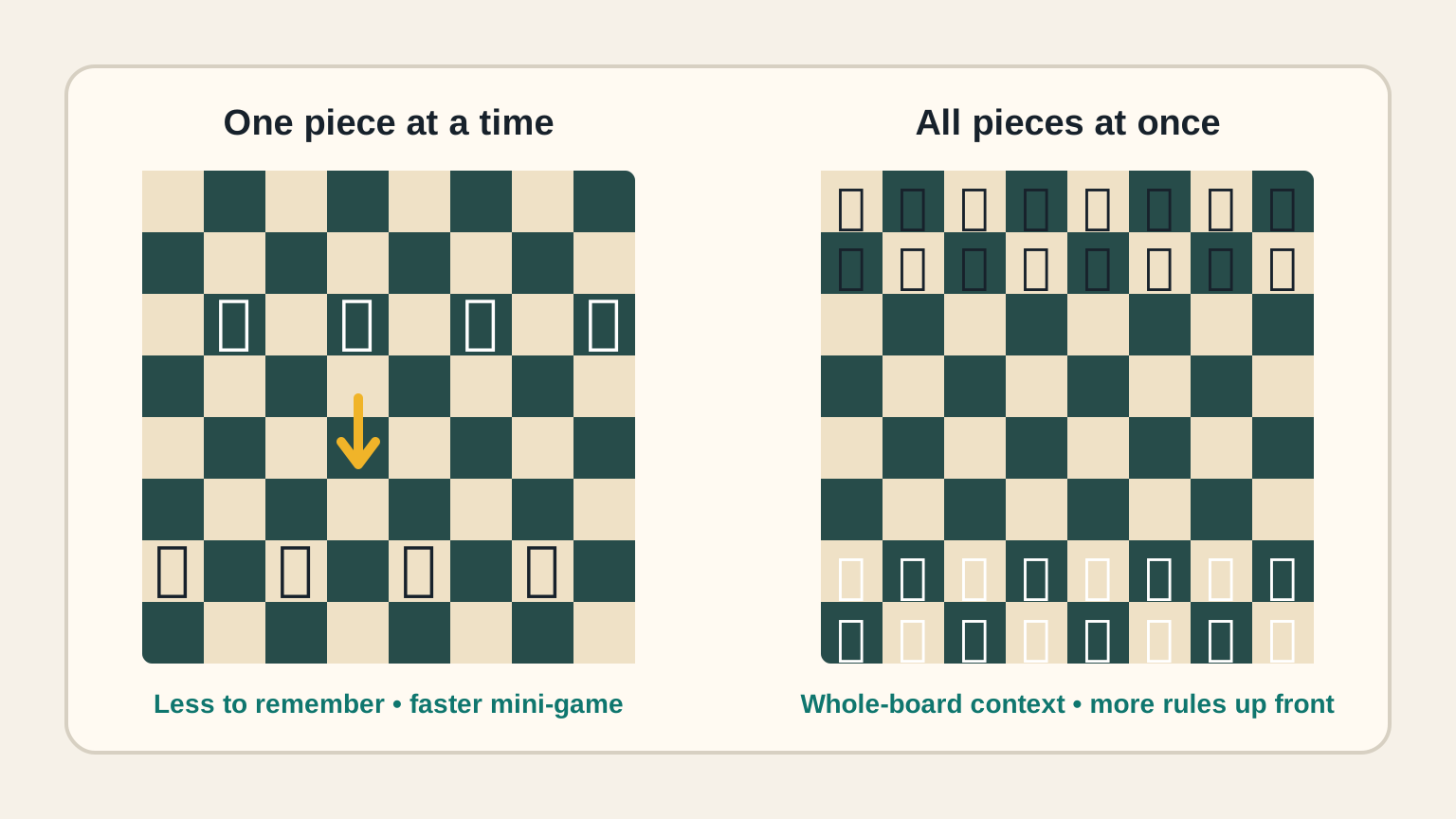
This approach removes most pieces and gives the learner a playable problem using one movement pattern. Pawns are a practical starting point because they introduce forward movement, diagonal captures, and a clear race to the far side. Rooks are another clear early lesson because their straight paths are easy to trace.
A suggested order is pawns, rooks, bishops, queen, king, then knights. That is only a teaching sequence, not an official curriculum. Move knights earlier if their unusual jump is what captured the child's interest; move the king earlier if the learner keeps asking how a game ends.
A 15-minute one-piece first session
- Two minutes: orient the empty board and name ranks, files, and diagonals in plain language.
- Three minutes: place four pawns per side and demonstrate forward movement and diagonal capture.
- Seven minutes: play a pawn race. A player wins by reaching the far edge or by leaving the opponent with no pawn move.
- Three minutes: ask the learner to show one legal move, one capture, and the goal without prompting.
Tradeoff: mini-games build confidence but can leave a learner wondering when “real chess” begins. Show the complete set at the end and say which piece comes next so the path is visible.
Skip this approach when removing pieces feels babyish to the learner, they already know most movements, or repetition causes boredom. Switch to a complete-board tour or a short supported game.
Option B: teach all pieces at once
An all-at-once lesson starts with the complete position. The learner sees that chess has different jobs: long-range pieces, pawns that shape space, knights that jump, and a king that must be protected. The advantage is context. The risk is turning the first session into a lecture followed by a game full of corrections.
A 20-minute all-pieces first session
- Five minutes: set up the board together and name each piece family.
- Six minutes: demonstrate each movement once, asking the learner to copy it on an open board.
- Two minutes: explain capture, check, and the aim of checkmate without adding castling or en passant yet.
- Seven minutes: begin a supported game. Pause for questions, allow takebacks, and stop before attention fades; finishing is not required.
Tradeoff: the learner gets a real-game view immediately, but legal-move reminders can crowd out decision-making. Correct the rule needed for the current move instead of repeating every rule.
Skip this approach when piece names are already blending together, the learner guesses every move, or the adult is doing most of the moving. Reduce the position to one mini-game and return to the full board later.
Who each method fits
- A young first-timer: try one piece and one goal, without using age alone as proof of readiness.
- A child who has watched family games: try the full-board tour, then check understanding with a few legal-move questions.
- A nervous beginner of any age: use mini-games so errors stay small and understandable.
- An eager learner asking for a full game: honor that interest with an all-pieces lesson, but permit reminders and an unfinished game.
- A small group: use the same mini-game on matching boards so everyone moves pieces rather than waiting for a long demonstration.
Setup and maintenance issues
For one-piece lessons, keep unused pieces in a labeled bag or tray so the lesson does not end with a missing bishop. Photograph the mini-game start position or keep a small card with the setup. Use the same piece shapes and board orientation each time while recognition is still developing.
For all-pieces lessons, count 16 pieces per side, confirm that the board is oriented correctly, and let the learner help with setup. Avoid novelty pieces that make bishops, kings, and queens hard to distinguish. If setup itself is uncertain, use the board setup guide before explaining movement.
Neither method needs special equipment. A complete set with familiar shapes, visible square contrast, comfortable piece size, and predictable storage is enough. Rule cards can help the adult prepare, but covering the table with reminders can create more visual load than it removes.
How to know when to switch methods
Move from mini-games toward a complete game when the learner can name the pieces practiced, show their legal paths on an open board, and explain the mini-game goal. Do not require perfect recall. Add one new piece family, then reuse an earlier one so the lesson feels connected.
Move from all-at-once teaching back to focused practice when the same movement question interrupts several turns or when corrections outnumber choices. This is not failure; it identifies the rule that needs its own small exercise.
Next steps
Use how chess pieces move as the movement reference rather than packing every rule into the lesson. For more mini-games, pacing ideas, and ways to include checkers in family teaching, continue to how to teach chess and checkers without overwhelming kids.
If the learner is ready for independent practice, compare chess puzzle-card formats for kids. Choose a product only when it solves a real need for visible prompts or short activities.
Bottom line
One piece at a time is the safer default for a true first lesson because it creates a playable success before the learner must remember the whole game. All at once is reasonable for a prepared, eager learner who wants context and has patient support.
The best method is the one you can adjust. Start small, watch what the learner can explain and enjoy, and switch formats as soon as the current lesson becomes either confusing or boring.