
How to Set Up a Chess Board and Checkers Board Correctly
Updated October 25, 2026 by The Good Chess & Checkers editorial desk
A plain beginner guide to board direction, starting squares, chess piece placement, checkers rows, and the setup mistakes that make both games harder than they need to be.
Many first games start with the same quiet problem: the board is turned the wrong way, the queen is on the wrong square, or checkers are sitting on every square instead of only the dark ones. The game can still look close enough that nobody notices until a move feels strange.
Good setup matters because it removes one source of confusion before beginners even make a move. Chess and checkers both use an 8-by-8 board, but they do not use it in exactly the same way.
As an Amazon Associate, The Good Chess & Checkers may earn from qualifying purchases.
Quick decision aid
Choose boards that make setup easier
Choose readable squares, recognizable chess pieces, and complete checkers pieces so the setup lesson is easy to repeat.
Helpful product path
Start With the Board Direction
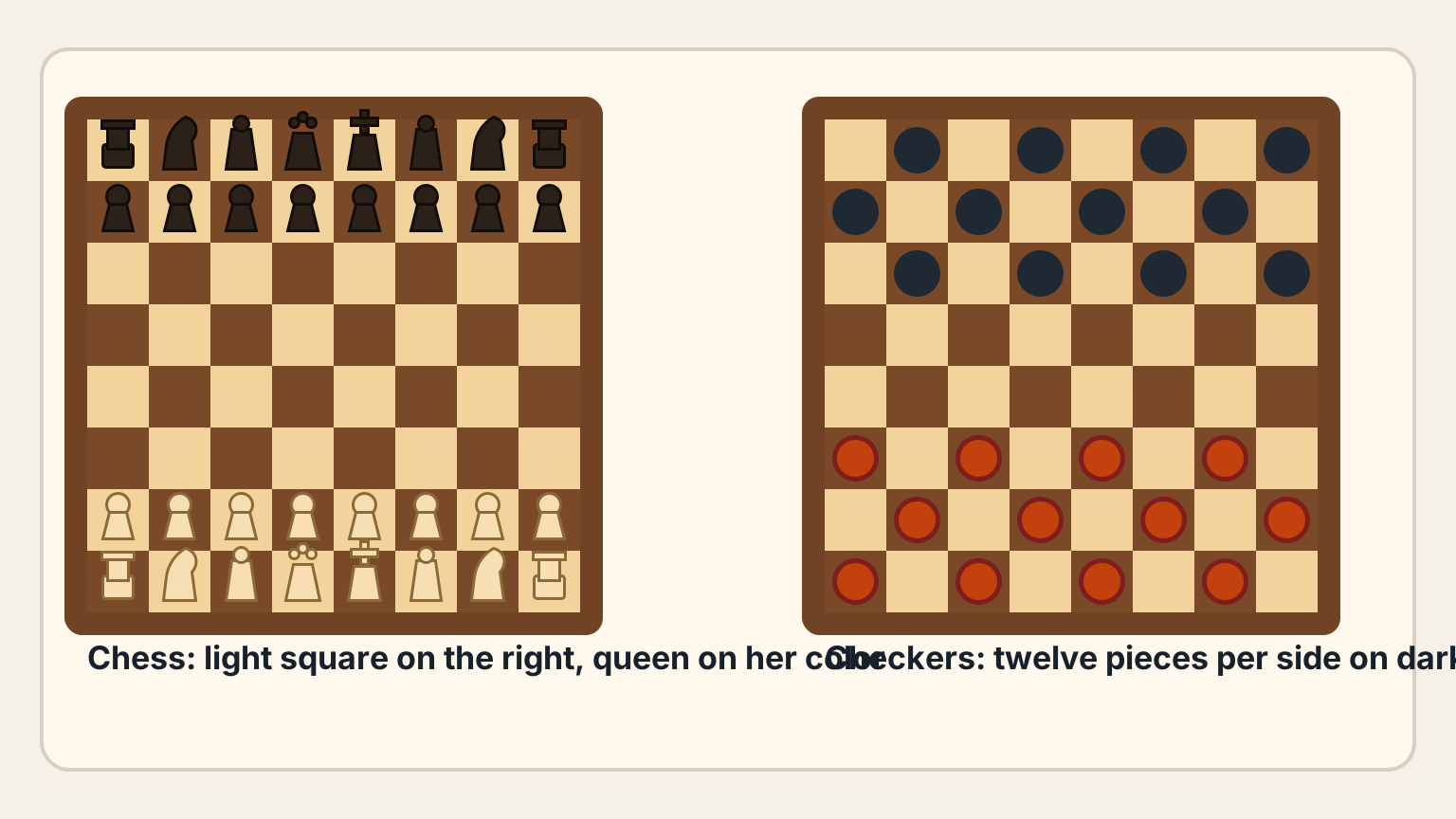
Before placing any pieces, turn the board correctly. For chess, each player should have a light square in the near right corner. A common memory line is “white on right.” That means the right-hand corner square closest to each player should be light.
Checkers uses the same 8-by-8 pattern, and many casual boards are shared between chess and checkers. Keeping a light square on each player’s near right corner is still a helpful habit because it makes the board feel consistent across both games. The biggest checkers issue is not the corner color by itself; it is whether the pieces are placed only on the dark squares.
How to Set Up a Chess Board
Chess starts with all 32 pieces on the two rows closest to each player. Each side has one king, one queen, two rooks, two bishops, two knights, and eight pawns.
Set up the back row from each player’s left to right like this:
- Rook in the corner
- Knight next to the rook
- Bishop next to the knight
- Queen on her own color
- King on the remaining center square
- Bishop next to the king
- Knight next to the bishop
- Rook in the corner
Then place all eight pawns in a straight row directly in front of those pieces. Pawns are the small pieces that start as the front line.
If the squares or piece shapes are difficult to read even after the position is correct, the setup may be fighting the learner. Use the beginner chess board guide to compare contrast, square size, coordinates, and storage before replacing the whole set.
Remember: Queen on Her Color
The most common chess setup mistake is swapping the king and queen. A simple check is this: the white queen starts on a light square, and the black queen starts on a dark square. The queen goes on her own color.
If the queens are right and the board has a light square in each player’s near right corner, the kings will naturally be in the correct center squares beside them.
How to Set Up a Checkers Board
In common American checkers, each player starts with 12 checkers. Put them on the dark squares in the three rows closest to that player. Leave the two middle rows empty.
That gives each player four checkers per row for three rows. Checkers move diagonally, so pieces should never begin on the light squares in this version. If a beginner is unsure where a checker can move, ask them to trace the dark diagonal path from the piece.
When a checker reaches the far side of the board, it becomes a king. Most family sets show this by stacking a second checker on top. That is why checkers pieces should stack neatly if the set is used often.
For lessons that refer to positions by row or square, a clearly labeled board can make the directions easier to repeat. The guide to checkers boards with numbered squares explains when labels help and when a plain high-contrast board is the simpler choice.
Decide Your Checkers House Rules Before the First Jump
Checkers rules can vary by family, classroom, region, and game type. The setup above fits common American checkers, but players should still agree on a few rules before starting.
- Are jumps required when available?
- If more than one jump is possible, can the player choose either path?
- Must a player continue a multiple jump if another capture opens up?
- Can ordinary checkers capture backward, or only kings?
- Do kings move one square at a time, or are you playing a version with flying kings?
For family play and beginner tables, it is fine to use a simple house rule. The important part is saying it before the game starts so a rules argument does not become the first lesson.
If the jump rule is the part people disagree about, use do you have to jump in checkers? as the next guide before the first full game.
Common Setup Mistakes to Avoid
Most beginner setup problems are easy to fix once you know what to look for.
- Chess board turned sideways: Check that each player has a light square in the near right corner.
- King and queen swapped: Put the queen on her own color.
- Knights and bishops reversed: The back row starts rook, knight, bishop from each corner.
- Pawns missing from the second row: Pawns should make a full row in front of the main chess pieces.
- Checkers on light squares: In common checkers, pieces start on dark squares only.
- Too many checkers rows filled: Each side uses three starting rows, with two empty rows in the middle.
If the count is wrong because pieces have gone missing, do not guess at fit from appearance alone. The replacement-piece guide shows how to match chess bases and checker diameters to the board before buying.
Use the Setup as a Teaching Moment
Setup is a useful first lesson because it gives beginners a reason to notice the board. In chess, they learn that the two armies mirror each other and that each piece has a starting job. In checkers, they learn that the dark squares and diagonals control the whole game.
If you are teaching children, let them help set the board before every short game. For a fuller teaching approach, read how to teach chess and checkers to kids without overwhelming them. Parents who want the board and lesson aids packaged around that routine can also compare chess teaching sets for home lessons. For a classroom, library, or club space, pair this setup habit with a beginner-friendly chess and checkers station so pieces, rule cards, and storage all support the same routine.
Once the pieces are in the right places, continue with the game-specific basics: use how chess pieces move for a first chess lesson, or how to play checkers for movement, captures, and kinging. Those guides take over where this setup-only page stops.
Primary setup sources
The chess orientation and starting position follow the FIDE Laws of Chess. The American-checkers 8-by-8 setup with 12 pieces per side follows the World Checkers/Draughts Federation Rules of Checkers. Other draughts variants can use different boards and inventories.
A Quick Setup Check Before Playing
Before the first move, ask three questions.
- Is the board turned so each player has a light square on the near right?
- For chess, is each queen on her own color?
- For checkers, are all pieces on dark squares in the first three rows?
If the answer is yes, the game can begin. Beginners will still make normal beginner mistakes, but at least the board will be helping them instead of working against them.
For more practical articles, visit The Good Chess & Checkers blog. For more on our editorial approach, read About The Good Chess & Checkers.