
A paid chess app can be worth it for a beginner who already studies several times a week and can name the paid feature that removes a real obstacle. It is usually better to delay when you are still learning how the pieces move, have not used free material consistently, or are subscribing because a discount timer creates pressure.
The useful question is not whether an app has a large library. It is whether its lesson order, explanations, practice loop, and renewal terms fit what you will actually do. If you still need the basics, begin with how the chess pieces move and play a few slow games first.
The Good Chess & Checkers may earn commissions from qualifying purchases.
Quick decision aid
Keep a physical study option in the decision
A beginner book and ordinary board can provide a fixed sequence without another recurring account. Compare assumed level, diagram clarity, notation, exercises, and answer explanations before buying.
Quick verdict: subscribe, try free, delay, or skip
- Subscribe when you already return regularly, a specific paid feature supports your next learning step, and you understand the current billing and cancellation terms.
- Use the free tier when it supplies enough lessons, puzzles, or games for your present routine.
- Delay when you have not formed a practice habit. A subscription cannot create time in the week.
- Choose a book or free guide when you want a fixed sequence, fewer prompts, or a resource beside a board.
- Skip when you mostly want casual games, already have more study material than you use, or cannot identify what the paid plan changes for you.
The five checks that matter most
1. Start with the learning problem
Name one problem in plain language: “I do not know what to study next,” “I need explanations after puzzles,” or “I want a routine that records where I stopped.” A feature list is useful only when it answers that problem. Do not pay merely to unlock a larger quantity of material.
2. Test your habit before your card
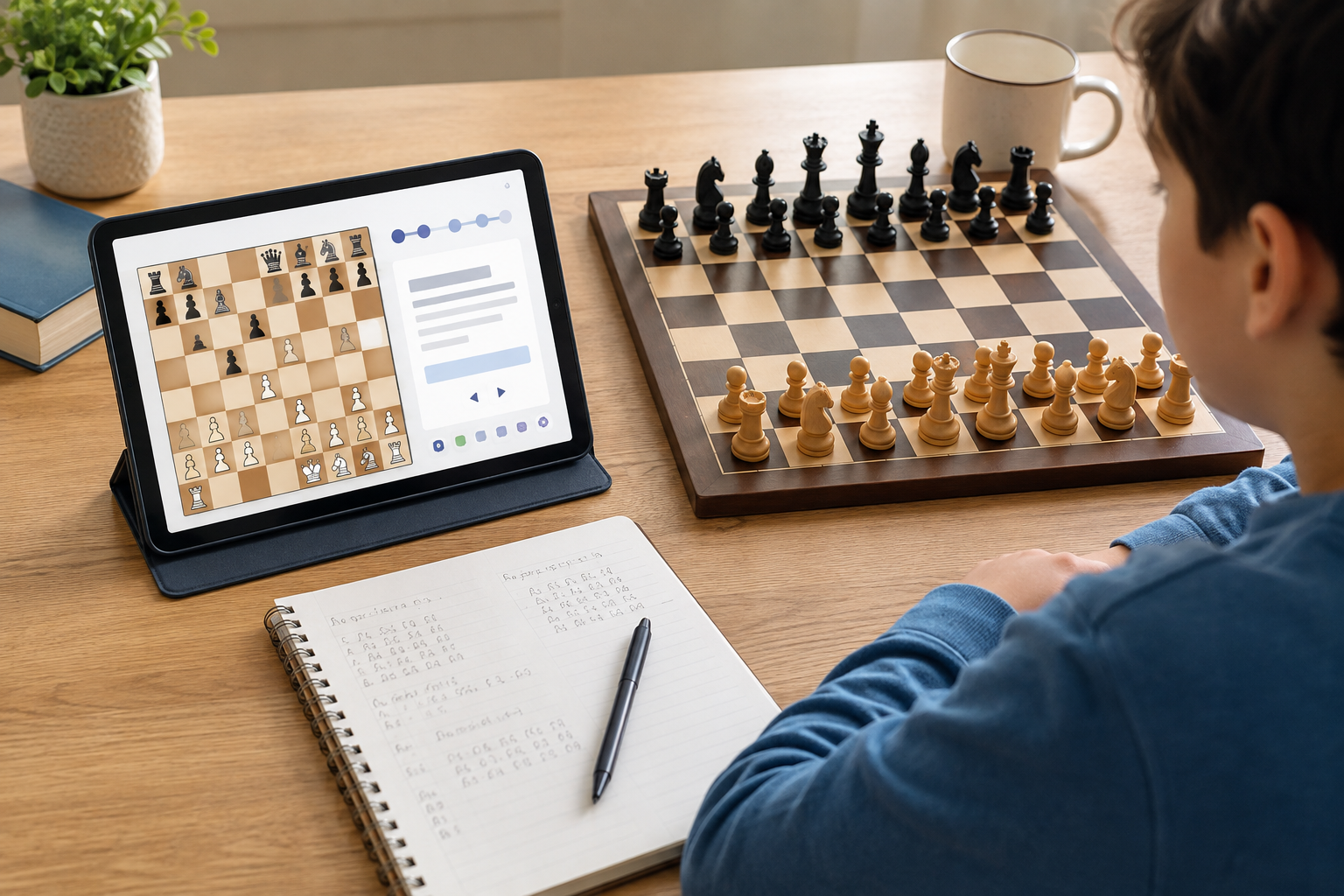
For one or two weeks, schedule the same short sessions you expect to use after subscribing. Use free lessons, this site's beginner guides, or positions on a board. Record the date, minutes studied, and next topic. If the routine does not survive a normal week, paid access is unlikely to fix the schedule.
3. Inspect the teaching format
Try any officially available sample material. Look for clear diagrams, explanations after wrong answers, sensible progression, and notation introduced at a manageable pace. Some beginners prefer short interactive prompts; others remember more when replaying positions on a physical board. Neither format guarantees improvement.
4. Verify the current subscription terms yourself
Plans change. Before paying, use the provider's official plan and support pages to confirm what is included, the billing period, renewal behavior, trial conversion, cancellation steps, refund terms, device support, account requirements, and any family or child-account rules that apply. Save the confirmation or receipt. Do not rely on an old review or search-result snippet.
5. Decide how you will measure usefulness
Choose a modest measure you control: completing two planned sessions per week, replaying one lesson on a board, or writing down one mistake pattern after each practice set. Ratings and streaks may reflect activity, but they do not by themselves show that the subscription is worth renewing.
A no-spend seven-session test
- Choose one beginner topic, such as piece safety, simple checkmates, or spotting undefended pieces.
- Schedule seven short sessions across two weeks using free material.
- At the end of each session, write the next action in a notebook.
- Replay at least two examples on a physical board or in a plain analysis position.
- Note where the free path becomes genuinely limiting rather than merely less convenient.
- Match that limitation to a currently verified paid feature.
- Subscribe only if you completed the routine and the paid feature directly helps it continue.
Red flags before paying
- You cannot tell whether the displayed amount is monthly, annual, introductory, or automatically renewing.
- The feature you want appears in marketing but not in the current plan comparison or help documentation.
- You have not checked how to cancel through the place where payment is processed.
- You are choosing a plan for a child or family without checking current account, communication, and supervision controls.
- The lesson samples assume notation or tactical knowledge you do not yet have.
- You feel pushed to decide before testing whether the free version fits your routine.
- You expect payment alone to produce a rating gain, tournament result, or fixed learning outcome.
When the alternatives are better
Use free guides and an ordinary board when you are learning legal moves, setup, and the rhythm of a complete game. Our physical board vs chess app comparison explains when to use either format or combine both.
Choose a beginner book when you want a stable sequence that will not change with an interface update. Check whether it explains notation and answers rather than presenting unexplained positions.
Join casual play when your main need is experience making decisions against another person rather than more lessons. Keep games slow enough to notice checks, captures, and threats.
Use dedicated hardware only for a different problem. If general-purpose screens are the obstacle and solo play is the goal, read whether a dedicated chess computer fits casual practice. It is not a structured course unless its documented features actually provide one.
Who should skip a paid chess app?
- Absolute beginners who have not played enough to identify the help they need.
- Casual players satisfied with free games and occasional puzzles.
- People already carrying unused book, video, or course backlogs.
- Families that want face-to-face play more than individual screen-based study.
- Learners who prefer writing, printed diagrams, or moving pieces on a board.
- Anyone who has not confirmed the current charge, renewal, cancellation, and account terms.
Bottom line
A chess app subscription is worth considering after a free practice routine exposes a specific limitation that a verified paid feature solves. Confirm the current official terms, try the teaching format, set a renewal reminder, and decide in advance what useful participation looks like.
Delay or skip when the free tier is sufficient, the habit is not established, or a board, beginner book, club game, or free guide serves the same next step. The best beginner resource is the one you can use consistently and understand—not the one with the longest feature list.