
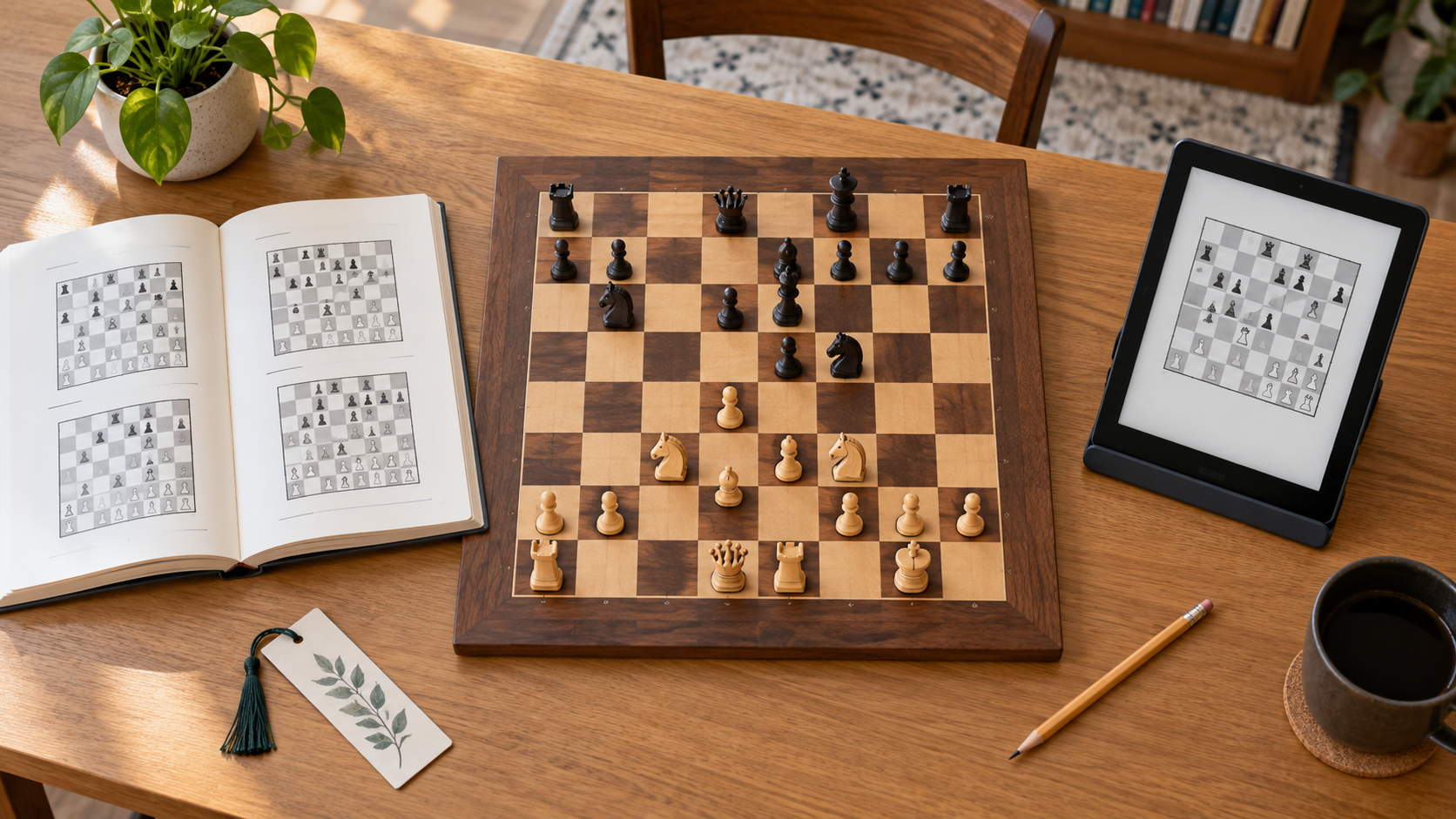
A chess book becomes a working tool when you place it beside a physical board and replay the positions. Print gives you a fixed page, direct page turns, and no device to manage. An e-book can make a library portable and searchable, but the screen, reading app, layout, and stand all affect whether the diagrams remain useful at the board.
This guide compares delivery formats, not specific titles or devices we tested. When possible, compare the same edition in both formats so the lesson quality does not distort the format decision.
As an Amazon Associate, The Good Chess & Checkers may earn from qualifying purchases.
Compare the exact edition
Preview the book before choosing its format
Check the table of contents, assumed level, notation, diagram size, answers, and edition details first. For an e-book, also verify the supported device or reading app, layout behavior, download terms, and whether the sample works offline.
Quick Verdict
Choose print when you want predictable diagram placement, fast page flipping, margin notes, and a study tool that works without a charged device or reading account.
Choose an e-book when portability, text search, bookmarks, and keeping several titles on one device matter more—and you have a screen and stand that leave enough room for the board.
Delay the purchase when the format is still unclear. Borrow a print title and use a digital sample through one complete study session before buying the full edition.
Print vs E-Book at a Glance
| Decision | Print chess book | Chess e-book |
|---|---|---|
| Diagram layout | Fixed to the printed page | May be fixed-layout or may change with screen, app, text size, and orientation |
| Navigation | Page turns, contents, index, and physical markers | Search, digital bookmarks, links, and location or page controls that vary by edition and app |
| Table setup | Needs open-book space and may need page control | Needs a stable screen position; a stand may improve the viewing angle |
| Notes | Direct pencil notes if you are comfortable marking the book | Highlighting and notes depend on the file and reading app |
| Offline use | Works wherever you can read the page | Confirm the title can be downloaded and opened offline on the intended device |
| Portability | One physical volume adds its own size and weight | Many titles may travel on one device, plus any charger and stand you need |
Start With the Same-Edition Test
Format comparisons become misleading when the print and digital offers are different editions. Match the title, author, publisher, publication details, language, and included material. A revised print edition may have different diagrams or answers from an older e-book listing, while bundled offers may include extras that the other format lacks.
Use the available preview to inspect an actual lesson rather than only the cover. Confirm that pieces, coordinates, move numbers, side to move, and solution text remain understandable at your normal reading distance.
Choose Print for Predictable Pages and Direct Handling
A printed page does not reflow when you enlarge the type, rotate a device, or change a reading app. That consistency helps when a lesson refers to a diagram on the same page or when you move repeatedly between an example and its explanation.
Print still has setup costs. Measure the open footprint beside your board, check whether the binding stays open, and decide whether a page holder or stand would crowd the pieces. If page control is the main problem, the binding comparison addresses that narrower decision.
Choose an E-Book for Search and a Portable Library
Search can help you return to a named opening, endgame idea, or unfamiliar term, while bookmarks can hold several study positions without paper tabs. Those features are not identical across files and apps, so verify them with the exact sample on the device you intend to use.
The screen must also work beside the board. Test brightness, glare, viewing angle, sleep settings, touch targets, and the space taken by the device and stand. A phone may be convenient for reading a paragraph but too small for a detailed diagram; a larger tablet may improve visibility while using more table space.
Check the Digital Format Before Paying
- Layout: determine whether the pages are fixed or whether text and diagrams reflow as settings change.
- Device and app: verify the supported hardware, software, account, and current system requirements through the seller or publisher.
- Offline access: download the sample, disconnect from the network, and confirm that it opens where you plan to study.
- Navigation: test contents links, search, bookmarks, footnotes, and the route back to the position you were studying.
- Terms: check current access, lending, download, and return conditions before purchase; do not assume a digital purchase behaves like a physical book.
Run One Real Study Session
- Set up your usual board, pieces, reading format, and any stand or page holder.
- Choose one sample position and recreate it without rushing.
- Read the explanation, play through the moves, and return to the starting position.
- Jump to the answer or next example, then return to the lesson.
- Note what interrupted you: page closure, glare, small diagrams, navigation, notifications, charging, or table crowding.
The repeated interruption matters more than an abstract list of features. If both formats work, choose the edition with the clearer teaching and diagrams rather than buying around a minor preference.
Who Should Skip Each Format?
Skip print when carrying several books is the recurring problem, the available edition has unreadably small diagrams, or the open volume will not fit safely beside the board. Skip the e-book when the sample renders poorly, the required device or app adds friction, offline access is uncertain, or notifications and screen fatigue consistently shorten study sessions.
If you already own a useful edition, avoid rebuying it merely to change formats until a free sample shows that the new format fixes a repeated obstacle.
Bottom Line
Print is the dependable choice for fixed pages, direct navigation, and device-free study. An e-book is useful when search, bookmarks, and carrying a larger library improve the routine. Preview the exact edition, test one full position beside the board, include the stand and screen in your space calculation, and choose the format that removes the most repeated friction.
The planned beginner chess rules and strategy pillar is not yet built. Until it is, continue with how chess pieces move, the beginner tactics-workbook guide, or the board-study comparisons linked above.