
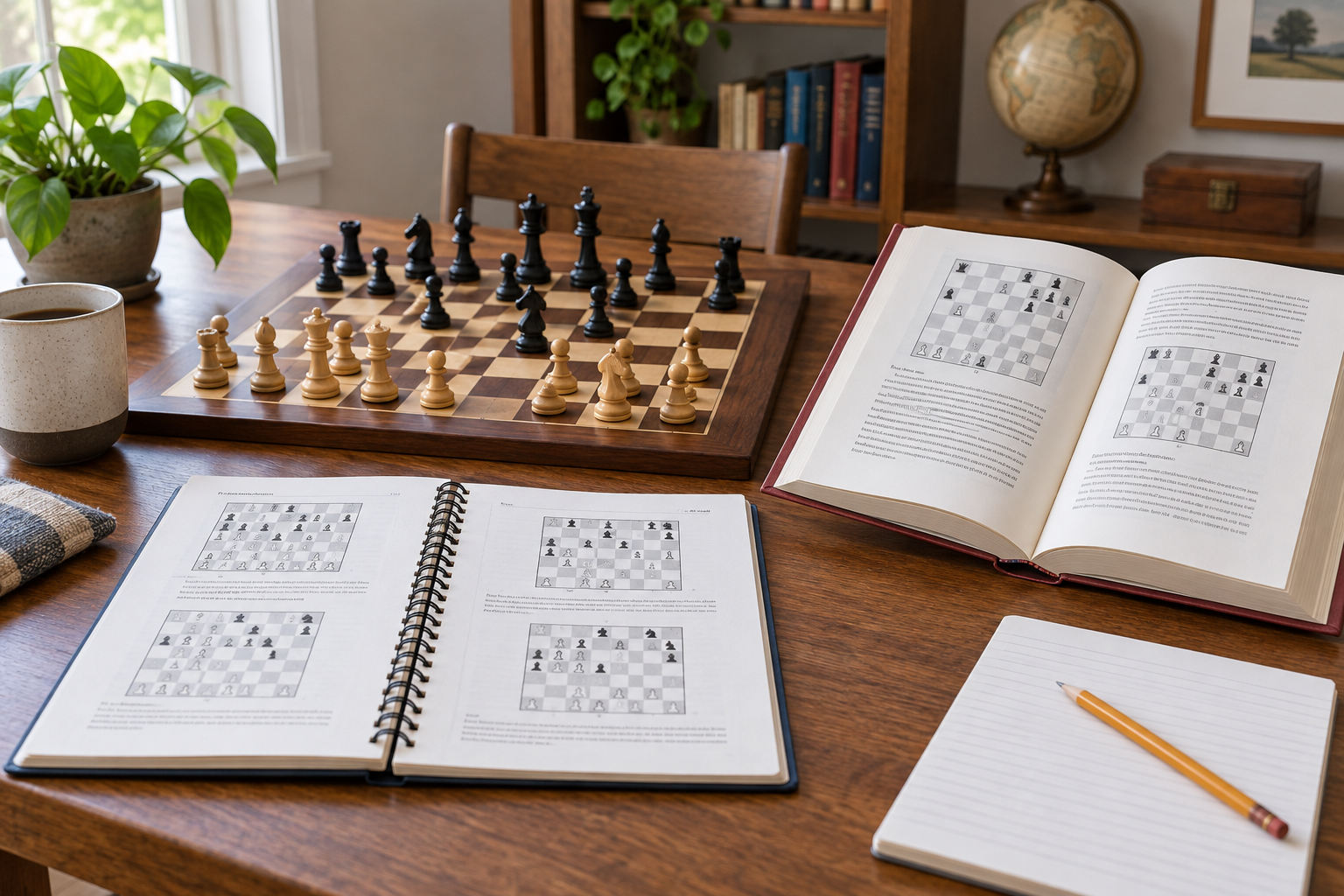
A chess book can be excellent yet awkward to use beside a physical board. The binding affects whether a page stays visible while both hands move pieces, how much table space the book occupies, and whether diagrams remain easy to follow. A spiral-bound book usually wins on page control; a hardcover often wins on range of titles, shelf life, and conventional reading.
This comparison covers formats, not books we tested. Inspect the exact edition before buying because the same title may appear with different bindings, page sizes, diagram layouts, or notation.
As an Amazon Associate, The Good Chess & Checkers may earn from qualifying purchases.
Compare the exact formats
Start with the study routine, then choose the binding
Look for a spiral-bound workbook when hands-free page control matters most. Choose a hardcover when the better-matched title or edition is available in that format and you have a stand, page holder, or enough space to keep it open.
Quick Verdict
Choose spiral-bound for workbook-style sessions, frequent position setup, and a small table where the book must stay reliably open or fold back to one visible page.
Choose hardcover when title choice, a particular author or edition, and long-term shelf storage matter more—and your setup can support the book without covering part of the board.
Skip the binding upgrade if you already own the right book. A simple page weight, book stand, or rearranged table may solve the problem for less.
Spiral-Bound vs Hardcover at a Glance
| Decision | Spiral-bound book | Hardcover book |
|---|---|---|
| Staying open | Usually lies flat and may fold back to one page | May need gentle support, a stand, or a page holder |
| Table footprint | Can show one page when folded back | Usually needs room for the full open spread |
| Title selection | Common in workbooks and course materials, but selection can be narrower | More common for general instruction, history, and reference titles |
| Page turns | Pages rotate around the coil; check for snagging and writing near the binding | Conventional page turns; the book may try to close near the beginning or end |
| Bag and shelf fit | The coil can add width and needs protection from crushing | A rigid cover packs and shelves conventionally, but adds weight and thickness |
Choose Spiral-Bound When Page Control Is the Main Problem
A spiral binding is most useful when you repeatedly read a diagram, recreate it on the board, and return to the page. Folding the unused half behind the visible page can free table space, and a flat spread makes it easier to write in workbook fields.
Check the coil and page layout in real photos. A large coil can catch on a bag, while diagrams or writing areas placed too close to the binding may be uncomfortable to use. Confirm that the listing shows the spiral edition rather than grouping it with paperback or digital formats.
Choose Hardcover When the Content Is the Better Match
Binding should not outrank the lesson. If the clearest book for your level is hardcover, solve page control separately. A wide desk, a book stand, or a compact page holder may make the format easy to use without choosing a weaker book merely because it lies flat.
Preview the diagram size, notation level, answer explanations, and chapter sequence. A durable cover cannot compensate for lessons that start too far above the reader or examples that are hard to transfer to a board.
Measure the Whole Study Setup
- Place your board where it normally sits and leave enough edge clearance to move pieces without bumping the book.
- Measure the remaining width and depth for an open book, notebook, and pencil.
- Compare those measurements with the exact book’s page or trim dimensions—not a generic format label.
- Decide whether you need a two-page spread or can work from one page folded back.
- Check where the book, board, and pieces will be stored after the session.
Preview Before Buying
- Exact edition: match title, author, publisher, publication details, and binding shown in the selected offer.
- Diagram readability: confirm that coordinates, piece symbols, side to move, and solution text are clear at normal reading distance.
- Lesson fit: beginners need terms and notation explained before exercises depend on them.
- Answer support: workbooks should provide enough explanation to review a mistake rather than only naming a move.
- Board transfer: examples should be practical to recreate on the physical board you use.
A No-Buy Trial
Use your current chess book for three sessions. Try a clean, stable household object as a page weight, or borrow a stand. Note whether the real problem is page closure, small diagrams, advanced notation, poor lesson sequence, or insufficient desk space. Buy a different binding only when page control remains the repeated obstacle; choose a different title when the content is the problem.
Who Should Skip Each Format?
Skip spiral-bound books when the coil will be crushed in a tightly packed bag, when you mainly read away from a board, or when the right lesson is unavailable in that binding. Skip hardcover when the open spread overwhelms the table, the spine will not stay open comfortably, or portability matters more than shelf presentation. Readers who study entirely on a screen may not need either format, though a physical board can still make position practice more deliberate.
Bottom Line
For repeated board-and-book exercises, spiral binding is usually the easier physical format because it stays open and can use less desk space. Hardcover is the better choice when it contains the right material and your workspace can support it. Choose the lesson first, measure the complete setup, preview the exact edition, and avoid replacing a useful book until a simple page-control fix has failed.
The planned beginner chess rules and strategy pillar is not yet built. Until it is, continue with the beginner movement guide, compare a print chess book with an e-book for board study, or use the board-study setup guides linked above.