
The most useful sorting cups are low, stable containers that hold one 12-piece side without crowding the table. Choose pairs that are easy to label and nest after class. Buy one pair first, then test the full distribute, play, count, return, and store routine before outfitting every board.
This is a category comparison, not a named-product ranking or hands-on test. Measure the classroom's actual checker pieces, tables, shelves, and cleanup route, then verify current dimensions, materials, pack quantity, and maker care instructions before buying.
As an Amazon Associate, The Good Chess & Checkers may earn from qualifying purchases.
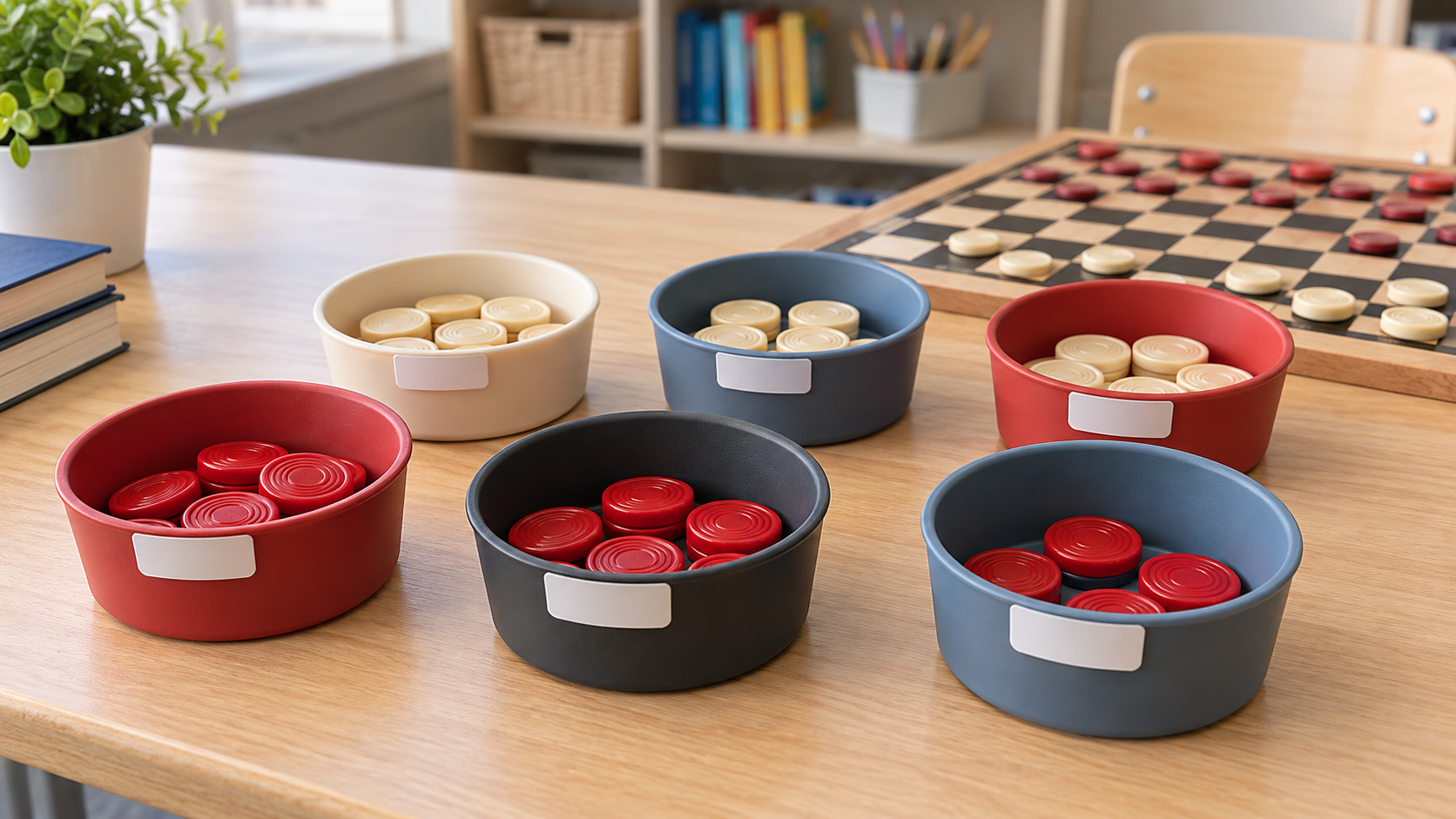
Divide, play, count, return
Browse adaptable classroom sorting cups
Look for a low cup that holds 12 of your actual checkers, resists tipping during reach-in use, has a blank labeling area, and nests without trapping labels. Verify the listed rim, base, and height dimensions plus the maker's cleaning guidance.
Quick choice framework
- Choose low, wide cups when younger beginners need easy reach and the table may get bumped.
- Choose nesting cups when empty containers must fit one compact shelf bin after the lesson.
- Choose two colors or clear labels when helpers need to match each pair with a board quickly.
- Keep the existing set boxes or trays when pieces already distribute cleanly and extra cups would only add another item to collect.
Why cups are different from storage trays
A storage tray keeps a complete set together between sessions. Sorting cups temporarily divide that inventory at the table: one cup can go to each player, hold captured pieces during a game, and become the visible return point afterward. The cups should normally return empty to a shared teaching-supply bin while the complete checker set goes back to its labeled storage container.
That difference matters. A cup does not need a carrying lid if it never transports pieces through the building. It does need a stable base, reachable rim, modest footprint, and a routine that prevents cups from drifting between tables.
Selection criteria that matter
Capacity for one side
Standard American checkers begins with 12 pieces per player. Measure one 12-piece group as the class actually handles it—loosely placed rather than perfectly stacked—and compare it with the cup's usable inside space. A listing's fluid volume does not prove that flat discs are easy to reach or count.
Rim access and wall height
A low rim makes flat pieces easier to pinch and lift. A very tall or narrow cup can make students dig through a stack; a very shallow dish may spill when moved. Use the actual checker diameter and a student's normal reach path to test a similarly sized household container first.
Base stability and table footprint
Compare the base width with the rim width and total height. A broad base is generally less easy to tip than a narrow pedestal shape, but only a real table trial shows whether the pair fits beside the board without crowding elbows, worksheets, or a teaching display.
Nesting and total shelf space
Confirm that the cups are described as nesting or visibly share a compatible tapered shape. Measure the height of the full empty stack, not one cup. Labels, handles, rolled rims, or textured sides may keep a large quantity from nesting as tightly as expected.
Labels and pair matching
Give both cups and the matching board the same short set number. Use removable labels suitable for the stated surface, place them where hands do not rub constantly, and check that they remain visible when cups are nested. Color alone may not identify which pair belongs to which set.
Material and cleaning instructions
Follow the maker's current care guidance. Do not assume every plastic cup is dishwasher safe, suitable for disinfectants, or intended for classroom use. Smooth interiors and rounded transitions are easier to inspect for crumbs and pencil debris than narrow grooves.
Three workable classroom setups
One cup per player
Place one color in each of two cups and hand one to each player. This is the clearest handoff for a standard two-player board and gives captured pieces an obvious temporary home. It uses two table spots, so test the combined footprint first.
One shared return cup per board
Keep pieces in the set's normal container for setup, then use one cup only for captured pieces and cleanup. This reduces cup inventory but mixes colors during play, so students still need a separate 12-and-12 count before storage.
One color-coded pair per table station
Assign a visually distinct pair to each station while using number labels for the actual set match. This can speed distribution across several boards, but it works only if the color system remains simple and replacement cups can be integrated without confusing the labels.
A one-board pre-purchase trial
- Count 12 checkers of each color and measure their diameter and thickness.
- Test two low household containers with approximately the proposed rim, base, and height dimensions.
- Run the normal distribute, setup, game, captured-piece, count, return, and shelf routine.
- Record spills, table crowding, missed pieces, label visibility, and where empty cups wait during play.
- Verify the current listing's dimensions, quantity, material, care instructions, and return terms.
- Standardize only after teachers and learners can complete the routine without creating another cleanup bottleneck.
Who should skip sorting cups?
Skip them when a lidded tray already moves cleanly from shelf to table, when tables are too small for two more containers, or when cups would need to carry pieces through hallways. Also skip a listing that omits usable dimensions, pack quantity, material, or care guidance. A small drawstring pouch may be better when containment and transport matter more than visible table-level distribution.
For a broader classroom equipment decision, compare a prebuilt kit with a DIY classroom setup. For replacing incomplete inventories rather than distributing complete ones, use the replacement checkers piece guide. The planned classroom-and-club pillar is not built yet.
Bottom line
Choose sorting cups only when the classroom needs a faster table-level handoff. The best category fit is a low, broad, nestable cup that comfortably holds 12 actual checkers and accepts a durable removable label. Trial one pair through the complete lesson routine before buying a class quantity, and keep long-term storage in the set's existing labeled container.