
Not sure permanent furniture is the right starting point? Compare a folding game table with a dedicated chess table by full footprint, storage, setup, board fit, and everyday room use first.
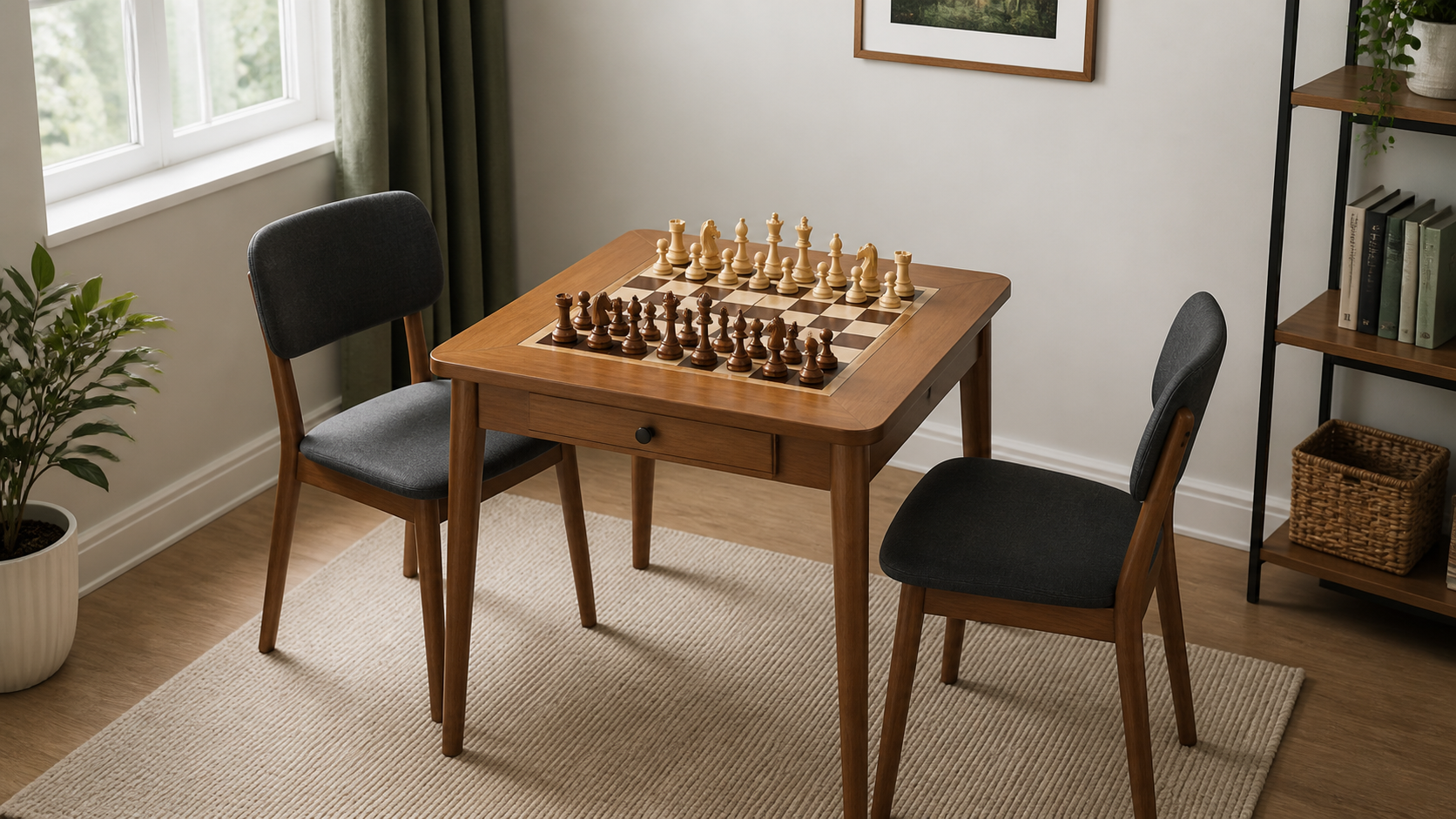
A purpose-built chess table can make a small game room feel ready to play, but the board is only part of its footprint. The chairs, knees, drawer pulls, and walking path all need space too. For most compact rooms, the best choice is a modest square table with a readable inset board, open legroom, and chairs that tuck in cleanly.
This is a category comparison, not a ranking of named tables or a claim of hands-on testing. Confirm every listing's assembled dimensions, board dimensions, weight, materials, storage, delivery method, and return terms before ordering furniture.
As an Amazon Associate, The Good Chess & Checkers may earn from qualifying purchases.
Quick decision aid
Compare compact chess-table formats
Start with the table's assembled size, then add the space needed to sit, stand, and pass behind each chair. Favor a clear board and comfortable knees over decorative bulk.
Measure the Room Before Comparing Tables
Mark the proposed tabletop outline on the floor with removable painter's tape. Place the chairs you expect to use at opposite sides, pull them out as if someone were sitting down, and walk the normal route through the room. This quick layout test catches a common mistake: a table that technically fits but makes the door, shelf, or walkway awkward.
- Table footprint: use the full assembled width and depth, including trim or projecting corners.
- Chair zone: allow for the seat and for pulling it back. Armless chairs usually tuck under a small table more easily.
- Knee clearance: deep aprons, drawers, and cross-braces can make a compact table feel cramped.
- Walking path: preserve the route people actually use, especially near doors and shelves.
- Delivery path: compare the carton or largest assembled component with doorways, stairs, and tight turns.
Best Overall Format: A Compact Square Pedestal or Four-Leg Table
A compact square table is the simplest fit for two players because each person can sit centered on one side of the board. A pedestal base can open up knee room, while four slim corner legs may offer better visual stability and easier assembly. Neither base style wins automatically; check where feet, knees, and chair legs will land.
Look closely at the playable board rather than the decorative border. Squares should have enough contrast to read in the room's normal lighting, and the pieces should fit without spilling into neighboring squares. If pieces are included, confirm that their base diameter suits the squares. If they are not, plan to match the table to a readable beginner piece set.
Best for: a dedicated two-player corner where the table can remain assembled.
Skip it if: the room must regularly convert to exercise, guest, craft, or work space.
Best for Fast Cleanup: A Chess Table With a Shallow Drawer
A drawer can keep pieces close to the board without adding a separate box to the room. The useful version is shallow enough to preserve knee clearance and wide enough for the pieces to lie without forcing tall kings or queens against the drawer bottom. A felted or divided interior may reduce pieces knocking together, but only trust details shown or stated in the current listing.
Check which side the drawer opens from and whether a seated player or nearby wall blocks it. Also confirm that a drawer stop is present in the design description; do not assume one from a photograph. A simple nearby shelf or piece storage bag may be the better solution when the drawer compromises legroom.
Best for: rooms where the board stays visible but loose pieces need to disappear quickly.
Skip it if: the drawer reduces comfortable knee space or cannot hold the pieces you already own.
Best Flexible Option: A Folding Game Table
A folding table earns its place when floor space must serve more than one job. Compare folded dimensions, folded stability, carrying grip, setup steps, and whether the playing surface locks flat. A table that stores compactly but wobbles or pinches fingers during setup is a poor trade, so follow the manufacturer's assembly and use instructions.
Folding furniture often gives up some mass and visual permanence. It may also provide less storage than a fixed table. Keep the pieces in a separate labeled bag, and verify that the folded table has a safe, dry storage position where it will not be knocked over.
Best for: multipurpose rooms and occasional games where permanent furniture would be in the way.
Skip it if: you want a display piece that stays set up or the room has no sensible place for the folded table.
Best Alternative: Use an Existing Desk or Side Table
A dedicated chess table is not required for good play. A stable desk, console, or small dining table paired with a separate board is often more flexible and easier to replace. This route also lets you choose the board contrast, square size, coordinates, and material independently of the furniture.
Measure the usable surface after lamps, monitors, and other daily objects are in place. A board mat can help define the play area, but it should be compatible with the table finish; the guide to mats for protecting tables explains the fit and material checks.
Best for: renters, uncertain layouts, tight budgets, and rooms that already contain suitable furniture.
Skip it if: clearing and resetting the surface makes spontaneous games unlikely.
Quick Comparison Framework
- Choose a fixed compact square table for the clearest dedicated two-player setup.
- Choose a storage-drawer table when pieces need to stay with the board and the drawer leaves enough knee room.
- Choose a folding table when the room changes jobs and a safe folded-storage spot exists.
- Use existing furniture plus a separate board when flexibility, board choice, or cost matters more than a permanent display.
Materials, Assembly, and Care
Solid wood, veneer, engineered wood, and metal-framed tables each have different weight, care, and assembly tradeoffs. Read the current material description and care instructions instead of judging by color alone. A wood-look finish does not establish solid-wood construction, and an inset board does not guarantee that spilled liquid can be wiped without affecting seams or finish.
Furniture listings can change, so confirm hardware, assembly requirements, total weight, and return constraints on the seller page. Keep drinks off the playing surface, lift rather than drag furniture where practical, and use only care methods approved for the stated finish.
Who Should Skip a Dedicated Chess Table?
Skip a dedicated table if the room needs every square foot for other activities, if only one person plays occasionally, or if online practice handles most games. Also skip it when an existing table already gives you a stable surface, readable board, and comfortable seating.
Families who want both games available may get more value from a portable combo set than furniture with a permanent chess-only grid. Start with the small-space chess and checkers set guide if storage flexibility matters more than display.
Bottom Line
For most small game rooms, the best chess table is a compact square model with a readable board, uncomplicated legroom, and a measured chair-and-walkway zone. Add a drawer only when it truly fits the pieces without crowding knees; choose folding construction only when the room needs to change jobs. If the complete play zone feels tight, a separate board on furniture you already own is the smarter choice.