
A chess magazine subscription can be worth it for a beginner who already enjoys reading about chess, can follow the publication's diagrams and notation, and will use at least one feature from most issues. Sample one complete issue before subscribing. Delay if the material feels too advanced, and skip if a beginner book, free article, library copy, or occasional single issue gives you a clearer study path.
A magazine is recurring editorial material, not a step-by-step course or a promise of improvement. Its mix may include annotated games, puzzles, interviews, history, news, or event coverage. That variety is useful only when it matches what you will actually read and practise.
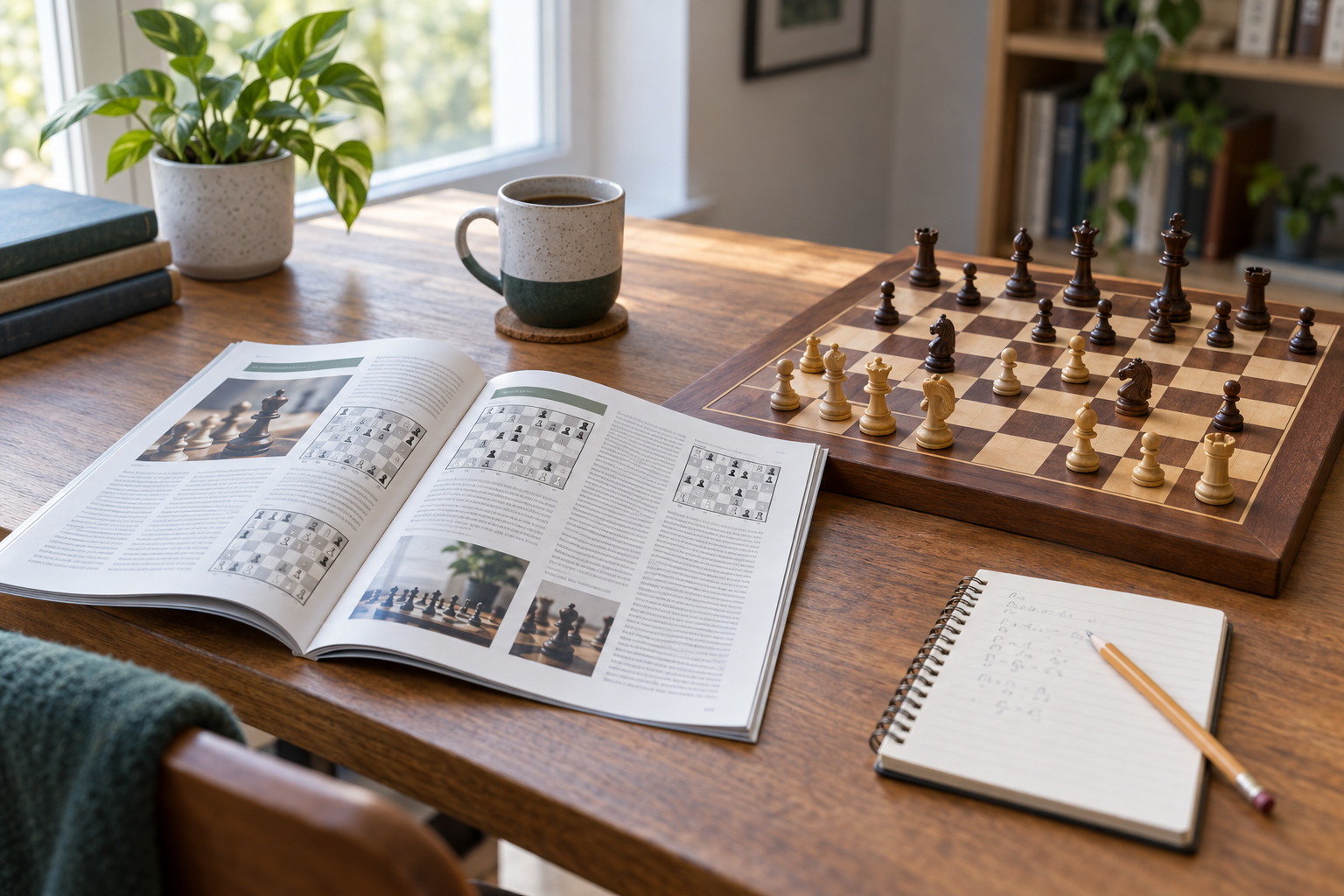
Quick verdict: subscribe, sample, delay, choose an alternative, or skip
- Subscribe when a sampled issue suits your reading level, you use recurring sections, and the current access and renewal terms fit your routine.
- Sample first when the subject mix looks promising but you have not worked through a complete issue.
- Delay when notation, annotations, or assumed concepts interrupt nearly every page.
- Choose an alternative when you need a planned beginner sequence, focused exercises, or a searchable answer to one question.
- Skip when issues pile up unread, the useful material is only a small fraction of each issue, or important access and cancellation terms are unclear.
Start with one real issue
Use an official sample, a library copy, or a legitimately purchased single issue that resembles the current publication. Do not judge from a cover or contents page alone. Read one short article, replay part of one annotated game, and complete a small puzzle section if those features are present.
Mark where you get stuck. A few unfamiliar terms are normal; needing a separate explanation for nearly every move suggests that a beginner book or structured course should come first. Also note which sections you skipped. A broad magazine is poor value when only one narrow column consistently helps you.
Seven things to check before subscribing
- Reading level: Inspect a current sample for unexplained notation, symbols, opening names, and assumed strategy.
- Editorial mix: Decide whether you want instruction, puzzles, annotated games, interviews, history, news, or a combination. Verify the current publication rather than assuming every issue has the same balance.
- Issue rhythm: Check the stated publication schedule and ask whether you can finish or meaningfully use an issue before another arrives.
- Print or digital fit: Compare diagram size, zoom, search, bookmarking, offline reading, table space, and how easily you can place a board beside the pages.
- Archive access: Confirm what past material is included, how it is searched, and whether access changes after cancellation. Treat these as provider-specific terms.
- Total commitment: Review the billing period, taxes or delivery charges shown at checkout, automatic renewal, cancellation steps, refund terms, and any account or app requirement.
- Study follow-through: Name the board, notebook, or puzzle routine that turns reading into practice. Interest alone does not require a subscription.
A four-week usage test
Choose three items from one issue and schedule them across four weeks: for example, replay one annotated game, solve one set of puzzles, and summarize one instructional article. Keep each session short enough to repeat.
At the end, ask three questions: Did I finish the selected material? Did I return to the board or notebook without prompting? Would another issue extend this habit instead of replacing unfinished work? Subscribe only when the answers are mostly yes. Sampling is evidence; buying because you hope to become a reader is a guess.
Print and digital tradeoffs
| Decision area | Print may fit when… | Digital may fit when… |
|---|---|---|
| Board study | You want an open page beside a physical board with no screen switching | You want zoom, search, or reading on several supported devices |
| Portability | You read in one regular place and do not mind storing issues | You want a lighter library, subject to the provider's access rules |
| Notes | You like page flags or pencil notes and own the physical copy | The service offers useful bookmarks or notes you can retrieve |
| Long-term access | You want to keep delivered issues on a shelf | You have verified download, archive, and post-cancellation access |
| Distraction | A paper page helps you focus | Device tools help more than notifications interrupt |
Neither format is automatically better. Test the exact format you plan to buy, because a readable print diagram can feel cramped on one screen, while a searchable digital archive may be more useful than a growing shelf. If both formats are bundled, count the value only if you will genuinely use both.
Red flags
- A sales page that does not show representative current contents or sample pages.
- Improvement, rating, or tournament-result promises based on subscribing alone.
- Dense annotations presented as beginner material without definitions or a clear entry point.
- Publication, delivery, device, archive, renewal, cancellation, or refund terms that are difficult to locate.
- A long commitment before you can test a complete representative issue.
- Digital access that depends on an app, account, or connection you have not confirmed will work for your routine.
- Buying mainly to collect issues rather than to read and use them.
Who should skip a chess magazine subscription?
- Absolute beginners who still need a clear sequence for setup, legal moves, check, and checkmate.
- Learners who prefer guided lessons and immediate exercise feedback.
- Readers who rarely finish periodicals or already have a backlog of chess material.
- Players seeking only one narrow topic that a focused book or free guide covers better.
- Anyone unable to verify current costs, access requirements, renewal, cancellation, and post-subscription archive terms.
Alternatives that may fit better
A beginner book offers a finite sequence and is easier to revisit when you are building foundations. A library copy or single issue tests the magazine habit without a recurring commitment. Free articles and videos help with occasional questions, while a course can provide ordered lessons and exercises. Your own games may be the best study material when the goal is finding repeated mistakes.
If you want a planned learning path, compare whether an online chess course fits an absolute beginner. If you mainly want lessons, puzzles, and play tools in one service, use the chess app subscription decision. Readers who prefer a finite physical resource can start with the beginner chess lesson-book guide, then use a readable board from the analysis chess set guide to replay positions.
Bottom line
A chess magazine subscription is worth it when a representative issue is understandable, several recurring sections match your interests, and you turn reading into board or notebook practice before the next issue arrives. Verify the exact publication's current format, frequency, access, renewal, cancellation, and archive terms before paying.
Sample first rather than subscribing on aspiration. Delay when foundational instruction would remove more friction, and skip when a focused book, library issue, free guide, or your own games already serves the job. The planned beginner-chess pillar is not yet built, so continue through the site's chess learning hub for rules, study formats, and practical next steps.