
A score-sheet clipboard is worth it when players use loose paper on uneven, narrow, or shared tables and the club collects those sheets after games. It provides a firm writing surface and keeps each game’s pages together. Skip it when tables already write well, players keep bound scorebooks, or the group rarely records games.
The clipboard does not teach chess notation or improve the record by itself. Its job is narrower: support the sheet while a player writes and carry that sheet through the club’s collection or review routine.
As an Amazon Associate, The Good Chess & Checkers may earn from qualifying purchases.
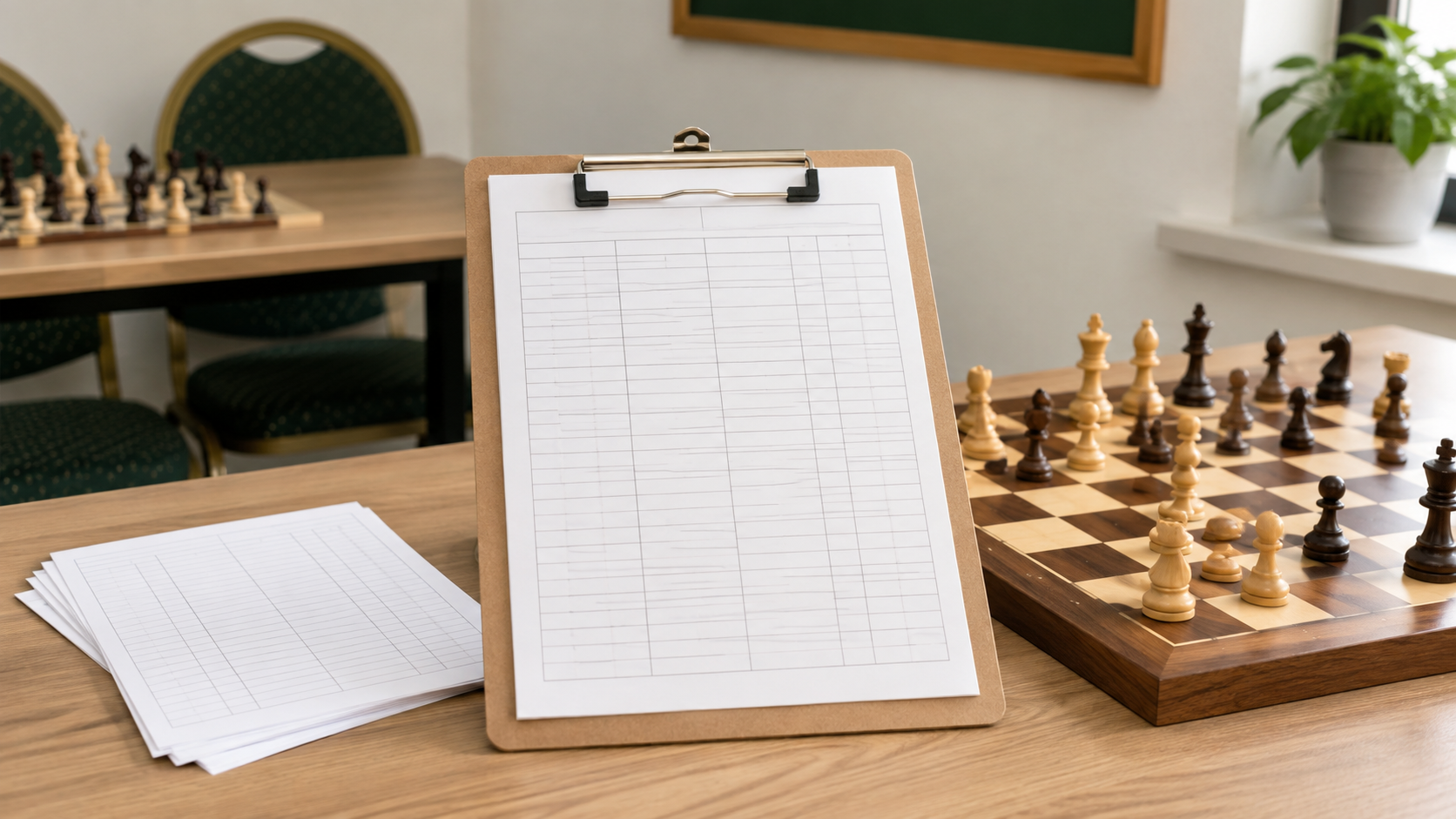
Quick decision aid
Browse letter-size low-profile clipboards
Confirm the club’s actual sheet size first. Compare usable board area, clip shape, hanging hole, board thickness, edge finish, and storage footprint rather than buying from a styled photo.
Quick verdict
- Buy a small shared set when the club uses loose score sheets, some tables are poor writing surfaces, and an organizer collects records.
- Trial one clipboard first when only a few players record games or the table layout varies by venue.
- Choose bound scorebooks when each player owns and reviews a personal sequence of games.
- Skip clipboards when the table is already firm and clear, digital recording is permitted and practical, or records are never revisited.
What problem does a clipboard solve?
Loose score sheets can crease, rotate, slide under the board, or become separated from a second page. A clipboard creates one firm surface with one attachment point. That is useful on folding tables with seams, on tables protected by soft covers, or when a finished sheet must travel to an organizer’s desk.
It does not solve cramped placement automatically. A full letter-size board beside a chessboard, clock, captured pieces, and drinks may make a narrow table worse. Before buying several, place an ordinary sheet where the clipboard would sit and measure the remaining playing space.
When the purchase earns its place
The venue has inconsistent writing surfaces
A clipboard is most useful when the club changes rooms or uses tables with seams, texture, or soft coverings. If every playing surface is smooth and stable, the hard backing may add little.
The club owns the record workflow
Loose sheets suit a club that provides forms, gathers them after games, and files selected records for lessons or events. The board keeps a player’s pages together until handoff. Write any player names, date, or board number on the form itself; a clipboard label identifies equipment, not the game record.
Players need a firm surface away from the table
Some rooms leave no safe writing area beside the board. A clipboard can rest on a lap briefly, but that is still less stable than a table and should not be promised as comfortable for every player. Test the actual chairs, table height, and sheet position.
When a scorebook or plain table is better
A bound scorebook keeps one player’s games in order and removes the club’s loose-page filing task. It is usually the clearer choice for a learner building a personal study archive. A clipboard favors replaceable forms and centralized collection. If both seem plausible, compare the complete clipboard-versus-scorebook club record workflow.
If the table already supports clear writing, try a thin backing sheet or a small stack of forms before adding equipment. If players record games digitally, confirm the club or event rules and device expectations rather than assuming a phone is acceptable during play.
Run a one-session trial
- Print the exact score sheet the club normally uses.
- Borrow one clipboard that fits the paper without folding it.
- Set up a complete board, clock if used, captured-piece area, and the clipboard on a normal table.
- Check whether the clip covers any fields and whether a hand can write near the top edge.
- Play or replay a game, including a second sheet if games can exceed one page.
- Carry the finished sheet through the normal collection and filing routine.
- Buy more only if the firm surface or handoff fixes a repeated problem.
How to choose the right clipboard
- Paper fit: match the board to letter, A4, half-sheet, or another form size actually used by the club.
- Clip clearance: a low-profile clip can leave more room for a writing hand, but verify that it holds the club’s normal number of sheets.
- Usable writing area: check whether the clip or corner hardware covers names, move columns, result fields, or notes.
- Table footprint: measure the board beside the complete playing setup, not on an empty desk.
- Edges and surface: inspect the finish for rough edges, protruding hardware, or a surface that marks paper.
- Storage: count the depth of the full stack and decide whether boards hang, lie flat, or travel in a document case.
- Identification: use a removable club number if clipboards circulate among tables.
How many should a club buy?
Do not assume one per board. Start with the number of games that are actually recorded at the same time. A club with twelve boards but three regular notation users may need only three or four clipboards. A club that requires a loose score sheet for every organized game may need one per active board plus a small replacement margin.
Keep blank sheets separate from completed ones. One clearly labeled folder or accordion file can receive finished records after they leave the clipboard; see the guide to organizing chess and checkers lesson materials for portable paper-storage criteria.
Bottom line
A chess score-sheet clipboard is worth buying for a club only when loose forms, unreliable writing surfaces, and a real collection workflow meet in the same room. Borrow one and test the full table first. If the sheet stays stable and the handoff becomes simpler without crowding play, add only as many boards as simultaneous recorders require.