
One Board for Chess and Checkers: How to Choose a Set That Works for Both
If you want one set that can handle both chess and checkers, the hard part is not the rules. It is choosing a board and pieces that are easy to see, easy to store, and pleasant enough that people actually want to use them. A tiny travel board may save space but frustrate new players. A beautiful decorative set may look nice on a shelf but be awkward for children, classrooms, or casual game nights.
This guide explains what to look for when buying one board for both games, especially if you are shopping for beginners, families, classrooms, clubs, or a practical gift.
For a broader first-set framework, start with how to choose a chess and checkers set everyone can actually use. If the main question is physical fit, pair this guide with how to choose the right chess and checkers board size.
As an Amazon Associate, The Good Chess & Checkers may earn from qualifying purchases.
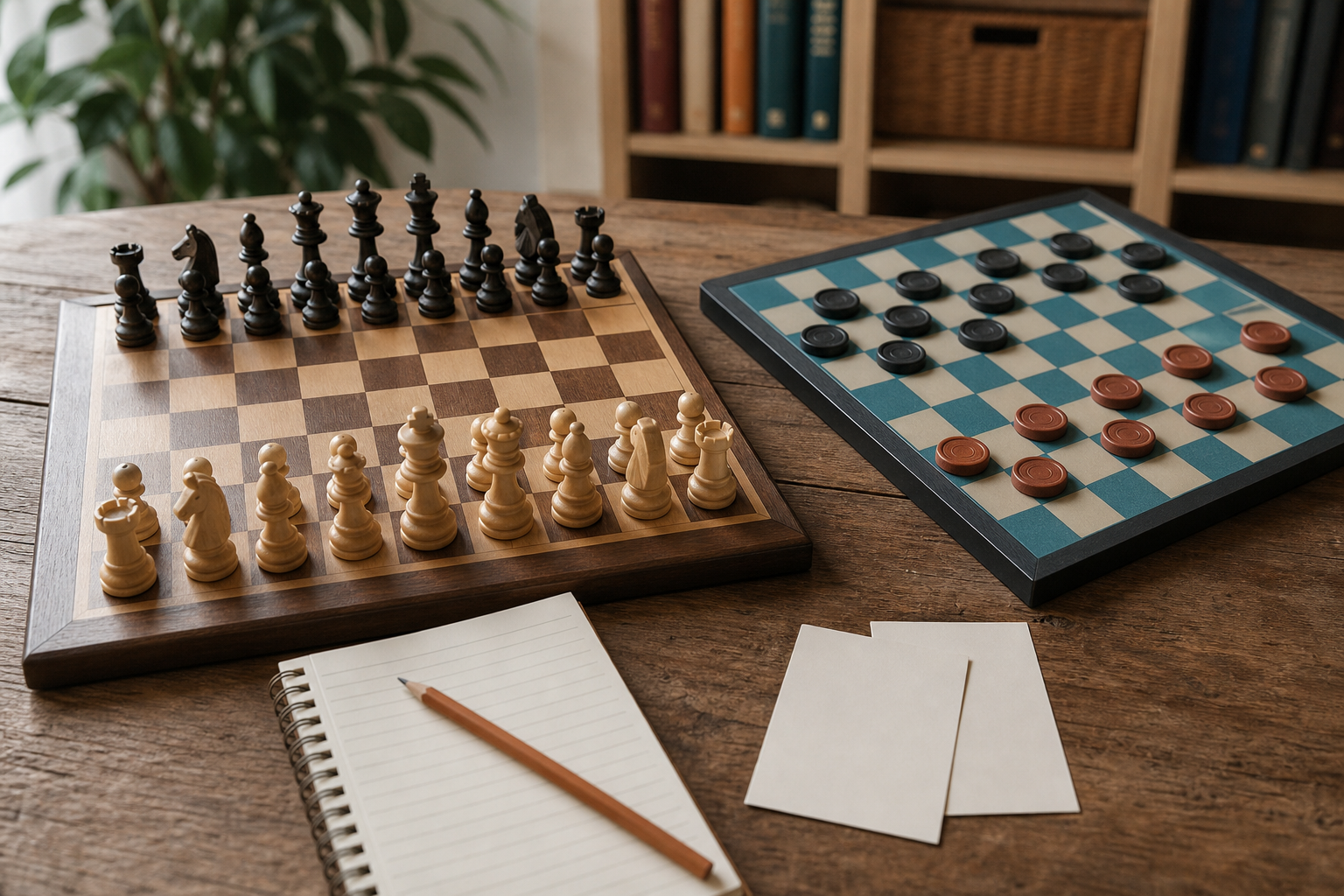
Quick decision aid
Choose one-board combo options
Start with complete combo sets and replacement-piece paths, then use the guide to decide whether one board can serve both games well.
Helpful product path
Start With Who Will Use the Set
Before comparing materials or styles, decide where the set will live and who will play on it most often. A good chess and checkers set for a coffee table is not always the best set for a classroom, and a travel set is not always the best first set for a child learning how each piece moves.
Ask these questions first:
- Will beginners use it? Choose clear, familiar pieces and a board with high contrast squares.
- Will children use it? Look for sturdy pieces, simple storage, and a board that can handle bumps.
- Will it travel? Prioritize magnetic pieces, compact storage, and a case that closes securely.
- Will several people share it? For classrooms and clubs, durability and replaceable pieces matter more than decoration.
- Is it a gift? Choose a set that is useful first and attractive second.
Board size: the biggest comfort factor
Both chess and checkers use an 8-by-8 board with alternating light and dark squares. That makes a shared board practical, but size still matters. If the squares are too small, chess pieces crowd each other and checkers pieces become fiddly. If the board is very large, it may be difficult to store or use on a small table.
For most home and beginner use, a medium board is the safest choice. It gives chess pieces enough room and keeps checkers easy to handle. For classrooms or clubs, a larger, high-contrast vinyl or folding board can be easier for groups to read from across a table.
Travel boards are useful, but they should usually be a second set rather than the only set for learning. Small magnetic pieces can be harder for beginners to identify and move comfortably.
Piece size and readability
Chess has six different piece types: king, queen, rook, bishop, knight, and pawn. Checkers uses identical round pieces, usually stacked to make kings. Because chess pieces carry more information, the chess pieces should guide your buying decision.
For a beginner-friendly chess set, look for pieces that are easy to tell apart at a glance. A knight should clearly look different from a bishop, and the king and queen should not be so similar that new players mix them up. Fancy themed sets can be fun, but they are often harder to learn with because the pieces do not match the shapes people see in books, apps, and diagrams.
For checkers, focus on grip and stacking. Pieces should be easy to pick up, and they should stack securely enough that a crowned king does not topple every time someone reaches across the board.
Material: wood, plastic, vinyl, magnetic, or folding?
There is no single best material. The right choice depends on the setting.
Wood sets
Wood can feel warm and gift-worthy. It is a good choice for a family table, living room, or personal set. Check that the pieces are stable and that the storage compartment, if included, is easy to use. Some folding wooden boards look nice but have shallow storage or cramped squares, so do not judge by appearance alone.
Plastic pieces with a vinyl board
This is often the most practical choice for classrooms, clubs, and repeated use. Plastic pieces are durable, easy to replace, and less stressful when they get dropped. Vinyl boards roll or fold away and usually provide excellent square contrast.
Magnetic travel sets
Magnetic sets are useful in cars, airports, waiting rooms, and small spaces. They are not always ideal for first-time learners because the pieces may be small, but they are excellent for keeping a game in progress when the table moves.
Decorative or themed sets
These can make memorable gifts, but they are better for players who already know the games. If the goal is to help someone learn chess or checkers, choose clarity over novelty.
Storage matters more than people expect
A set that is annoying to put away will get used less. Good storage keeps the board, chess pieces, and checkers pieces together so game night does not start with a search for missing pawns.
For family use, a folding board with internal storage can be convenient if the pieces fit securely. For classrooms and clubs, separate containers may work better because they make it easier to count pieces at the end of a session. For travel, choose a case or board that closes firmly enough to prevent spills.
Make sure both games are actually supported
Some products are sold as chess sets but do not include checkers pieces. Others include checkers pieces but use a board or storage design that is awkward for chess. If you want one set for both games, confirm that it includes:
- An 8-by-8 checkerboard pattern
- A full chess set with 16 pieces per side
- A full checkers set with 12 pieces per side
- Storage for both chess and checkers pieces
- Enough square size for the chess pieces to sit comfortably
Rule variations to know before teaching
Chess rules are fairly standardized for casual play, though families may still simplify things for young beginners. Checkers can vary more depending on the version being played. In common American checkers, pieces move diagonally forward and kings can move diagonally forward or backward. Other checkers traditions may use different board sizes, capture rules, or king movement.
For casual family or classroom play, the important thing is to agree on the rules before the game starts. If you are teaching beginners, keep the first games simple and consistent. Once players understand the basics, you can introduce variations as a way to compare how different rule sets change the game.
Best choice by situation
For a first family set: Choose a medium-size folding or flat board with clear chess pieces and sturdy stackable checkers. Avoid tiny travel sets as the main learning board.
For a classroom or club: Choose durable plastic chess pieces, readable boards, and storage that makes pieces easy to count. Practicality beats decoration here.
For travel: Choose a compact magnetic set with a secure closure. Accept that it may be less comfortable than a full-size home set.
For a gift: Choose a set that matches the recipient’s likely use. A beginner needs clarity. A family needs durability. A hobby player may appreciate nicer materials.
A simple buying checklist
- Can a beginner easily tell every chess piece apart?
- Are the board squares large enough for the chess pieces?
- Do the checkers stack cleanly for kings?
- Is the board readable in normal room lighting?
- Does the set include both chess and checkers pieces?
- Will storage keep everything together?
- Does the material fit the setting: home, classroom, club, or travel?
Who should skip one shared board?
Skip the one-board approach if chess and checkers have very different jobs in your home or program. A child joining a chess club may benefit from a chess-first roll-up board with coordinates, while a checkers-focused family may prefer thicker stackable pieces and storage built around checkers rather than chess pieces.
Also skip a combo set if it makes either game feel like an afterthought. Missing checkers, cramped chess pieces, weak board contrast, or storage that mixes every piece together can turn a convenient purchase into a set nobody wants to reset. In that case, separate sets may be simpler and more useful.
Bottom line
The best shared chess and checkers set is not the fanciest one. It is the one people can set up quickly, read clearly, store easily, and enjoy without fighting the equipment. For most beginners and families, that means a medium-size board, familiar chess piece shapes, sturdy checkers, and simple storage. For classrooms and clubs, choose durability and visibility. For travel, choose secure magnetic pieces and accept the smaller size as a tradeoff.
When the set fits the setting, both games become easier to teach, easier to play, and much more likely to come back to the table.