
Wooden and plastic chess and checkers sets can both work well for beginners. The better choice depends less on which material sounds nicer and more on where the set will live, who will handle it, how often it needs to be packed away, and whether both chess and checkers stay easy to read.
This comparison focuses on practical material tradeoffs, not product rankings or hands-on test claims. If you are still choosing the overall type of set, start with how to choose a chess and checkers set everyone can actually use, then use this page to decide whether wood or plastic better fits the table.
As an Amazon Associate, The Good Chess & Checkers may earn from qualifying purchases.

Quick decision aid
Choose the products in this guide
Compare these affiliate product routes first, then use the guide criteria to choose the board, pieces, storage, clock, or learning aid that fits the player.
Helpful product path
Quick Answer
Choose a wooden chess and checkers set when the set will mostly stay at home, gift presentation matters, and the board has clear contrast with recognizable pieces. Choose a plastic chess and checkers set when durability, cleanup, repeated handling, easy replacement, and classroom or club use matter more than display feel.
Neither material automatically makes a set beginner-friendly. A glossy wooden board with hard-to-read squares can be worse than a simple plastic board. A flimsy plastic travel set with tiny pieces can be worse than a sturdy wooden folding set. Readability, piece fit, storage, and checker stacking still come first.
What Wooden Sets Do Well
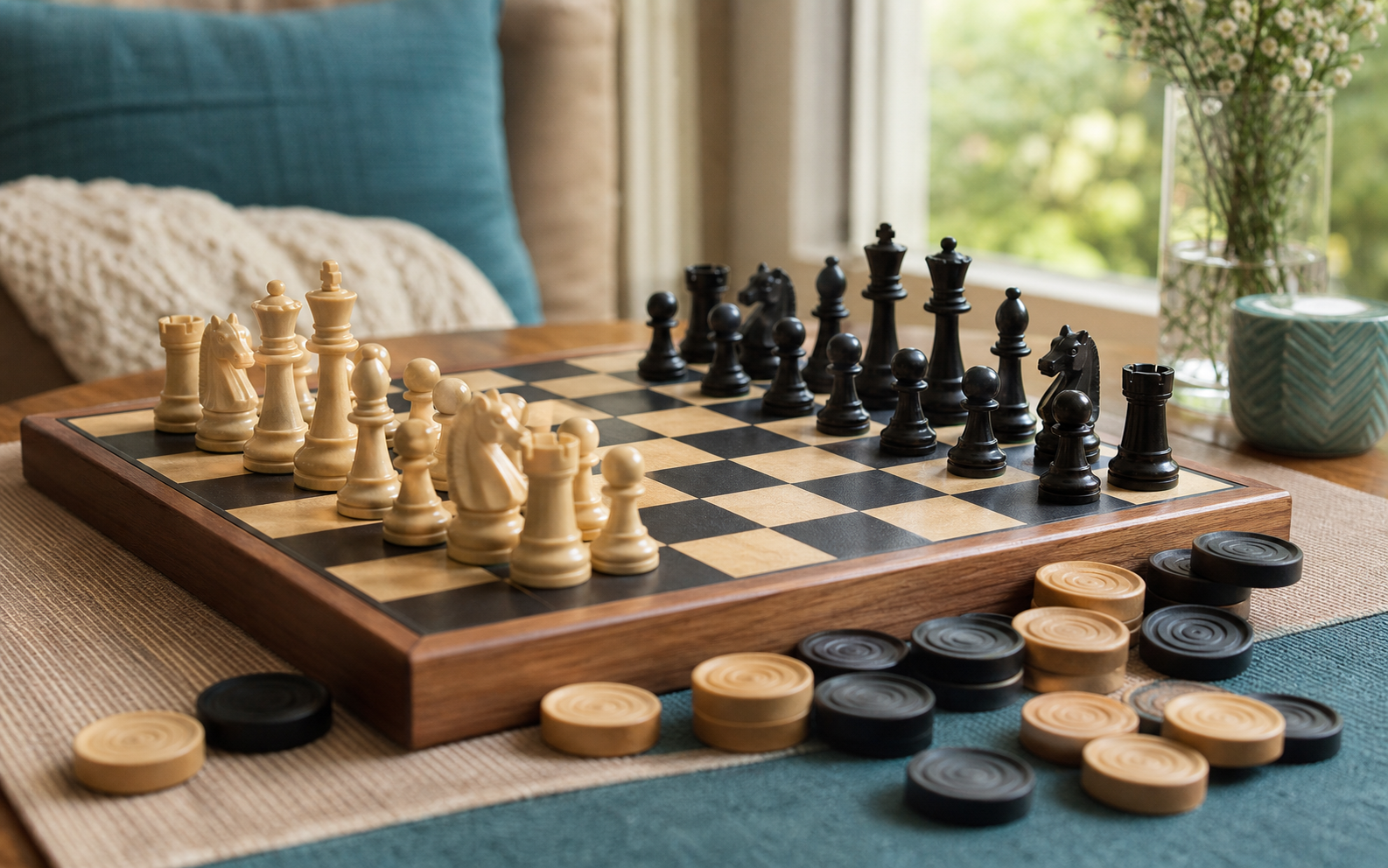
Wooden chess and checkers sets often feel more gift-worthy and permanent. They can look good on a shelf or coffee table, and many players enjoy the warmer feel of wood pieces on a wood board. For families trying to keep one set visible and inviting, that matters. A set that looks pleasant enough to leave nearby is more likely to get used.
Wood can also help a beginner slow down and treat the board as a shared table game rather than a disposable toy. That makes wooden sets a good fit for family game night, grandparents and kids, casual adult beginners, and gifts where the set should feel like something worth keeping.
Best fit: home tables, family rooms, gifts, quiet coffee-table play, and beginners who want one nice shared set for both games.
Where Wooden Sets Can Frustrate Beginners
Wood quality varies a lot. Some sets are practical, while others are decorative first and learning tools second. Watch for low-contrast squares, overly ornate chess pieces, glossy finishes that glare under lights, and checkers that do not stack cleanly for kings.
Wooden folding boards can also have storage compromises. If the inside compartments are shallow, the pieces may rattle, chip, or spill when the board is moved. If the hinge or latch is weak, the board may not sit flat enough for easy play.
Skip wood if: the set will be handled by many players every day, needs frequent cleaning, will travel in a bag, or has decorative pieces beginners cannot identify quickly.
What Plastic Sets Do Well
Plastic chess and checkers sets are usually easier to treat as everyday learning equipment. They are often lighter, more tolerant of repeated handling, simpler to wipe down, and easier to replace if a pawn or checker goes missing. That makes plastic especially useful for classrooms, clubs, libraries, waiting rooms, and families with several children using the same set.
Good plastic pieces can be very beginner-friendly when they use clear Staunton-style chess shapes and checkers that are thick enough to grip and stack. Plastic also pairs well with roll-up boards, storage bags, and labeled bins when a group needs fast setup and cleanup.
Best fit: classrooms, clubs, after-school programs, travel-adjacent use, shared shelves, younger players, and buyers who care more about function than display.
Where Plastic Sets Can Frustrate Beginners
Cheap plastic sets can feel too light, too small, or too easy to scatter. If the pieces tip over constantly, the checkers slide around, or the board is thin enough to curl, beginners may spend more time fixing the set than learning the game.
Plastic sets can also look less gift-ready. That is not a problem for a club bin or classroom shelf, but it may matter if the set is meant to be opened as a special family present. A practical plastic set can still be the better choice, but the buyer should know what tradeoff they are making.
Skip plastic if: the set is mainly a display gift, the pieces are tiny or hollow, the board will not lie flat, or the checkers are too thin to show kings clearly.
Beginner Readability: The Material Is Secondary
For chess, beginners need pieces they can identify without hesitation: king, queen, rook, bishop, knight, and pawn should each have a clear shape. For checkers, players need strong board contrast, pieces that stand out from the squares, and stackable checkers for crowning kings.
Material can help or hurt that readability, but it does not decide it by itself. A simple plastic set with clear black-and-white contrast may teach better than a carved wooden set where the bishop and pawn look similar. A warm wooden board may be excellent if the squares contrast well and the checkers are easy to see.
If square size and piece fit are the main concern, compare this choice with how to choose the right chess and checkers board size.
Durability and Maintenance
Wooden sets need more care. Keep them dry, avoid rough storage, and be careful with finishes that scratch or chip. They are usually better when one household controls the setup and cleanup. If a piece breaks or goes missing, exact replacements may be harder to match.
Plastic sets are more forgiving. They can often handle group use, quick cleanup, and labeled storage without much worry. For repeated club or classroom sessions, the ability to sort, count, and replace pieces can matter more than how the set feels in the hand.
For group setup planning, pair a plastic-leaning material choice with how to set up a beginner-friendly chess and checkers station.
Storage and Setup Differences
Wooden sets often come as folding boxes with interior storage. That is convenient for a home shelf, but only if the pieces fit securely and the board closes without pressure. Check whether the checkers and chess pieces have separate spaces; mixed piles make cleanup slower and missing pieces harder to notice.
Plastic sets often work better with pouches, bins, trays, or roll-up boards. That can look less tidy on a living-room shelf, but it is efficient when several boards need to be handed out. A labeled bag of plastic pieces may beat a beautiful box if the main problem is fast reset.
Wood vs Plastic by Buyer Situation
- Family game night: Wood is appealing if the board is readable and stays at home; plastic is better if children will move pieces roughly or cleanup needs to be quick.
- Gift buying: Wood often feels more presentable, but avoid novelty pieces that slow learning. Plastic can still be a better gift for a child or classroom helper.
- Classrooms and clubs: Plastic usually wins because durability, replacement, storage, and consistent pieces matter most.
- Travel and small spaces: Plastic and magnetic formats are often more practical, though a compact wooden folding set can work on a shelf. For portable choices, see best magnetic chess and checkers sets for travel.
- Coffee tables: Wood often fits the room better, but only if dust, glare, and piece storage are manageable. A good next read is best chess and checkers sets for coffee tables.
Setup Issues to Check Before Buying
Before choosing either material, confirm that the set supports complete play. A standard chess set needs all 32 chess pieces. A common American checkers setup uses 12 checkers per side on an 8-by-8 board. Families may use house rules, and some checkers variants use different boards or piece counts, so match the set to the version people actually plan to play.
Also check the board direction and piece fit. The board should make it easy to put a light square at each chess player's right-hand corner, and the chess pieces should not crowd neighboring squares. Checkers should stack cleanly without wobbling so kings are obvious during play.
Who Should Skip Both Standard Options
Skip a typical wooden or plastic combo set if the buyer needs a chess-club-style roll-up board with separate pieces, a very compact magnetic set for car or airplane use, or a checkers-specific setup for a rule variant that does not use the common 8-by-8 board. In those cases, the material choice is less important than the format.
Also skip sets where style makes the game harder. Beginners do not need pieces that look impressive but are hard to tell apart, boards with low contrast, or storage that hides missing pieces until game night.
Bottom Line
Choose wood when the set is mostly for home, presentation matters, and the board is still clear enough for beginners. Choose plastic when the set needs to survive repeated handling, quick cleanup, shared storage, or group teaching.
The best beginner set is not wooden or plastic by default. It is the one with readable squares, recognizable chess pieces, stackable checkers, sensible storage, and a material that matches the way people will actually play.